Church of Santa Engrácia
The National Pantheon, 300 years to finish, with a roof terrace

Visit details
Overview
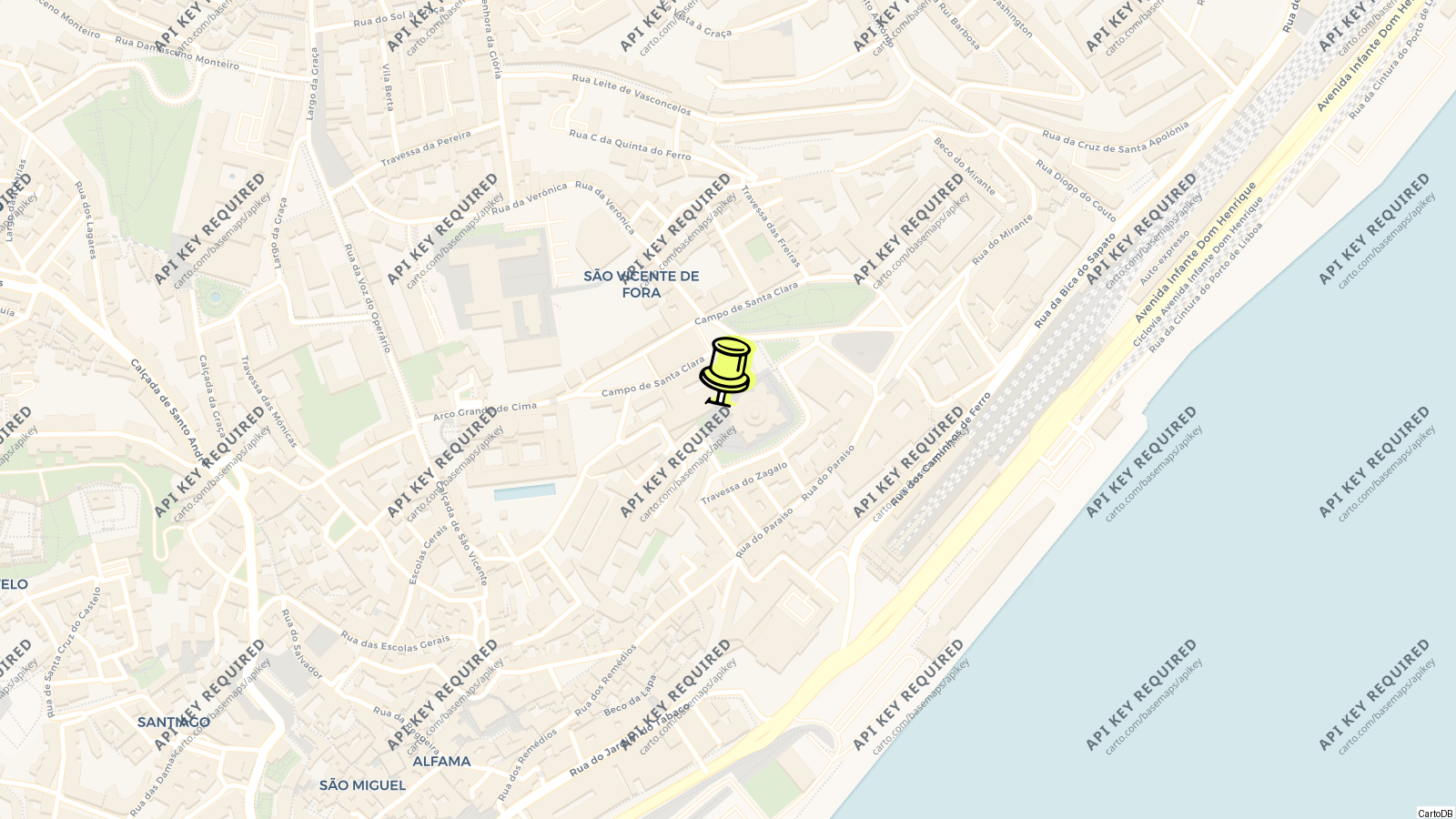
The Church of Santa Engrácia is the great white Baroque church with the dome on Alfama’s eastern hill, begun in 1681 and left unfinished for so long that “works of Santa Engrácia” became the Portuguese phrase for a job that never ends; the dome was finally added and the building inaugurated in 1966 as the National Pantheon, where presidents, writers, the fado singer Amália Rodrigues and the footballer Eusébio lie.
It is open Tuesday to Sunday, 10:00 to 13:00 and 14:00 to 17:00, and the reason to go beyond the tombs is the roof: a walkway around the base of the dome with a view over the river, the Alfama roofs and the Feira da Ladra spread out on the Campo de Santa Clara below on market days. There is no lift.
History
A church to St Engratia, a martyr of Braga, was founded here around 1568 by Infanta Maria, daughter of Manuel I; when it collapsed, the royal architect João Antunes began the present building in 1681 on a plan never tried in Portugal, a Greek cross with a square tower at each corner and undulating facades in the manner of Borromini. Antunes died in 1712, João V turned his money to Mafra, and the church stood roofless for two and a half centuries.
The First Republic decided in 1916 to make it the National Pantheon, and the Estado Novo finished it with the dome in 1966; the rumour that it was completed for Salazar’s own burial was disproved when he was buried in his home village in 1970, and Óscar Carmona is the only figure of the regime entombed here.
Visiting
The main front has an entrance hall with three niches of statues and a portal with the arms of Portugal held by two angels. Inside, the curved spaces of the crossing and arms are lined in polychrome marble on floor and walls, the 18th-century organ came from the cathedral, and the light falls from the dome.
Around the walls are the tombs: the presidents Manuel de Arriaga, Teófilo Braga, Sidónio Pais and Carmona; the general Humberto Delgado, who ran against the regime and was murdered by its police; the writers Almeida Garrett, João de Deus, Guerra Junqueiro, Aquilino Ribeiro, Sophia de Mello Breyner Andresen and Eça de Queiroz; Amália Rodrigues, whose tomb usually has fresh flowers; and Eusébio. Cenotaphs remember Camões, Vasco da Gama, Henry the Navigator, Afonso de Albuquerque, Pedro Álvares Cabral, Nuno Álvares Pereira and Aristides de Sousa Mendes, the consul who saved thousands in 1940. Then the stairs to the terrace.
Tips
- Come on a Tuesday or Saturday morning and combine the roof view with the Feira da Ladra on the square below.
- The building closes for lunch from 13:00 to 14:00; do not arrive at 12:45.
- São Vicente de Fora, two minutes uphill, has the Braganza royal tombs and its own roof terrace; the two make a pair.
- The stairs to the dome are many; the view is the reward and the only way is on foot.
Nearby
- Feira da Ladra on the Campo de Santa Clara: outside the door, Tuesday and Saturday.
- Monastery of São Vicente de Fora: two minutes.
- Alfama: downhill to the west.
- Santa Apolónia station and the cruise terminal: five minutes down.
Know this destination? Help us improve
Your local experience is valuable to other travelers.