Padrão dos Descobrimentos
The 56 m caravel prow of 1960 with Henry the Navigator at its point

Visit details
Overview
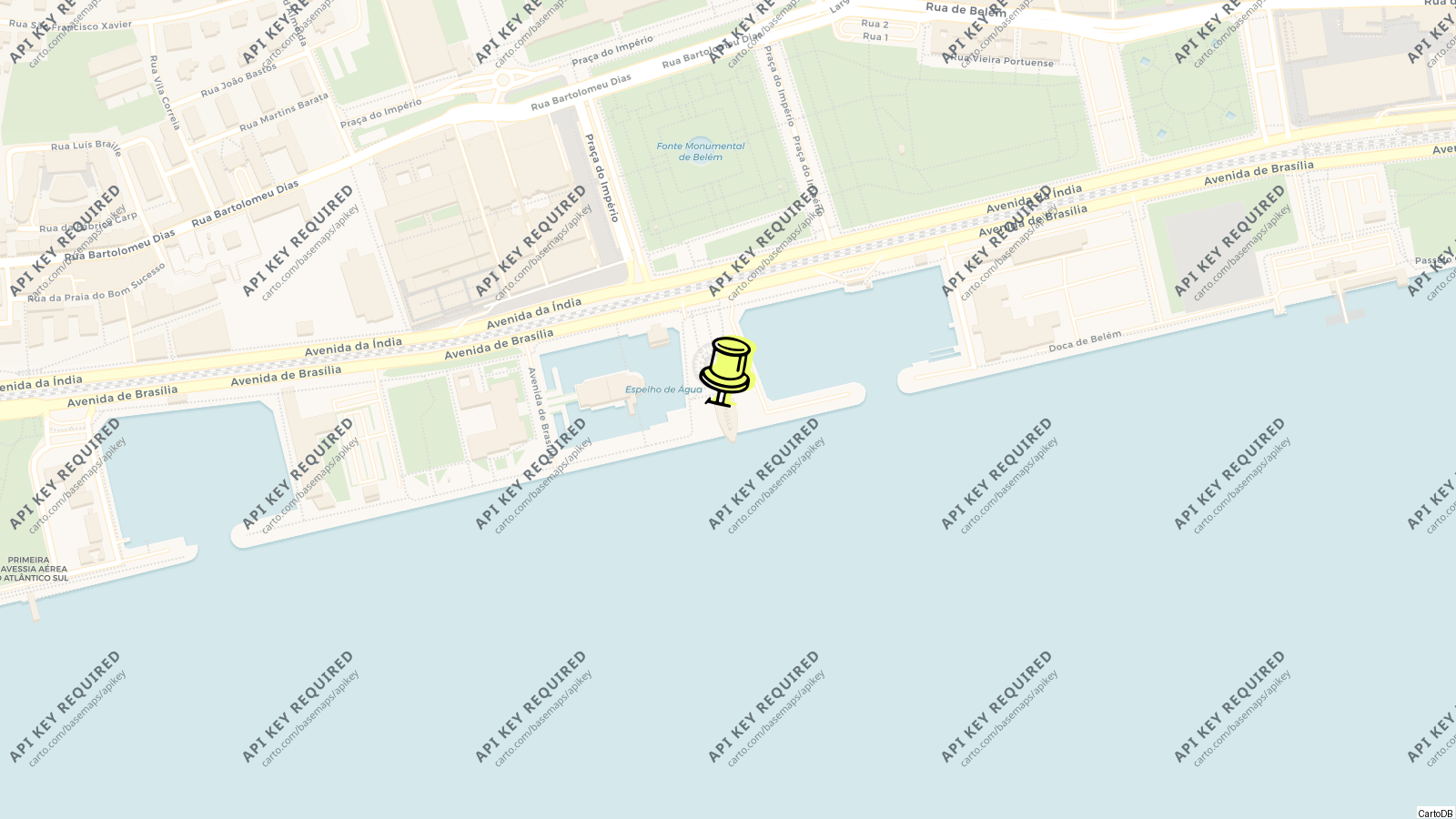
The Padrão dos Descobrimentos is the 56 m concrete-and-limestone prow on the Belém waterfront, with Henry the Navigator at the point holding a ship and 32 figures of the Discoveries climbing the ramps behind him: kings, navigators, cartographers, missionaries, Camões with his poem. It was built in 1958 to 1960 for the 500th anniversary of Henry’s death, replacing the temporary version of the 1940 Portuguese World Exhibition, and is the Estado Novo’s monument to the empire in the year the empire began to end.
There is a lift and stairs to the top, with the view along the river to the Belém Tower and across to the Jerónimos, exhibitions and an auditorium inside, and, in the pavement in front, the 50 m compass rose given by South Africa with a 14 m map of the world showing the routes of the caravels.
History
The architect Cottinelli Telmo and the sculptor Leopoldo de Almeida designed the first Padrão in plaster and tow as a beacon for the 1940 exhibition on the Praça do Império, and it was pulled down in 1943 when no permanent version had been agreed. In 1958 the government decided to rebuild it for the Comemorações Henriquinas, and between November 1958 and January 1960 the new monument went up in cement and rose-tinted Leiria stone, with the statues carved in Sintra limestone; Telmo had died and António Pardal Monteiro took over, with the engineer Edgar Cardoso on the structure. It was inaugurated on 9 August 1960.
Nothing was done with it for twenty years; only in 1985 did the city open the interior as a cultural centre with the observation deck, and since 2003 it has been run by the municipal company EGEAC.
Visiting
Walk round it first. On the north face, flanking the staircase, are the two inscriptions, to Henry and to the Portuguese “who discovered the paths of the sea” over an anchor, and to the fifth centenary 1460 to 1960 over a laurel; the sword of Aviz forms the north face itself. Along each ramp are 16 figures, monarchs, explorers, cartographers, artists, scientists and missionaries: Afonso V, Vasco da Gama, Afonso de Albuquerque, Magellan, Pedro Álvares Cabral, Bartolomeu Dias, Camões, the painter Nuno Gonçalves, the chroniclers, the missionary Francis Xavier, Henry’s mother Philippa of Lancaster, the only woman, and his brothers Pedro and Fernando; each leans forward towards the sea.
Inside, the auditorium usually shows a film on the history of Lisbon and the two upper levels hold temporary exhibitions; the lift or the stairs go to the roof, the best place to see the compass rose whole and the Jerónimos in one frame.
Tips
- The monument itself is free to look at and the compass rose is in the open pavement; the ticket is for the exhibitions and the roof.
- Morning light falls on the east ramp, afternoon on the west; the figures are hard to photograph at noon.
- Cross to the river side by the underpass beneath the road and railway; there is no crossing at grade.
- The Belém tram stop and the train station are 10 minutes’ walk east; the tower is 10 minutes west.
Nearby
- Jerónimos Monastery: across the Praça do Império.
- Belém Tower: 10 minutes west along the river.
- Museu de Arte Popular: next door.
- MAAT, the museum of art, architecture and technology: 10 minutes east along the river.
Know this destination? Help us improve
Your local experience is valuable to other travelers.