Castle of Saint George
Moorish citadel on Lisbon's highest hill, rebuilt in the 1940s

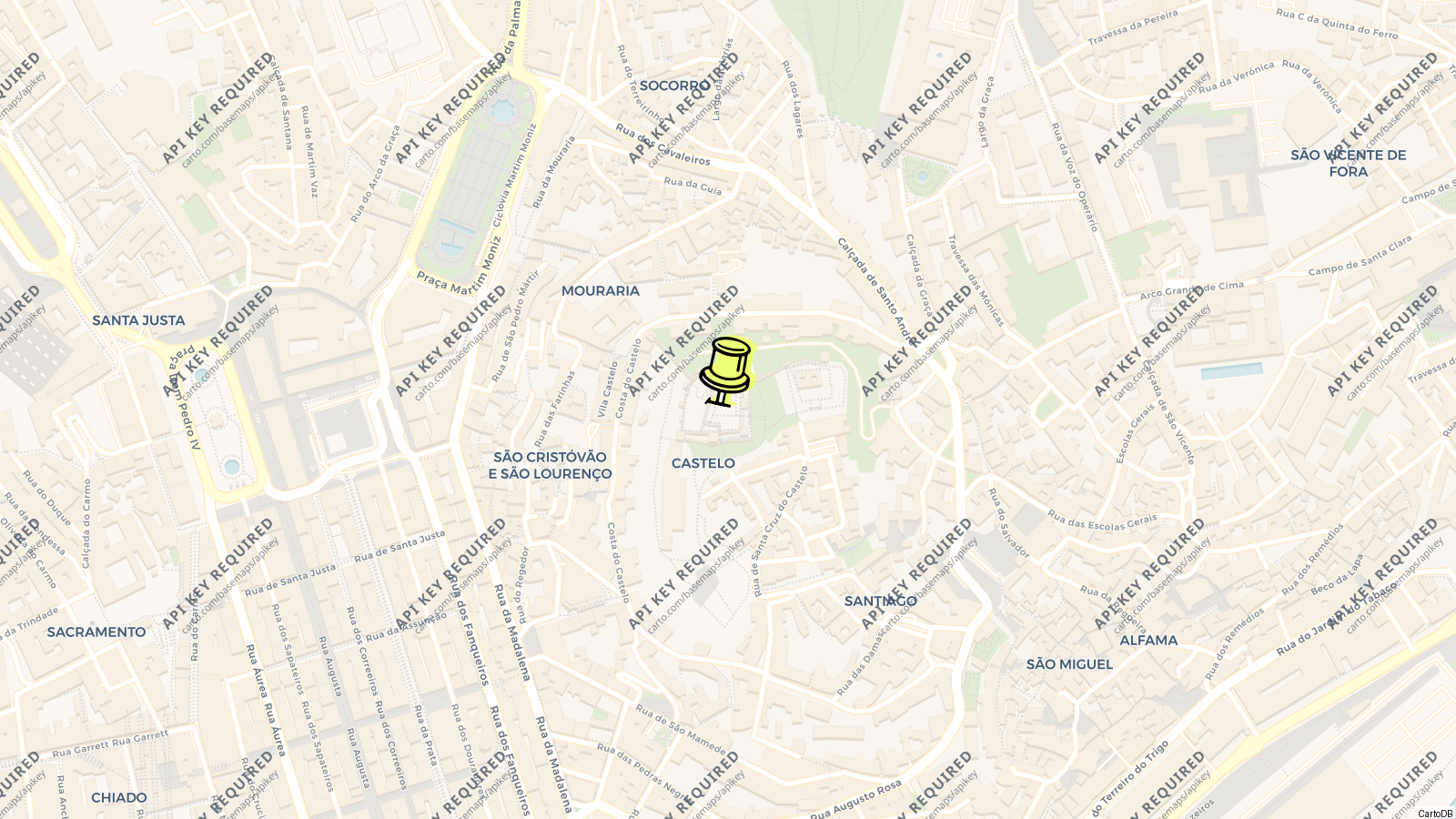
Visit details
Overview
The Castle of São Jorge crowns the highest hill of old Lisbon, a Moorish citadel of the 10th and 11th centuries taken by Afonso Henriques and his crusader allies in the siege of 1147, then royal palace, barracks and prison, and since the 1940s a walled park of towers, gardens and ramparts with the best view over the city and the Tagus. It is open daily from 10:00 to 20:00 and the ticket includes the walls, the archaeological site and the camera obscura in the Tower of Ulysses.
People have lived on the hill since the 8th century BC and fortified it since the 2nd century BC; what stands is the Moorish castle as restored by Salazar’s government for the 1940 celebrations, with its towers, a keep, a dry moat and the ruins of the medieval royal palace beside it.
History
Phoenicians, Carthaginians, Romans, Sueves and Visigoths all held the hilltop before the Berber forces of the 10th century built the walls, the Cerca Moura; in 1147, during the Second Crusade, the city fell after a siege of months, the legend of Martim Moniz throwing his body into the closing gate belongs to the moment, and it was the only success of that crusade. When Lisbon became capital in 1255 the castle was the alcáçova, and around 1300 Dinis turned the Moorish citadel into the Royal Palace of the Alcáçova; Fernando I added the Cerca Fernandina in 1373 to 1375, 5,400 m of wall with 77 towers round the whole city, and João I dedicated the castle to St George after his English marriage.
From 1378 the royal archive was kept in the Torre do Tombo, the tower that still gives the archive its name; João I housed two Barbary lions from Ceuta in the palace in 1415; Manuel I received Vasco da Gama here on his return from India in 1498, and Gil Vicente staged his first play in the palace in 1502. The court moved to the Ribeira Palace on the river, the 1531 earthquake damaged the old buildings, Sebastian’s rebuilding was abandoned at his death, and the Spanish made it a barracks and prison. The 1755 earthquake wrecked the rest; the Casa Pia school occupied it from 1780 to 1807 and the first geodetic observatory in Portugal was built on a tower in 1788. By the 1930s the castle had vanished under later buildings; the restoration of 1938 to 1940 stripped them away and rebuilt the walls that are seen today.
Visiting
Enter through the outer gate into the citadel, where the Praça d’Armas terrace under the pines is the view: the Baixa grid, the river, the bridge and the Cristo Rei across the water. The castle proper is up the ramp: the dry moat, the keep, the wall-walk connecting the towers, from which the panorama turns in every direction, and the Tower of Ulysses with its camera obscura that projects the city on to a bowl in a darkened room.
Beside the castle the archaeological site shows three layers, Iron Age houses of the 7th century BC, the Moorish quarter of the 11th century and the ruins of the Alcáçova palace, with the permanent exhibition of finds emphasising the Moorish centuries in the old palace rooms. Peacocks wander the gardens.
Tips
- The ticket queue by mid-morning is long; buy online, or come at 10:00 or after 18:00 in summer when the light is best anyway.
- Walk up through Alfama or take the tram to the Portas do Sol and climb the last stretch; there is a minibus from the Baixa for those who cannot.
- The view from the Miradouro da Graça and the Senhora do Monte, north of the castle, is free and includes the castle itself.
- The camera obscura runs on a timetable in a small room; ask for the next session as you enter.
Nearby
- Alfama: the slope below.
- Lisbon Cathedral: 10 minutes down.
- Miradouro da Graça: 10 minutes north.
- Praça do Comércio: 20 minutes down through the Baixa.
Know this destination? Help us improve
Your local experience is valuable to other travelers.