Cathedral of Santiago de Compostela
Every day at noon, watch clouds of incense swing from the giant botafumeiro inside a cathedral that’s greeted pilgrims since 801.

Essential info
Visit details
Overview
You walk onto Praza do Obradoiro and face a building that’s been pulling in nearly half a million pilgrims and visitors a year,499,239 as of 2024. The Cathedral of Santiago de Compostela isn’t just a church. It’s a 12th-century Romanesque colossus layered with Gothic and Baroque, parked directly on top of the supposed tomb of Saint James the Great. This is the symbolic finishing line for everyone who’s followed the Camino de Santiago, no matter if they limped in from Sarria or slogged the whole way from St. Jean Pied de Port.
Admission to the main nave costs nothing, walk in any day from 7:00 to 20:00, and yes, you can bring a wheelchair. Physically, the place sprawls: two towers (Torre das Campás and Torre da Carraca) hit up to 80 meters, and the interior can hold 1,200 people, though on busy summer afternoons it feels way tighter. If you’re looking for Spain’s largest Romanesque church, you’re standing in it.
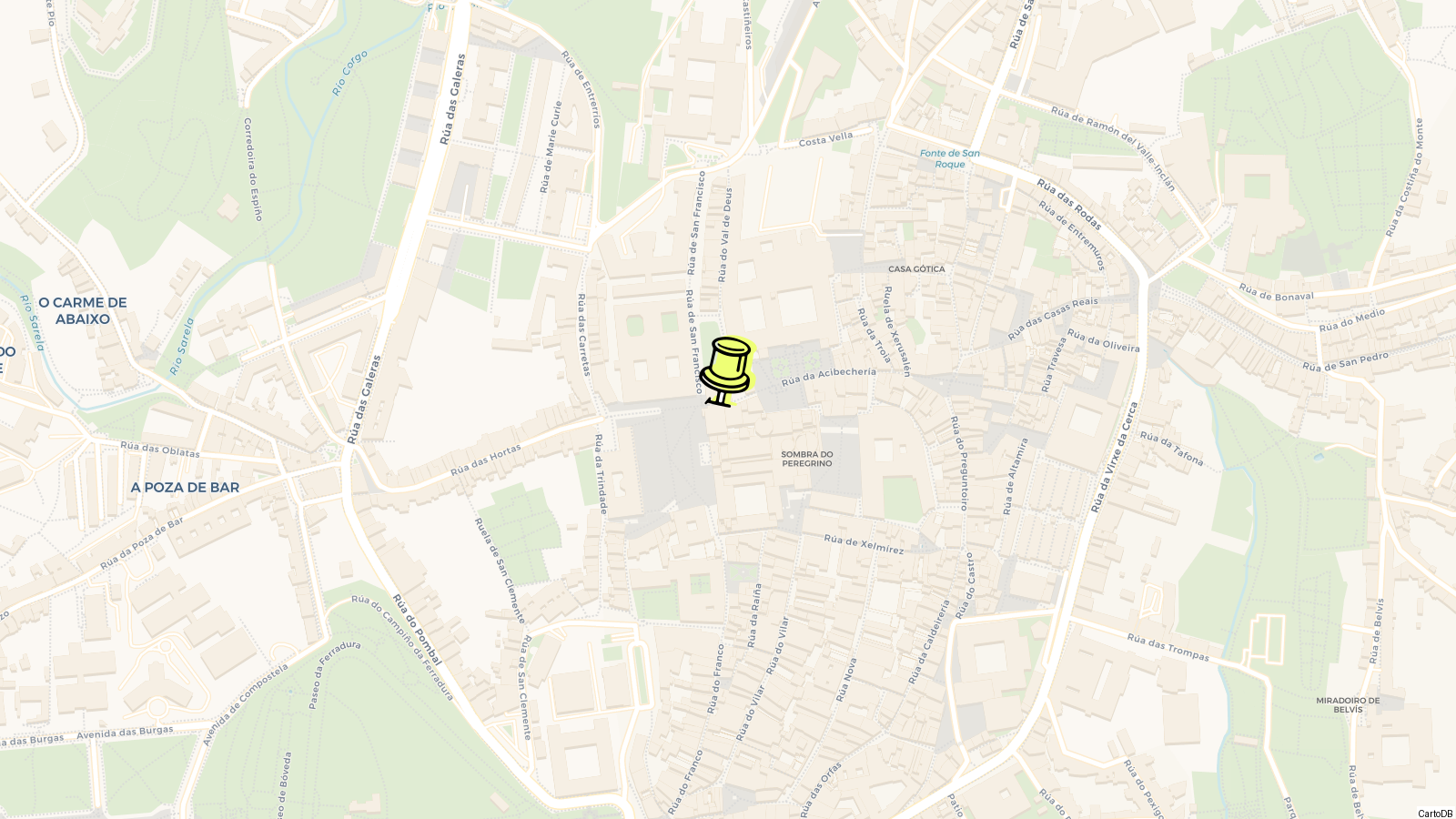
The cathedral sits at coordinates 42.880555° N, -8.544444° W, though you’ll know you’re close well before that, usually by following a stream of scallop-shell-clad walkers dragging backpacks. The façade you see, the one on all the Spanish euro coins, wasn’t finished until 1740, when Fernando de Casas Novoa nailed the Baroque look.
Inside, aside from the inevitable crowds, what makes the place different from most European cathedrals is that everything revolves around arriving: there are chapels, crypts, tombs, and the “hug the saint” ritual at the altar. The Botafumeiro, a 1.6-meter, 80-kilo thurible, gets swung above the crowd on special days, nothing subtle about it.
Most visitors barely glance at the surroundings, but it’s all embedded in a UNESCO World Heritage–listed old town as of 1985. If you want practical info, the official site (www.catedraldesantiago.es) is regularly updated, and you don’t need to reserve a spot to walk into the main church, but extra areas (like the Pórtico da Gloria, rooftop, or museum) cost €6–15 and need a timed ticket.
History
Construction on the current Cathedral of Santiago de Compostela started in 1075, backed by King Alfonso VI and Bishop Diego Peláez, after an earlier church on the site was burned down in 997 during a raid by Al-Mansur from Córdoba. Santiago was already attracting pilgrims, the site is said to be where the remains of Saint James the Apostle were rediscovered around 814, sparking the Camino de Santiago route that still ends at the cathedral door today.
The legend says a hermit called Pelagius saw mysterious lights over the forest where Saint James’s body was buried, and Bishop Theodomirus declared it a miracle. King Alfonso II built a chapel here in 829, followed by a proper pre-Romanesque church ordered by Alfonso III in 899. Centuries later, Al-Mansur’s army destroyed most of that structure, but the apostle’s tomb survived untouched.
By 1211, after more than a century and a few pauses in the work, the building was finally consecrated, with King Alfonso IX of León present for the ceremony. Most of what you see inside, massive stone columns, barrel vaults, and a nave that can fit 1,200 people, dates from this Romanesque phase. The cathedral became the seat of a bishopric in 1075, and then an archbishopric in 1120, giving it even more regional and religious clout.
The Pórtico da Gloria, the elaborate carved triple entrance just inside the main façade, took 20 years to finish and was completed by Master Mateo in 1188. There’s usually a line to glimpse this up close, with access sometimes included in guided visits (around €6 to €15 for the museum+portico combo).
Master Mateo’s workshop was responsible for this Romanesque sculpture set, which mixes scenes from the apocalypse, stone musicians, and saints, look for the scallop shell motifs and the tree of Jesse, supposedly the first time this biblical family tree appeared in Spanish church art. Mateo even tucked a self-portrait kneeling below the central pillar, locals call it the “Santo dos Croques” because old-timers used to bump their heads on it for wisdom (don’t try it now, security is stricter).
Wars, fires, and shifting architectural fashions all left marks. The only surviving original Romanesque exterior is the South façade (Pratarías), built between 1103 and 1117; the others were rebuilt, especially after fires or as new styles took over. The famous Baroque façade facing Praza do Obradoiro, with its stone saints and huge glass windows, was added in 1740 by Fernando de Casas Novoa.
The twin towers, Torre das Campás and Torre da Carraca, rise nearly 80 meters. The bells, carted off by Moorish raiders in the 10th century, eventually wound up in Toledo Cathedral after Christian armies reconquered Córdoba in 1236. The Berenguela tower (added later as a kind of baroque clocktower) gets lit up during Jacobean Holy Years, when St. James’s feast day falls on a Sunday, acting as a beacon for pilgrims.
Inside, you’ll see scaled-down layers of Galician, Romanesque, Gothic, and Baroque influences, thanks to centuries of tweaks and additions. The crypt under the main altar, containing what are believed to be relics of Saint James, was hidden for nearly 300 years during wars and rediscovered in 1879.
During the 16th–18th centuries, the cathedral kept growing, chapels, main altarpieces, gilded organs, and the monumental staircase of the Obradoiro all got built to accommodate the relentless flood of pilgrims and keep up architectural fashion. Some carvings from the stone choir by Master Mateo (now gone) survived by being worked into the Pratarías doorway and the Holy Door.
Napoleonic troops occupied the city and looted the cathedral in 1809. Like much of northern Spain, the cathedral fell into relative obscurity until renewed interest in the Camino in the late 19th and 20th centuries restored Santiago as a pilgrimage hot spot. By 1985, the old town, including the cathedral, made the UNESCO list.
Visiting
General admission to the cathedral’s main nave is free, every day from 7:00 to 20:00. You walk in from Praza do Obradoiro, up the monumental staircase through the Baroque western façade. Inside, the place feels surprisingly unadorned at first, striped granite arches, Romanesque barrel vaults, almost no stained glass. It absorbs crowds easily, so even when it’s packed with day-trippers and footsore pilgrims (especially midday May–September), you’ll find space to pause.
You’ll see lines forming for two things: behind the main altar, the glassed-in crypt holds a silver casket. This is the alleged resting place of Saint James and, sometimes, two of his closest followers. Above, a narrow passage lets you climb up a short staircase to embrace the carved figure of the saint himself, most locals have done this once, but for many pilgrims it’s the main event.
The Pórtico da Gloria isn’t visible from the nave. It’s behind the glass doors under the main organ, visiting this 12th-century Romanesque masterpiece now requires a separate ticket (€12 general, last time I checked). Only 25 people allowed at a time, with slots from 10:00 to 19:00 (last entry 18:00), and tickets sell out days ahead in summer. Night tours run some evenings at about 22:30, cost €25, with a different, dramatic vibe.
The Pórtico tour is worth it if you care about art or want to see up close the details (musicians, grimacing demons, and the battered “Santo dos Croques,” which students used to bang their heads on for wisdom, now off-limits for touching). They’re strict about timings and no photos. Book directly via the cathedral’s website rather than third parties.
The cathedral’s museum (Museo da Catedral, around €6–10 for most exhibitions) takes you into the cloister, treasury, and sometimes into the Archbishop’s Palace or Capela de Reliquias, depending on which ticket you buy. The most popular upgrade is the “rooftop and towers” tour (€20 combined), which gets you up the stone spiral stairs for angular views over the city and a close look at the towers and weathered statues.
The rooftop walk is not wheelchair accessible, but you get incredible perspectives, including how the Baroque façade covers up the original Romanesque frame. In good weather (and it’s often drizzly), you’ll see across to Monte Pedroso and out to the hills that pilgrims cross into the city.
Masses happen throughout the day (check schedule on the official website), but the midday Pilgrims’ Mass is when you’ll have the best chance of seeing the Botafumeiro in action: this massive incense “turíbulo” swings overhead on major feast days and select Sundays (not all Masses). If you want a seat, arrive at least 40 minutes early, standing room fills up, and latecomers are out of luck.
Wheelchair access is good via the Obradoiro entrance ramp and around the main floor, though the crypt and towers are stair-only. Staff are used to helping people with mobility needs.
Photography in the main nave is generally allowed if you’re discreet, but absolutely forbidden in the Pórtico da Gloria and side chapels during Mass.
The facades: how to see them
Walk the outside. The western Baroque façade (Obradoiro) is the one on all the postcards, but the side on Praza das Praterías is actually older, with 12th-century Romanesque stonework and strange carved figures, mermaids, prophets, and animals, mixed in with later additions. From there, keep going to Praza da Quintana to see the Holy Door, which only opens when St. James’ Day falls on a Sunday (next up: 2032). Each side of the cathedral has its own personality, and it’s worth the loop, takes 15 minutes at normal pace, longer if you’re stopping for photos or a pastry from Acibechería.
About the Botafumeiro
Seeing the Botafumeiro isn’t guaranteed unless you visit on big feast days (July 25, December 25, January 6, Pentecost, All Saints, Ascension Thursday). Check the schedule a few days out, as the decision is often last-minute, locals often check the cathedral’s Twitter/X or just ask at the door. When the red-robed tiraboleiros start gathering near the transept, you’re in luck.
Tickets, booking, and lines
Mass and the main church are free and don’t require booking. Only the Pórtico da Gloria, museum, and guided tours (e.g. rooftop/tower) need tickets, and in July/August, those sell out days in advance. Book via catedraldesantiago.es, skip the third-party sites. Bring your passport or ID for museum or Pórtico entry, they check.
Tips
-
Early morning is quietest. By 10:00 the tour groups and pilgrims fill the aisles. If you want elbow room, arrive right at 07:00 when they open.
-
Sundays get busy, but weekdays in winter (December–February) can feel almost empty outside of major feast days.
-
No ticket or reservation is needed for the main nave, but the museum, Pórtico da Gloria, and rooftop tours require advance online booking at catedraldesantiago.es; last-minute slots are rare in high season.
-
The Pórtico da Gloria isn’t included in basic entry. Access is timed and groups are capped, so reserve several days ahead in summer. Price for the art+museum+Pórtico combo is around €15.
-
If you’re on a budget: the main church, crypt, and Saint James’ tomb are free. The best views of the Obradoiro façade are from the Praza do Obradoiro and the wide steps, no ticket required.
-
Large backpacks aren’t allowed in the cathedral. There’s a left-luggage office just behind the main square, next to the Pilgrims’ Office.
-
The rooftop tour (techo) gives you a 360° view over Santiago. It’s guided, lasts under an hour, and involves narrow spiral stairs. If you get vertigo or have mobility issues, skip it.
-
The cathedral is fully wheelchair accessible at ground level on the Obradoiro side. Some upper chapels and museum exhibits are not adapted.
-
Photos are allowed in most of the nave but not during mass, inside Pórtico da Gloria, or in Saint James’ crypt.
-
Dress code is casual but respectful: no swimsuits, shirtless torsos, or super-short shorts. This is enforced more on festival days.
Avoiding crowds and tour groups
The post-siesta hour (14:30–16:00) is genuinely quiet. Most Spanish tour groups head to lunch then, and international groups are shuttling between sights. Late afternoon (after 18:00) works too, though the golden light for exterior photos is best from noon to 16:00 from the main square. On festival days around July 25 (Saint James), expect packed plazas and extra bag checks.
Money-saving and ticket hacks
If you want full access but don’t need a physical guide, book the “combined ticket” online for cheaper rates than buying at the window. Kids under 12, clergy, and some disabled visitors get reduced or free admission to museum areas, bring ID just in case.
Know this destination? Help us improve
Your local experience is valuable to other travelers.