Castro de Vigo
hillfort in Vigo (Spain)

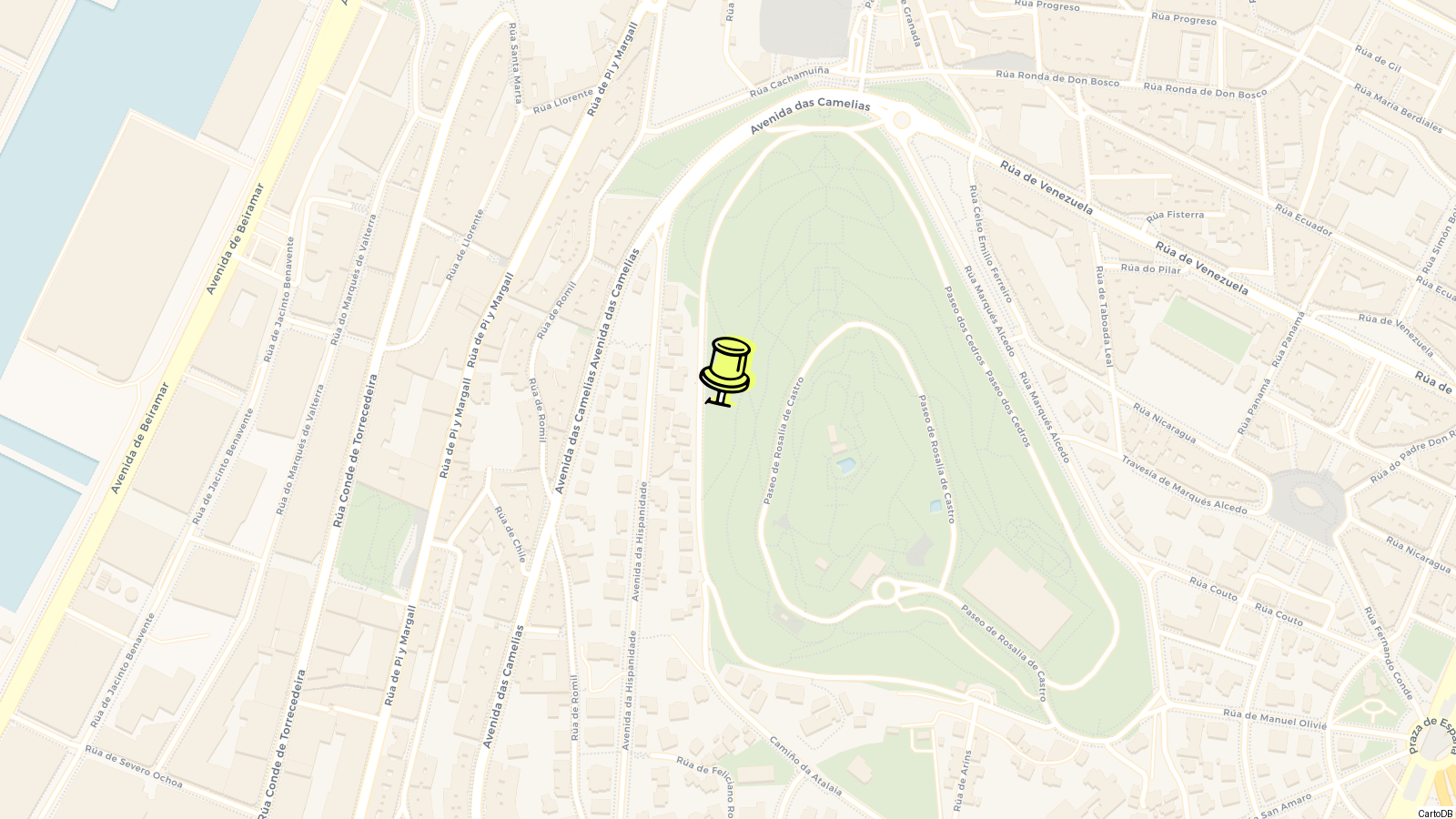
Visit details
Overview
Castro de Vigo isn’t just a patch of ancient foundations in a city park. It’s an open-air glimpse at everyday life here two millennia ago: round stone houses, vestiges of prehistoric walls, a hillside that saw both Celtic tribes and old Romans pass through. Standing in the middle of 21 hectares of gardens, playgrounds, and pine-scented paths atop Monte do Castro, it’s hard to believe you’re still in central Vigo.
This site is Galicia in miniature: the blend of old and new, prehistoric stones emerging between camelia shrubs, the sound of children playing where an Iron Age community once watched the ría. The archaeological settlement stretches across the slope, with about 45 stone buildings preserved as of 2026. Three key dwellings have been fully reconstructed so you can step into a real castro roundhouse, storehouse, and a later rectangular (post-Roman) dwelling.
The reconstructed houses are textbook examples: a circular structure with a vestibule showing typical home layout, a simple round storehouse, and a rectangular dwelling from after Rome’s arrival, used into the third century AD. This layering shows how the settlement shifted over the centuries, evolving with new populations and power structures. Preservation work means you don’t just see walls, you get a sense of how people actually lived: low doorways, communal spaces, and the outlines of hearths and storage pits.
Unlike most major sites, entry is free and you’ll rarely find crowds even in summer. Guided tours sometimes run for €5–10, but most people just wander, pausing at ruined walls or the cafe for city views.
Monte do Castro park is a proper city green lung, mixing up botanic collections (pines, cedars, camelias), a skate circuit, and children’s spaces with the ruins themselves. In April 2026, a new tourist bus was launched, worth it if you’re short on energy or want a panoramic loop over the park and downtown.
Castro de Vigo is for anyone wanting a sharp connection to pre-Roman Galicia, but also for locals walking dogs, old men arguing chess, and families on weekends. Don’t expect dramatic monuments. The power here is in the ordinariness: stone circles, wildflowers, and the sense that two thousand years on, this hill is still the centre of life in Vigo.
History
Iron Age Castro: 2nd Century BC to 3rd Century AD
People were living on the slopes of Monte do Castro at least as early as the 2nd century BC, building the sort of round, stone-walled houses you see here today. This was an era before the Romans arrived in force, when Galicia was a patchwork of castro settlements: fortified hilltop villages run by tribal groups. At Castro de Vigo, over 45 stone buildings remain, packed onto a steep slope just above present-day Vigo’s city centre.
Settlers here would have lived in tightly clustered homes, often with shared stone walls. The typical house was circular, built with granite blocks and topped with thatch. At Castro de Vigo, archaeologists have dug and preserved more than 45 structures, showing distinct phases of occupation and rebuilding as the centuries passed. While much of the surrounding hill has been built over in the past century, this section offers one of the clearest cross-sections of life from the last pre-Roman generations in what’s now Vigo.
With the Roman conquest, life began to change, new imported goods, coins, and ceramics start appearing in the layers here by the late 1st century BC. The settlement remained active up to the 3rd century AD, overlapping the full swing of Roman Gallaecia.
Fortresses and the Medieval Period
Fast-forward to the Middle Ages. The granitic spine of Monte do Castro, already long abandoned as a village, was seen as an ideal defensive perch. Sometime after the fall of Rome, and especially from the 12th century, a fortress went up here to guard the bay. Parts were rebuilt and remodelled up through the 17th century, and at one point the stronghold was linked by city walls to the Castle of San Sebastián lower down the hill.
The fortress on Monte do Castro played a role in regional skirmishes and in defending the coast from pirates and foreign fleets. Vigo’s strategic position on the Ría de Vigo made fortifications essential through the 16th and 17th centuries, as international conflicts (like the 1702 Battle of Vigo Bay) often involved attempts to control or raid shipping in these waters. The castle on the summit, backed by thick stone ramparts and bastions, served both as military barracks and as a reference point for shaping Vigo’s evolving urban core.
Today, most of what you see above the castro are 17th-century stone curtain walls and low platforms, the last substantial military builds before the city outgrew the hill.
Modern Transformation: From Military to Public Park
In 1934, under Spain’s Second Republic, the Ministry of War handed over Monte do Castro to the city of Vigo. This marked the end of its centuries as an active military zone. The city flipped the space into a public park, gradually opening up the archaeological castro and traces of fortification to everyday visitors. It’s this decision that saved the ruins from total neglect or redevelopment.
Turning Monte do Castro into a public park wasn’t just an act of preservation, it allowed for systematic archaeological digs and the creation of an open-air museum. Over time, selective excavation has left most of the visible structures from the original castro exposed, while the reconstructed stone dwellings that now stand on-site help visitors understand the layout and material culture of those first residents. The park itself evolved in phases, with landscaping, paths, and signage added over decades, integrating the ancient settlement into the urban heart of Vigo.
Archaeology and Present Use
Excavation and reconstruction at Castro de Vigo are ongoing and cautious, often balancing city-park uses with heritage conservation. Three dwellings have been rebuilt to show how building styles changed: a roundhouse with vestibule, a rectangular post-Roman house, and a traditional storehouse. Most of the exposed ruins are original, though the holes left by ancient posts are sometimes highlighted to guide the eye.
The open nature of the park means the ruins are rarely fenced off from daily life. Kids ride bikes past Iron Age walls, joggers loop around the ruins, and archaeology students can sometimes be spotted cleaning up recent dig layers. While professional digs have slowed in recent years due to budget and the focus on park maintenance, any new finds are documented and occasionally put on display in local museums.
Today, Castro de Vigo sits as both time capsule and city breathing space, still hemmed in by the outlines of old fortifications, with its Iron Age roots exposed atop Monte do Castro.
Visiting
Castro de Vigo sits inside the Monte do Castro park, about 147 m above sea level in central Vigo. Entry is free. There’s no ticket booth, just walk straight in during opening hours (Wednesday to Sunday, 11:00–13:00 and 16:00–18:00 in winter; 11:00–13:00 and 17:00–19:00 from May to September).
The site has no staffed entrance or fixed visitor facilities at the archaeological compound itself. If you want a deeper experience, check the official city page or phone +34 986 810 100 to enquire about guided tours. Standard access is always free, but guided visits, when available, may require advance booking and usually run €5–€10 per person.
Expect roughly 45 foundations spread downslope: mostly round stone dwellings, with three buildings reconstructed to show everyday life in Roman and post-Roman centuries, one circular house with a vestibule, one rectangular and more “modern” looking, one used as a storehouse. The reconstructed zone is roped off from the rest, and basic panels (in Spanish and Galician) explain features with line drawings.
If you’ve seen bigger archaeological parks with fancy interpretation centres, trim your expectations; Castro de Vigo’s information is low-tech and limited but good enough for a half-hour wander.
The walk from the base to the castro is moderately steep but scenic, running through gardens and past the Monument to the Galeões of Rande (three anchors commemorating the 1702 naval battle).
If you want the full Monte do Castro circuit, allow an hour for a leisurely loop. A circular route that takes in the park, viewpoints and archaeological site is around 2 km, with about 91 m elevation gain, top out at roughly 141–147 m.
The area blends into a public green space, so while you’re here, expect noise from playgrounds and dog walkers. Children can poke around the site, it’s open on all sides, and locals use the park for everything from football to picnics. There are no toilets or gift shops at the castro itself, if you need either, head toward the Mirador café (when open) or use the city facilities further down the park.
Some years, critic voices point out that maintenance isn’t always top-notch, expect graffiti or chipped signage in places, and don’t count on the Mirador café actually being open (as of early 2025, it was closed and under review by the council).
Tips
- The archaeological area is only open Wednesday to Sunday. In winter (October–April), hours are 11:00–13:00 and 16:00–18:00; in summer (May–September), 11:00–13:00 and 17:00–19:00. Times are strict – don’t expect the site to stay open even a minute past closing.
You won’t get past the ropes outside these published slots, even if the larger Monte do Castro park around the site is always open. Aim to arrive within the first 15 minutes of a session; staff start ushering people out promptly at the end. On weekends, especially around midday, there can be small queues if a guided tour is in progress since entry is paused for groups.
- Entry is always free. Guided tours are offered occasionally and may require a fee (typically €5–€10) and advance booking, check the official site or call +34 986 810 100 before you go.
The majority of visitors self-guide, but a small number of guided group visits are allowed per day, generally in Spanish or Galician. Book ahead if you want a slot, especially during spring visits for school groups or high summer.
- Surfaces in the archaeological area are uneven and can be slippery when wet. There are ramps in the park, but the castro itself isn’t suitable for wheelchairs or prams. Sturdy shoes are best, especially after rain.
The site’s ancient stones aren’t reinforced for modern access. If it rains, puddles and mossy patches develop fast around the dwellings. The rest of Monte do Castro park is more accessible, but close viewing of the reconstructed structures means stepping over stone thresholds and rough ground.
-
Avoid bringing food inside the archaeological enclosure, picnics are forbidden to limit littering among the ruins. Use the designated picnic zones elsewhere in Monte do Castro park instead.
-
The water reservoir under the Monte do Castro platform is an active piece of heritage infrastructure and sometimes fenced for safety, especially during inspection periods. Obey any barriers and keep children away from fenced zones.
-
Allow 30–40 minutes for a slow look at the visible roundhouses and reconstructions; longer if you want to explore the rest of the park.
- Maintenance can be patchy. Restoration works and criticism from local councillors have both been reported recently. Don’t expect museum-level presentation, especially outside peak season.
Complaint letters and media stories in 2025 called for refurbishment of amenities like the Mirador café and stricter site cleaning, after a string of rain-damaged signs and long grass. No major injuries have been attributed to maintenance issues, but do watch your footing, loose stones get moved by storms and school groups alike.
Know this destination? Help us improve
Your local experience is valuable to other travelers.