Church of Nuestra Señora de la Soledad, Vigo
church building in Vigo, Spain

Visit details
Overview
Most people walk past the Church of Nuestra Señora de la Soledad without realising it was inspired by La Madeleine in Paris. You’re looking at a slice of 1960s neoclassicism, all straight lines and symmetry, designed by Antonio de Cominges Tapias and finished in 1963. It sits on the slopes of Monte do Castro, squeezed in among residential blocks close to the foot of Vigo’s oldest hill.
The prostyle façade is a dead giveaway: four Ionic columns out front like a textbook Greek temple, not a common look in Galicia. The interior is modest, but the image of Nuestra Señora de la Soledad dominates the altar and draws local crowds every Holy Week. If you arrive during one of the processions, don’t expect a quiet visit.
You won’t find ticket desks or museum displays here. This is a working parish where Mass draws locals on weekday evenings and late Sunday mornings, it’s free to enter, though regulars drop donations for maintenance.
Official Mass times are 19:00 Monday through Saturday, and 11:00 plus 12:30 on Sundays and holidays. Confessions happen half an hour before each Mass. There’s no tourist infrastructure as such, it’s locals first, visitors second. Expect activity in the evenings rather than during the day.
Aside from regular worship, the church acts as a hub for concerts, lectures, and social work, you might stumble into a catechesis group or a live classical recital on the right night. It’s not touristy, but if you want a taste of everyday life in modern Vigo, this is a more honest window than any museum.
History
Planning and construction: 1957–1963
The Church of Nuestra Señora de la Soledad was built between 1957 and 1963, an unusually late date for neoclassical church architecture in Vigo. Local architect Antonio de Cominges Tapias led the project, and consciously modelled its exterior after La Madeleine in Paris, most obvious in the columned prostyle façade. Unlike most historic churches in Galicia, which cluster earlier in the timeline, this one is firmly a product of post-war Spain and the last wave of church construction during Franco’s regime.
The groundwork started as part of a broader urban push in the late 1950s to give the Monte do Castro slopes more community services and social infrastructure. The city’s population was already past 150,000, and parishes in central Vigo were past capacity. Cominges Tapias drew up a design rooted in symmetry, straight lines, and clear references to French neoclassicism, sidestepping Galicia’s dominant baroque or Romanesque dialects. The stone for the church came from local quarries, and many of the original construction crew were parishioners, some of whom left their names scratched behind plinths or in cement lintels. By 1963, the church was completed and consecrated, in active use from day one.
Modern parish life and symbolism
From the start, the church functioned as a regular parish rather than a grand civic monument or diocesan showpiece. It became the heart of a neighbourhood that had been growing ever since the nearby shipyards put Vigo on the industrial map. There’s no choir of bishops or major historical burials here, just a space for everyday worship, marriages, funerals, and community life.
That parish focus explains the church’s evolving role. La Soledad has consistently hosted catechesis (religious instruction), food aid campaigns, and community gatherings, especially in times of local economic downturn. Outreach and support for elderly parishioners and struggling families are still part of the church’s bread and butter, thanks to collaboration with city organisations. More recently, events like the “Coloquios en La Soledad” (public theological debates) and regular concerts or seasonal exhibitions have bridged typical parishioners and a wider, sometimes secular audience. Technically, some local directories now tag it as a “cultural centre” as much as a religious space.
The image of La Soledad: devotional focus
The church’s central Marian image, Nuestra Señora de la Soledad (Our Lady of Solitude), is not some medieval relic but was made specifically for this parish’s altar, reflecting the community’s devotion to the Virgin of Solitude, a widespread cult in Spain but with a particular following in urban Galicia. Every Holy Week, the image is carried through Vigo’s streets during processions that draw far more spectators than regular Sunday Masses.
The annual procession started soon after the church’s dedication in the 1960s. Local tradition holds that the image is only carried once per year, exclusively on Good Friday, making it more focal than daily or weekly devotions. The rest of the year, parishioners and curious passersby see her above the main altar, surrounded by flowers and ex-votos from families who migrated here from rural points in Galicia and northern Portugal. This devotion, and its Springtime expression, has anchored the church’s sense of continuity, even as neighbourhood demographics turn over.
Relationship to the wider heritage of Vigo
La Soledad is on the historical slope of Monte do Castro, but unlike the better-known Castro Fortress, it is neither medieval nor militarised. It’s easy to overlook in conversations about “old Vigo,” since plenty of local churches claim deeper roots, but its purpose has always been unapologetically contemporary.
The story here isn’t about conquest, war, or ancient saints, but about the changing face of Vigo in the twentieth century: incoming workers, new parishes, and the reach of mid-century architecture even on sacred sites. Go expecting active community life, not a tourist photo-op.
Visiting
Mass is your only reliable chance to get inside. The church is open for services at 19:00 Monday to Saturday, and on Sunday at 11:00 and 12:30. Arrive just before those times if you want to see the interior; doors stay closed outside liturgy hours and there’s no general visiting window.
The schedule is consistent year-round: evening Mass at 19:00 every day except Sunday, when only the 11:00 and 12:30 slots operate. Holidays follow the Sunday timings. If you’re hoping to catch extra access, concerts, theological lectures (“Coloquios en La Soledad”), or parish events, check the official parish site or inquire by phone (+34 986 411 773). Don’t expect an active visitor desk or guided tours: it functions as a regular parish, not a showpiece.
Entry is always free. No tickets, no need to book, but drop a euro or two in the alms box if you spend any time appreciating the space. The parish relies on donations for upkeep.
You won’t find standard tourist literature, but the locals do circulate informal event flyers, especially leading up to Holy Week, when the church’s main devotional statue sees extra veneration. The parish also hosts community events, small concerts, catechetical sessions, outreach for those in need. None of these operate on a fixed visitor schedule, but you might see posters outside or hear about them via the parish phone.
Confession is offered 30 minutes before each scheduled Mass. It’s a straight walk-in, no appointment needed. Unless you turn up for a special service, the congregation is made up of regulars and nearby residents.
Inside, look for the altar image of Nuestra Señora de la Soledad. This statue is central to the church’s identity and the focus of processions during Holy Week.
The church is smaller than its Paris inspiration, but feels weighty thanks to its symmetry and columns. There are side chapels and a modest sacristy, with the devotional image literally presiding over all. You’re in a functioning parish, not a tourist museum. If you’re lucky enough to catch a choral rehearsal or a small exhibition (advertised occasionally at the door), it’s worth ten minutes.
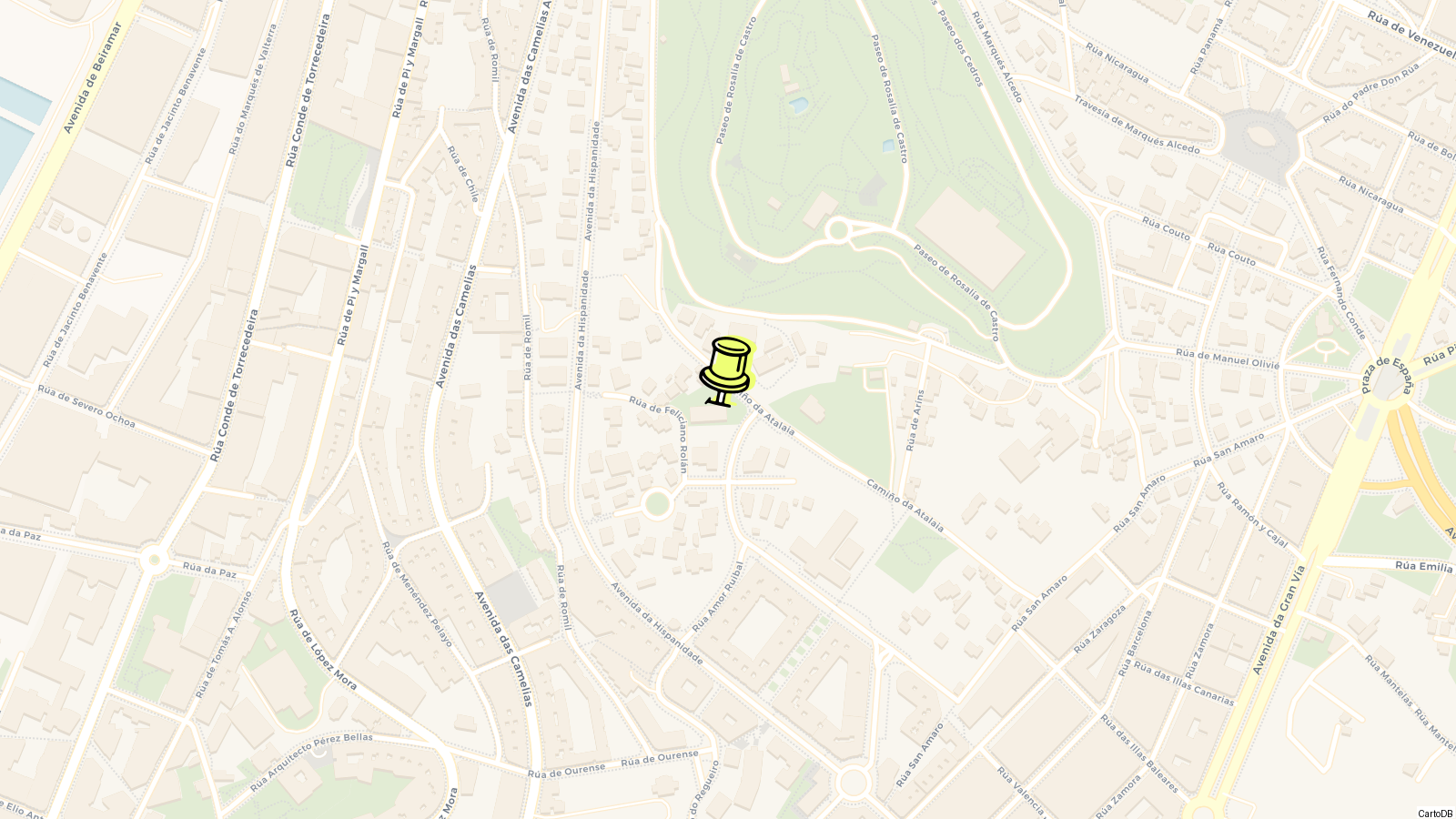
You’ll find the building on a slope of Monte do Castro, in Vigo’s old quarter and close to the Castro Fortress. No on-site parking; walk from central Vigo or catch a taxi.
Tips
- If you want to see inside, aim for Mass times: Monday to Saturday at 19:00, Sunday at 11:00 or 12:30. Doors open only for services, don’t expect casual opening hours.
There’s no tourist flow and no official “visiting” window outside these Mass slots, so time your trip accordingly. The current schedule holds as of 2024, with slight adjustments possible for special religious occasions. Call +34 986 411 773 in advance if you need to double-check, especially around holidays.
- You don’t pay to enter; it’s strictly free, but donations help keep the lights on.
There’s no formal request or fundraising stand, but a collection plate sometimes appears at the entrance during services. Bring cash if you want to leave something. The parish relies on contributions for basic upkeep, not grand restoration projects.
- No strict dress code, but you’ll be sitting among regular parishioners, avoid tank tops or beachwear. Cover shoulders, skip hats inside. This is an active parish, not a tourist display.
Evening Mass tends to draw local workers dropping in after work, while Sunday morning is family-heavy. If you want minimal fuss, the Saturday evening (vigil) Mass is usually quietest.
- The church sits on the slopes of Monte do Castro, so getting here means a short but noticeable uphill walk if you’re approaching from the centre.
The site’s elevation puts it near Vigo’s historic core and a stone’s throw from the Castro Fortress. There’s no church parking; use street spots below or come on foot. If mobility is an issue, factor this incline in, public transport gets you close, but not quite to the top.
- If you’re interested in local Holy Week customs, the image of Nuestra Señora de la Soledad is the focus of processions here, these services draw a much bigger crowd than regular Masses.
This Marian image is brought down from the sanctuary during processions, a tradition unique to this parish since the 1960s. Outside of Holy Week, the vibe is much quieter, and most days you’ll have the sanctuary to yourself if attending Mass.
Know this destination? Help us improve
Your local experience is valuable to other travelers.