Church of the Santísima Trinidade, Ourense
church building in Ourense, Spain

Essential info
Visit details
Overview
Two stone towers flank the main façade, giving the Church of the Santísima Trinidade a defensive, almost castle-like look that stands out even among Ourense’s historic churches. Much smaller than the nearby cathedral and physically overshadowed by the later city, it still gets a steady trickle of locals slipping inside for mass or quiet prayer.
The two cylindrical towers aren’t ornamental, they’re a rare survival from the building’s earliest phases and mirror the fortified design seen in the Cathedral of Ourense. It’s easy to see why this place gets mistaken for a miniature fortress at first glance. The square in front, Plaza de la Trinidad, is often almost empty except after Sunday mass when a handful of neighbours gather outside.
Architecturally, the building is a patchwork: its bones are late Romanesque from the 12th century, but everything you see is layered, Gothic-flamboyant windows and rib vaults, a full Renaissance entrance portico transplanted from the Hospital of San Roque, and Baroque ornament inside. Portugal Visitor Guide calls it “small but architecturally significant,” and that’s right: it’s one of very few Ourense churches where you can read five centuries of changing tastes in one glance.
Even the entry sets the tone, a Renaissance portico heavy with medallions and fantastic creatures, all originally part of the city’s pilgrim hospital. Local tradition ties the hospital to the city’s famous thermal springs, which made Ourense a magnet for weary travellers as far back as the 12th century. The layered façade is both deliberate and accidental: each period left its mark, and nothing was ever erased.
Inside, the nave’s modern smoothness gives way to a riot of carved detail: a mid-1500s Plateresque main retablo in deep green and gold, two colour-matched Baroque side-altarpieces, and niche figures from Saint Lucy to the Virgin of Carmen.
It’s a parish church at heart, not a museum or major tourist draw, but it’s worth a slow circuit if you’re in central Ourense. Entry is free. If you walk in during mass, expect regulars rather than tourists in the pews.
History
Early origins and Romanesque beginnings
Construction of the Iglesia de la Santísima Trinidad began in the late 12th century, making it the oldest preserved church in Ourense. The church was established alongside the Hospital of the Trinity, a pilgrims’ shelter likely connected to Ourense’s famous thermal springs, which have drawn visitors since Roman times. At its core, the building retains Romanesque features typical of the period: thick walls, semicircular arches, and a sturdy, fortress-like aspect.
That original Romanesque structure is still recognisable under later modifications. Unlike the city’s cathedral, Santísima Trinidad served mostly the sick and travelling, so it was built smaller. The site’s link with the Hospital of the Trinity made it a hub for medieval pilgrims moving through Galicia, especially those drawn to the healing hot waters or continuing west to Santiago.
Medieval expansion: 15th–16th century remodelling
Between the 15th and 16th centuries, the church underwent its biggest changes. The main body was rebuilt with Gothic-flamboyant decoration layered over Romanesque foundations, and the original layout was altered to suit changing tastes and needs. This is when most of the architectural “mashup” emerged: a plain, fortress-like shape dressed up with new, more decorative flourishes.
Renaissance influence crept in too. The entrance gate, which now acts as a visual focal point, wasn’t from the church’s own build. In the 16th century, they dismantled the portico of the Hospital of San Roque, another local landmark, then reassembled it at Santísima Trinidad. This portal now frames the doorway, carved with medallions of Hippocrates and Galen, as well as a figure of Saint Roch and his dog. It’s topped by an angel and baroque myth-creatures, a jumble typical of the period’s taste for mixing sacred and secular.
Layered centuries
By the end of the 16th century, Santísima Trinidad showed all the marks of incremental tinkering: Romanesque massing, Gothic details, and a Renaissance façade. The interior saw ongoing upgrades, including Baroque side-altarpieces added in later years. Despite the piecemeal construction, the church’s small size and varied decoration tell a clear story of local priorities, big enough for a busy parish, sturdy enough for safety, and just ornate enough to keep up with passing trends.
The atrium’s crucero doubles as evidence of religious layering in Galicia’s cities: Christians built right over Roman graves, reusing sacred land rather than stripping it bare. It’s not a unique move, walk anywhere in old Ourense and you’ll step across reused Roman blocks, but here it’s explicit, thanks to the documentation of the necropolis and the survival of the cross itself.
The cross isn’t some generic replacement. Jácome de Moure was known in Galicia for his work on calvaries, and this one features not only the usual crucified Christ, but also the Pietà (Mary holding the dead Christ) and the four evangelists, classic Plateresque iconography, with its detailed, almost “embroidered” stonework. The fact it was sited over a necropolis added symbolic resonance for locals, who would have been keenly aware that their church stood on ancient foundations.
Parish life and the hospital connection
Santísima Trinidad didn’t just shelter pilgrims and locals, it also maintained close ties with the Hospital of the Trinity, from the outset in the 12th century. While Ourense’s thermal springs were a draw for Romans and medieval folk alike, the hospital cared for those seeking cures or just passing through. The church essentially served as the hospital’s spiritual side, with priests tending to the sick and to travellers who needed more than a hot soak.
The hospital itself vanished long ago, either absorbed into newer facilities or closed when newer medical practices arrived. What survives is Santísima Trinidad’s dual character, as a neighbourhood parish and an old waypoint for the sick and wanderers. Today, the hospital’s memory lingers mostly in the church’s dedication, its unusual entrance, and in the old city’s street names referencing the pilgrim and hospital routes.
Survival through modern times
Unlike many inland Galician churches that suffered neglect or wholesale reconstruction, Santísima Trinidad stayed largely intact through the 19th and 20th centuries, shielded, perhaps, by its size and practical parish role. Most restoration work has focused on stabilising the fabric rather than erasing the visible layers of history. What you see today is a compact, patchwork record of changing tastes and needs from the 1100s to the present. The reason it feels so “layered” isn’t by accident, no one ever had the budget or intent to replace the whole thing at once.
Today, the church still hosts daily Mass and you’ll find locals, not just visitors, stepping in and out all week. It’s not a museum and never was, Santísima Trinidad remains a functional link between medieval Ourense’s needs and the present-day life of the city.
If there’s a single “thread” running through eight centuries here, it’s the survival of practical faith. Even the elaborate altarpieces inside, polychrome, gilded, full of 16th- and 17th-century bravado, were designed for parishioners, not only for show. Compared with more famous Galician churches, Santísima Trinidad is humble, but that’s kept its history remarkably clear to read.
Visiting
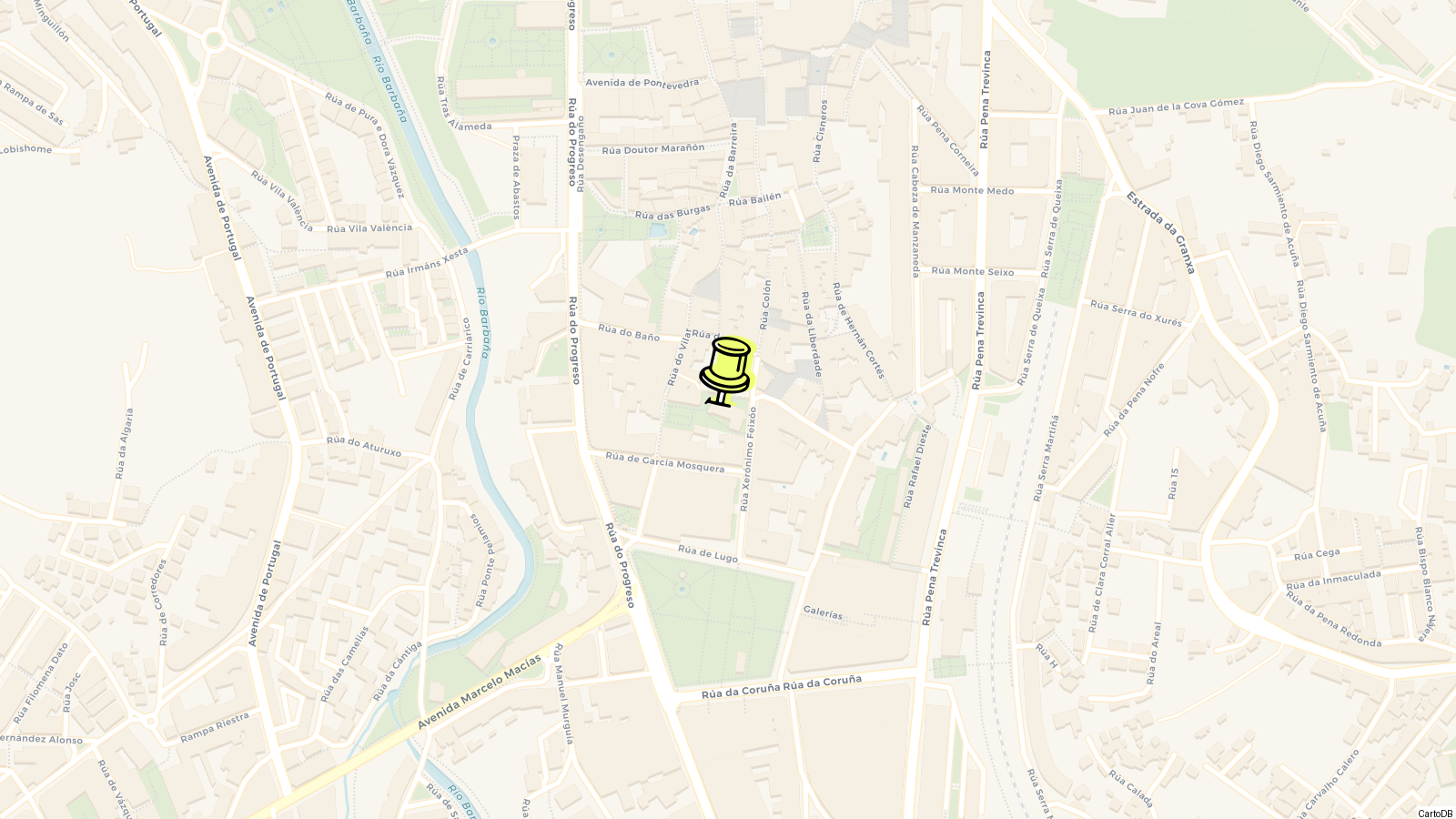
Arrive at Plaza de la Trinidad, Rúa Padre Feijóo 8, a few minutes’ walk from the pedestrian heart of Ourense. Entry is free; don’t look for a ticket counter. Most visitors pause first at the gateway: a Renaissance portico relocated here from the old Hospital of San Roque, decorated with medallions of Hippocrates and Galen, a carving of Saint Roch (complete with his dog), zoomorphic details, and a guardian angel perched above.
Stand here and note how the portico’s medical figures and wandering saint reflect the building’s history as a parish for pilgrims, many arriving for the therapeutic springs of Ourense. The gate’s displacement from the 16th-century hospital means even the entrance is a recycled artefact, not an original feature. Look closely: the figures of Hippocrates and Galen symbolise the care once offered by the hospital, and Saint Roch (patron against plague) stands with his loyal dog, a nod to the medical anxieties of the era. Grotesque, almost playful, faces lurk in corners of the portico, classic Renaissance whimsy intended to guard sacred thresholds.
Inside the walled atrium, you cross a 15th-century Plateresque crucero, built right above an old Roman burial ground. The sculpted stone cross is elaborate: Christ’s crucifixion, the Pietà, plus the four Evangelists, each figure attributed to Jácome de Moure.
Most guidebooks walk straight past this cross, but it’s older than every building on the nearby plaza. The Roman necropolis beneath your feet is why the church stands here at all, a continuity from pagan burials to Christian sanctuary. The plinth, squared and mossy, is heavy with wear; the four Gospel writers perch at the instrument’s base, easily missed unless you crouch.
Push the solid door and enter a single nave, effectively one long hall. Immediately on the left, the double holy-water font sits by a carved figure of Saint John the Baptist, most newcomers dip a hand without looking up at the subtle decoration above. You step onto a floor plan unchanged for 900 years, though most visible features are later touches in Gothic-flamboyant or Baroque style.
The focal point is the Plateresque retablo in the polygonal presbytery, built by Cornielles de Holanda in the 16th century. It’s a massive, gilded piece: green-black background, burnished gold leaf, five stacked tiers with five vertical rows, ending in a sculpture of the Sacred Heart of Jesus. Two side-altars match in style and colour, one dedicated to the Immaculate Conception, the other to Saint Joseph.
Check each altar: on either side you’ll see square niches holding devotional statues of the Virgin of Carmen and Our Lady of Fatima. Step closer to the walls and you’ll find Saint Anthony of Padua with his lilies, and Saint Lucy (Santa Lucía de Siracusa) gazing out in polychrome. Behind the main altar is a Calvary group, the Virgin in mourning, Christ crucified, and Saint John grouped together, likely older than the side altars. The variety of sculpture here is as much about local piety as it is about artists or patrons.
Mass times: Monday–Saturday at 10:00 and 19:00, Sundays and holidays at 10:00, 12:00, and 19:00. Don’t expect access to the sanctuary during services. To contact the parish (in Spanish or Galician), phone +34 988 221 468.
Admission stays free, but donations in the small box by the exit are appreciated for basic upkeep. Wheelchair access is limited; there’s a minor step at the main entrance and no ramp. No modern explanatory panels inside, interpretive info is thin, so bring notes or a guidebook if you like context. Photography is usually tolerated when no service is underway, but don’t expect good lighting except midday.
Tips
- Entry is always free. No tickets, reservations, or guided tour sign‑ups, just walk in during opening hours.
Hours as of 2026: Monday to Saturday, doors open 10:00 to 19:00. Sunday and holiday hours compress to 10:00–12:00 and reopen 19:00. Masses run at those start and end times, so avoid arriving right at 10:00 or 19:00 if you want to explore rather than attend service.
-
Aim for early afternoon (12:00–14:00) on weekdays; quieter moments and you won’t bump into Mass, cleaning, or maintenance. Sunday mornings are active parish hours.
-
Dress code is casual but respectful, uncovered shoulders or shorts above the knee stand out. This is an active church, not a museum. No hats inside.
- Photography is generally permitted, but keep it discreet. Absolutely no flash or tripods, and avoid shooting during Mass. The side chapels (Immaculate Conception to the right, Saint Joseph to the left) are easy to photograph in a few minutes if nobody is praying there.
The 16th-century main altarpiece by Cornielles de Holanda is the highlight, the green-gold polychrome hammers home the late-Renaissance style. Set your exposure for dark wood if the lighting’s poor. Other details like the double holy-water font and the 15th-century Plateresque crucero are worth a look, but much of the stonework can get lost in dim corners.
-
The small Plaza de la Trinidad in front has space to wait or regroup. No shade, few benches. For toilets or a sit-down, you’ll need to leave the church and head into central Ourense.
-
Allow at least 20–30 minutes if you’re interested in details; less if just popping your head in. There’s no formal signage inside, do your homework before you go, or load a page about the 16th-century Hospital of San Roque portico and the figures on it (Hippocrates, Galen, Saint Roch) for reference.
The Renaissance portico framing the atrium comes from the Hospital of San Roque, complete with medallion busts and a very literal representation of Saint Roch’s dog. These details rarely get a mention on-site, so bring context if you like art history.
- Call ahead (+34 988 221 468) only if travelling a long way; the phone is staffed for parish business, not tourism, but they can clarify last-minute closures or changes on feast days.
Know this destination? Help us improve
Your local experience is valuable to other travelers.