Church of San Francisco, Ourense
cultural property in Ourense, Spain

Visit details
Overview
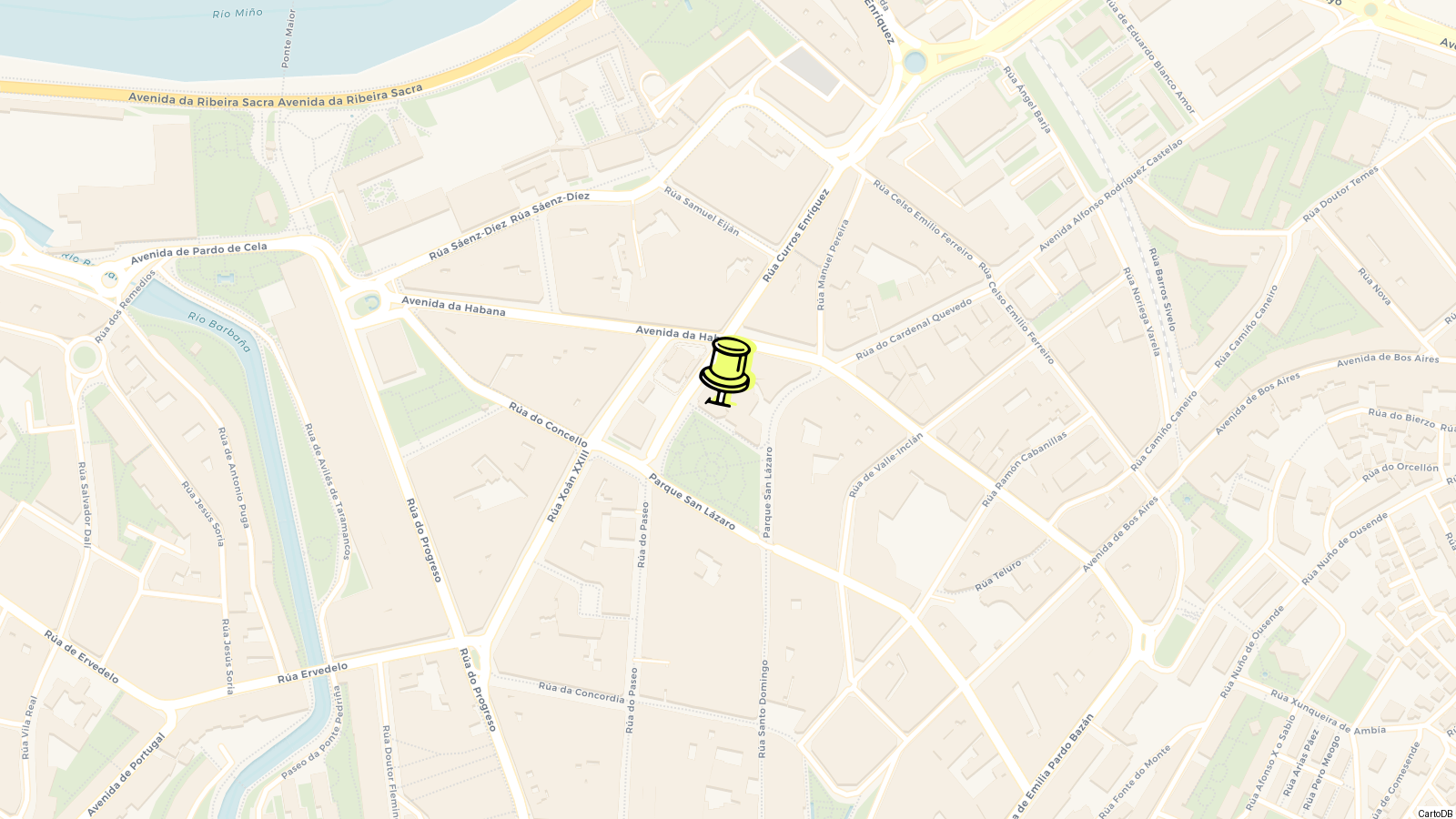
Gothic arches and weathered stone mark the Church of San Francisco, tucked up against San Lázaro Park in Ourense. Unlike most churches in Galicia, this one quite literally moved house: its medieval façade was dismantled stone by stone and rebuilt at its current address on Rúa Xaquín Lorenzo Fernández in 1929, with final touches to the west end only wrapping up in the 1950s.
Few churches in Ourense feel as intimate. San Francisco is officially recognised both as a Bien de Interés Cultural and a national-historic-artistic monument, but you’ll rarely share it with a crowd. Entry is free, and its somewhat smaller footprint compared to the city’s cathedral means more room to wander without bumping elbows with tour groups.
The Gothic stonework here isn’t showy, and that’s part of its charm. What you get are layered stories: from its medieval origins linked to the Franciscan order, to those 16th-century sarcophagi inside (the Noboa, Cadórniga, and Maceda families all have their coats of arms here). The former convent’s cloister survives next door and has housed military barracks, a provincial museum, and, since 2019, even the city’s archive and municipal auditorium.
The location is practical: right by the park, a few blocks from cafés and the city’s main pedestrian zone. It’s officially listed on regional and national tourism sites, and regular Mass is held daily for locals, but most visitors drop in for a look at the architecture and then wander on.
Its current address is C/ Rúa Xaquín Lorenzo Fernández, 7, and it sits at coordinates 42.34194, -7.86361. The church has a tourism office phone (+34 988 231 534) for practical questions. City buses and taxis can drop you almost at the door, but it’s an easy walk from central Ourense. If you’re plotting a route through the old town, it makes sense as a stop before or after San Lázaro Park.
History
Medieval Foundations and the Franciscan Convent
The Church of San Francisco first stood on a hilltop in Ourense in the 14th century, forming part of a Franciscan convent well outside what is now the city centre. The friars chose the spot for solitude, away from city bustle, this was common for mendicant orders at the time. Original medieval features survive in the Gothic details and the church’s old cloister, which remains attached to the complex.
Within the former convent’s grounds, the cloister was central to daily monastic life. The church’s presence on the outskirts reflected the Franciscan ethos and serves today as a record of 14th-century stonework typical for Galician religious architecture. The surviving cloister is not just a backdrop but has hosted various civic functions after deconsecration. Medieval nobility from the region, including the families of Noboa, Cadórniga, and the lords of Maceda, chose this church for their sarcophagi, carving their coats of arms directly into the stone.
Decline, Expropriation, and Urban Growth
By the 19th century, Ourense pushed outward, and the convent precincts lost their quiet. Like other church properties across Spain, the complex was expropriated during the 19th-century confiscations and gradually neglected. The area around the original site near the cemetery became hemmed in by new buildings and roads, with the monks long gone.
The 19th-century disentailment (Desamortización) did to the church what it did across Spain, stripped monastic orders of land and turned former cloisters and refectories to civil or military use. The old Franciscan monastery at San Francisco wasn’t immune: it changed ownership and purpose as the city expanded. By the early 20th century, Ourense’s urban priorities were clear. The church and its cloister sat half-emptied, surrounded by a growing modern city.
Relocation: 20th-Century Urban Planning
The 1929 relocation was done to save the church from decay and keep it accessible to modern Ourense. Each block, window, and Gothic arch in the main chapel and west end was catalogued and reset by municipal workers and masons. The project dragged on through the Spanish Republic and Civil War, with the restored façade not completed until about 1955.
Reassembling a medieval church in the 20th century was a bureaucratic slog, slowed down by funding gaps and the wider upheavals in Spain. By the time the new, urban-facing San Francisco church opened beside San Lázaro Park, the original monastic setting and rural context were gone forever. Only architects and historians know precisely which structural blocks came from the original fabric and which were replaced during reconstruction in the 1950s.
Monument Status and Shifting Civic Uses
In recognition of its architectural value, the Church of San Francisco and its cloister were declared a national-historic-artistic monument in 1951. By mid-century, the old convent’s buildings went through several uses, including a stint as military barracks from 1953 until as late as 1984.
The building shifted from sacred to civil use more than once: after military occupation ended, the attached monastery buildings became home to the Museum of Provincial Archaeology and later (since 2019) the city’s Municipal Auditorium and Archive, keeping the spot a living civic space even as the church proper returned to primarily religious use.
Heritage Status and Today’s Role
The church finally received Bien de Interés Cultural status in January 2025, cementing its role as one of the city’s protected sites. Through all its moves and makeovers, original Gothic tombs of Ourense’s noble families remain inside, family crests still visible in the stone vaults.
Today, the Church of San Francisco stands as both a survivor and a shape-shifter: medieval shell in a 20th-century city park, still home to worship and civic memory. Its history is a patchwork of monastic ambition, urban sprawl, and bureaucratic reinvention.
Visiting
Arrive at Church of San Francisco on Rúa Xaquín Lorenzo Fernández, right at the edge of San Lázaro Park. Entry is free, just walk in through the main door.
There’s no receptionist or ticket check at the door. The nave is usually unstaffed unless a service is underway, so don’t expect a formal visitor desk. The latest visitor information is on the city’s website, and the church’s own page is here: official tourism site.
On a typical weekday, you have nearly three hours in the morning to look around (09:30–12:00), and evening access resumes just before 19:30 Mass. Sundays open earlier, but the flow of services means the best gap is after 12:15, when things are quiet.
The doors open for Mass and lock promptly afterwards, so you’re unlikely to get in late at night. Morning openings are reliable, aim for between 10:00 and 11:45 if you want to look around without a crowd. Organised tours are rare. If you’re in a group, call ahead at +34 988 231 534 just to be safe.
As you walk inside, most visitors make a slow circuit down the single nave. On your left, several 16th-century stone sarcophagi bear the coats of arms of Ourense’s old noble families: Noboa, Cadórniga, and the lords of Maceda. Side altars and the modest choir let you see the church’s size up close, intimate for a building this old.
These sarcophagi are not just decoration. They’re detailed, with stone effigies and family crests: the Noboas’ wolf, the Cadórnigas’ rampant lion, Maceda’s arms quartered. The original layout was tightly packed, but the move in the 20th century added light, giving these monuments more breathing room.
The atmosphere inside is quiet, with patchy natural light and little in the way of modern displays. You’re left to spot the Gothic arches, sculpted capitals, and battered stone walls without interpretation panels or museum-style labelling.
Outside, look up: the main door and western façade you see were rebuilt piece by piece after 1929, when they were hauled here from the church’s old hilltop site. Locals will sometimes point out oddities, a sculpture aligned a little strangely, or a mix of stone shades, evidence of their move.
The front entrance is one of the few places to spot this process up close. Look at the margins along the arch: breaks in the original lines show where the medieval masonry was cut and rebuilt. The work began in 1929 but wasn’t truly finished until after 1955, due to delays in reconstructing the western side.
Given its unstaffed, peaceful vibe, don’t expect a bustling spot, this is a reflective church, not a tourist circus. Most people linger 10–20 minutes, or longer if they’re architecture or history geeks.
For any questions, try the Diocese on +34 988 231 534, or ask at the tourism office by San Lázaro Park.
Tips
- Arrive early if you want the church to yourself. Masses are held most days at 09:30, 12:00, and 19:30, with five services on Sundays (09:00, 10:00, 11:00, 12:00, 19:30), so time your visit for the gaps unless you wish to attend Mass.
Midday on Sundays is the busiest time. Local families stream in for the main service, and you might find the nave and side chapels crowded. If you want to linger and examine details like the 16th-century sarcophagi, aim for a weekday morning before 11:00 or any afternoon after 13:00 (except Mass at 19:30), when the church is typically quiet.
- Dress codes are not enforced, but the Church of San Francisco is an active parish. Avoid shorts and sleeveless tops out of respect, especially during Mass.
- Bring a light jacket year-round. The thick, original stone stays cool even when it’s baking outside. Ourense hit 44.1 °C in July 2022, but the interior remains a refuge from the heat.
Winter in Ourense is mild, but the church interior feels chilly compared to the city streets. Even in summer, stone benches and shaded corners can be cold for a prolonged sit.
-
Photography is permitted except during Mass. Use common sense, no flash, no tripods, don’t crowd parishioners.
-
The church is right by San Lázaro Park and central pedestrian streets, so you’re steps from cafés and benches if you want to decompress after your visit.
-
The surface is even and there are no steep stairs at the entrance, but some flooring inside is uneven medieval stone. Watch your step, especially in the dimmer side aisles.
If you want to trace the history of the families buried here, look for the sculpted coats of arms on the 16th-century sarcophagi along the nave, they mark the graves of the Noboa, Cadórniga, and lords of Maceda.
-
For questions or guided visits, phone +34 988 231 534 (diocese office). English may be limited, so basic Spanish or Galician helps.
-
Wheelchair access is possible via the main entrance, but not all chapels and side areas are step-free. No accessible toilet on site.
Know this destination? Help us improve
Your local experience is valuable to other travelers.