Termas da Chavasqueira
This is a public bath where you can enjoy the hot water of the city

Visit details
Overview
On a misty morning beside the Miño river, clouds of steam drift above stone pools just a ten-minute walk from the centre of Ourense. Termas da Chavasqueira is the city’s closest and most popular spot for open-air thermal bathing, city-maintained, always free to enter, with lawns and changing rooms right next to the Millennium Bridge. Local people soak here after work; spa tourists sometimes skip the centre altogether and come straight to the river.
The main draw is simple: the water emerges at 63 °C, rich in bicarbonate, sulphur, and sodium, subdued to a body-friendly 40 °C in the pools. Three million litres a day surge up from the depths across Ourense, it’s not just another spa town, but the second-richest city in thermal waters in Europe after Budapest.
Most flock to the free riverside pools, but there’s also a paid option: the rebuilt private spa, which runs a Japanese-style circuit with three outdoor stone rotemburo pools at a steady 41 °C, sauna, and various treatments. Entry is €5.15, or €4.65 for pensioners and minors, with opening hours stretching as late as 01:30 on weekends (closed Mondays). The 2019 fire that destroyed the original wooden bathhouse forced a rethink; as of 2025, the new complex also draws power from its own photovoltaic panels. Locals still debate whether the vibe matches the old one, but the hot mineral water remains identical.
You can walk, cycle, catch bus line 26, or hop the quirky little “Tren de las Termas” tourist train to get here, all drop you nearly on the doorstep. Parking is free if you’ve come by car. From the riverside path, the stone pools sometimes feel hidden only by the steam, with a siren sculpture by Acisclo Manzano drifting in and out of view as the river rises and falls.
The surrounding paseo termal is one continuous riverside walkway linking several thermal areas, if one spot is busy or closed for cleaning, you won’t waste your trip. Local families treat it as an extension of their backyard. Don’t expect luxury at the free pools, but the core experience is unscripted: scalding hot spring water, a view of the Miño, and whoever you happen to share a stone ledge with that evening.
History
Romans picked this exact stretch of Miño river over 2,000 years ago, drawn mainly by the scalding springs you still see steaming by the bank today. Thermal bathing has been part of daily life in Ourense ever since, though the open-air pools at A Chavasqueira as you see them now are a late-20th-century creation.
The Romans left few visible traces right at Chavasqueira, but ancient masonry and Roman engineering pop up at other springs along the Miño, as well as the city’s iconic Ponte Romana. Hot springs were central to Roman urban planning in Galicia, with public baths doubling as social and economic hubs. The tradition of communal thermal bathing, lapsed after the decline of Roman rule, resurfaced at Chavasqueira with modern investment into open-access pools in the late 1990s.
For most of modern history, the riverside area around A Chavasqueira was a wild, unregulated zone. Locals would slip into muddy banks and use the thermal seep for a soak, no structure, no caretaker, just a patch of warm water and stones. Properly built, city-managed pools only appeared when Ourense started leaning into public thermal tourism around the turn of the 21st century.
The 1990s–2000s brought another layer: a private Japanese-themed bathhouse built beside the free municipal pools. The design nodded to onsen style, with wooden pavilions, minimalist stonework, and paid entry for a full spa circuit. This split the Chavasqueira site into two parallel tracks, one free and public, one commercial.
Paid entry allowed access to extra pools, a dry sauna, and “rotemburo” open-air sections at higher temperatures. The overlap of barebones free pools and ticketed, pampering spa made Termas da Chavasqueira stand out from most other city springs. For over two decades, both ran side-by-side, pulling in all types: locals in flip-flops, visiting families, and package-tour wellness seekers.
Catastrophe hit in the early morning of 24 April 2019, when a fire destroyed every bit of the private bathhouse’s wooden construction in hours, shutting it down on the spot. No one was hurt. Locals lost their regular haunt overnight, and reconstruction work dragged out for years, delayed further by river floods and permit issues.
In 2025, with new energy regulations in play, the rebuilt complex reopened, now featuring photovoltaic panels for renewable power. The city reactivated the public pools first, now with strict capacity controls and a permanent caretaker, then the private spa circuit.
The process was anything but quick. After the fire, insurance payouts stalled and regional authorities debated how (and whether) to reconstruct so close to the river. Flooding delayed repairs longer than planned, chunks of stonework and lawn had to be rebuilt after repeated submersion. The decision to add renewable energy (photovoltaic panels) was driven as much by new building codes as ecological pride. When the new private circuit reopened in October 2025, the divide between open-access and paid spa continued, just with shinier tech and tougher safety protocols.
Official legal status shifted through the 2000s, but by the time the spa reopened, the site was protected under Spanish Historical Heritage Law 16/1985. Chavasqueira is now as established a part of Ourense as any bridge or plaza, a newer tradition maybe, but one shaped by centuries of hot-water obsession.
Visiting
The public hot spring pools of Termas da Chavasqueira run alongside the Miño river, directly at the foot of the Millennium Bridge. The main public complex is outdoors, with simple stone basins surrounded by lawns and city-maintained changing rooms. No entry fee, no booking needed, just show up with a towel, swimsuit, and flip-flops. As of June 2025, the public area runs from 10:00 to 22:00, daily, with a caretaker keeping numbers in check and closing promptly at night.
After a nine-month closure, the city reopened the public pools with new rules: numbers are capped by the on-site caretaker, and night access is shut off at 22:00 to stop late-night noise and rubbish problems. Expect a short wait on sunny weekends, as capacity checks can mean brief queues. The facilities are basic, showers and changing huts, lawns for leaving your gear, but no lockers or food kiosks. The water emerges at 63 °C, cooled to about 40 °C by the time it hits the pools; mineral content is moderate, with a sulphurous note you’ll smell before you settle in.
If you want something a bit fancier, the rebuilt private spa at A Chavasqueira reopened in October 2025 just beside the public pools. Admission is €5.15 (or €4.65 for pensioners or minors), and you get access to a Japanese-style thermal circuit: three outdoor stone rotemburo pools at 41 °C, sauna, and a small indoor relaxation zone. The private area is open Tuesday–Thursday 09:00–23:30, Friday–Saturday 09:00–01:30, closed Mondays.
This private spa sits on the riverbank, separate from the free pools by a fence but sharing the same water source. After a fire in 2019, everything was rebuilt: the complex now includes photovoltaic solar panels for hot water and electricity, a detail regulars appreciate in winter months. Spa sessions work on a first-come, first-served basis; if you arrive near closing, they may refuse entry. You’ll find massage tables, a sudarium (steam bath), Japanese ofuro tubs, and some limited aromatherapy, all very simple, but functional. Lockers, showers, and towel rentals are available, but bring your own flip-flops to avoid the €2 rental mark-up.
Look up from the pools and you’ll spot a sculpture standing partway in the river: a modernist siren by local sculptor Acisclo Manzano. Depending on the Miño’s mood, she’s either half-visible or completely drowned out.
If you’re curious, the sculpture is one of Manzano’s better-known public works in Ourense. The city’s hot spring stretch is peppered with riverside contemporary art, of which this siren is both the closest and most visible to bathers lounging at Chavasqueira.
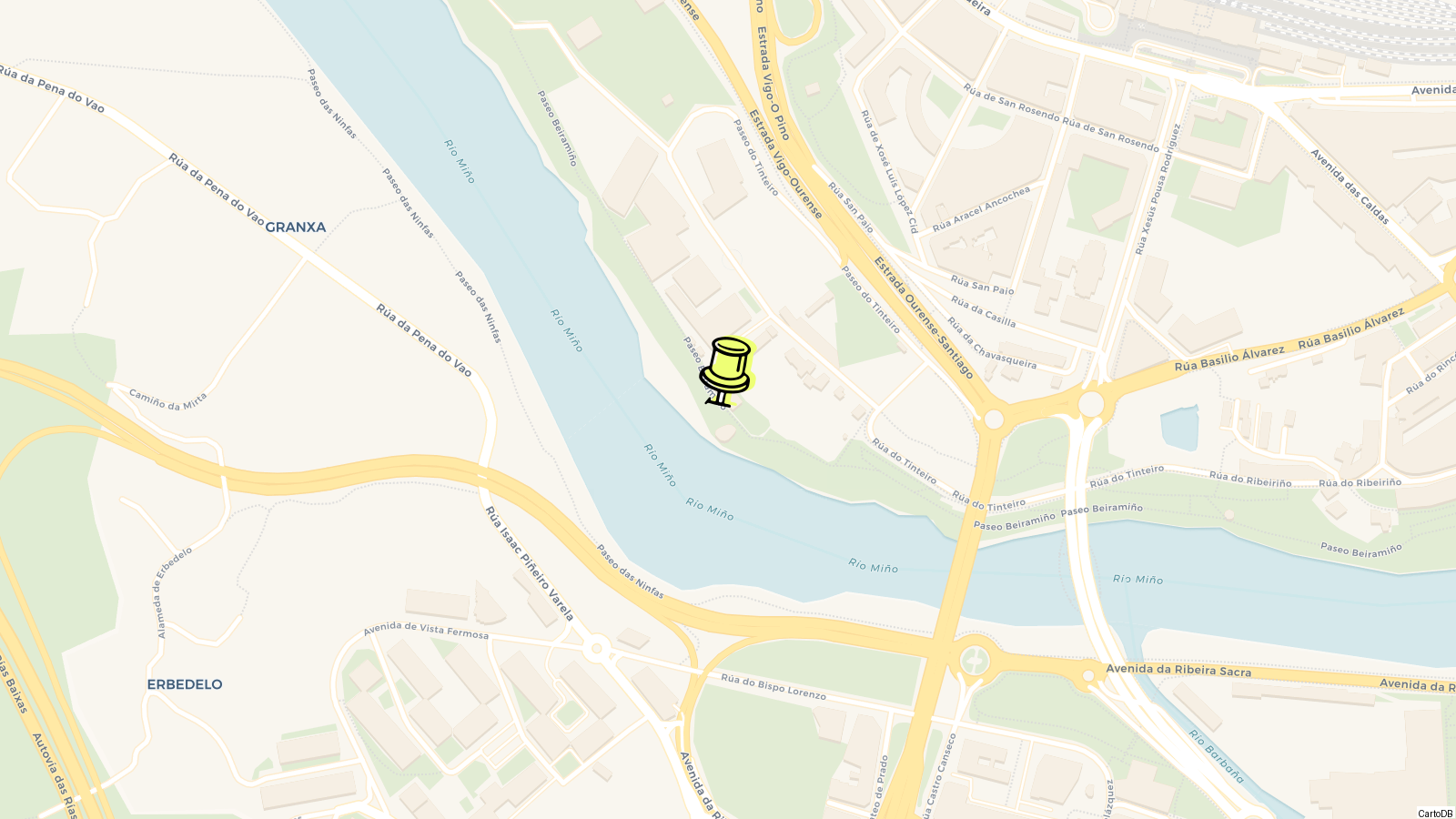
The site sits on the city’s riverside path (paseo termal), which links several hot spring spots in town. It’s barely a ten-minute walk from the true city centre, making it easiest for day-trippers and anyone staying in the old quarter.
Tips
- Bring proper swimwear, swimming costumes are mandatory, and you’ll be turned away if you try to bathe without one.
- Flip-flops and a towel make things easier; the stone gets slippery and can get muddy after rainfall.
- There are no lockers at the public baths, keep valuables to a minimum and don’t leave anything unattended.
- The water temperature is usually around 40 °C, but it bubbles up from the ground much hotter. Test the first pool with a toe before sinking in. You’ll smell the sulphur right away, but it clings your skin far less than in many other springs.
- On weekends or rainy evenings, expect queues. Each public pool has a maximum capacity, and staff keep count. For a quieter soak, early mornings (from 10:00) and weekdays are best.
- There’s no entry fee for the open-air public pools, they’re maintained by the city and open daily 10:00–22:00, but the private spa charges €5.15 (€4.65 for pensioners/minors) and has separate hours.
- Changing rooms are simple and can get crowded; come already changed if you prefer privacy.
- The site sits right beside the Miño river, watch water levels after heavy rain. Flooding can close the baths at short notice.
The pools are strictly separated: public areas to the north, private spa to the south. There’s no cross-access between them. The city gates the public complex outside operating hours, and police will fine anyone jumping the fence. On arrival, look for signs showing current occupancy; the posted figure is enforced. During peak periods around local holidays or festivals, wait times can exceed 30 minutes. Staff communicate closures (maintenance, heating issues, river flooding) at the entrance only, not online. For the private spa, advanced booking isn’t strictly necessary unless travelling as a group, but entry may be refused if already full.
Outside, the grass lawns get muddy during or after rain, locals bring old towels for sitting. If you want to shower after bathing, the public facilities have only cold water. All pools are unguarded, and children must be supervised. If you want to explore the riverside even further, the thermal promenade (“paseo termal”) runs for several kilometres east and links at least three other open-air hot spring areas.
If you want a full spa experience (Japanese-style baths, sauna, treatments), go for the private circuit. It stays open into the small hours on Friday and Saturday, so locals book late-night slots to dodge crowds.
You’ll see a partially submerged bronze siren just off the riverbank, a sculpture by Acisclo Manzano, a local artist. Some days she’s completely underwater, other times visible from head to tail, depending on river flow.
Know this destination? Help us improve
Your local experience is valuable to other travelers.