Termas de Outariz
Visit details
Overview
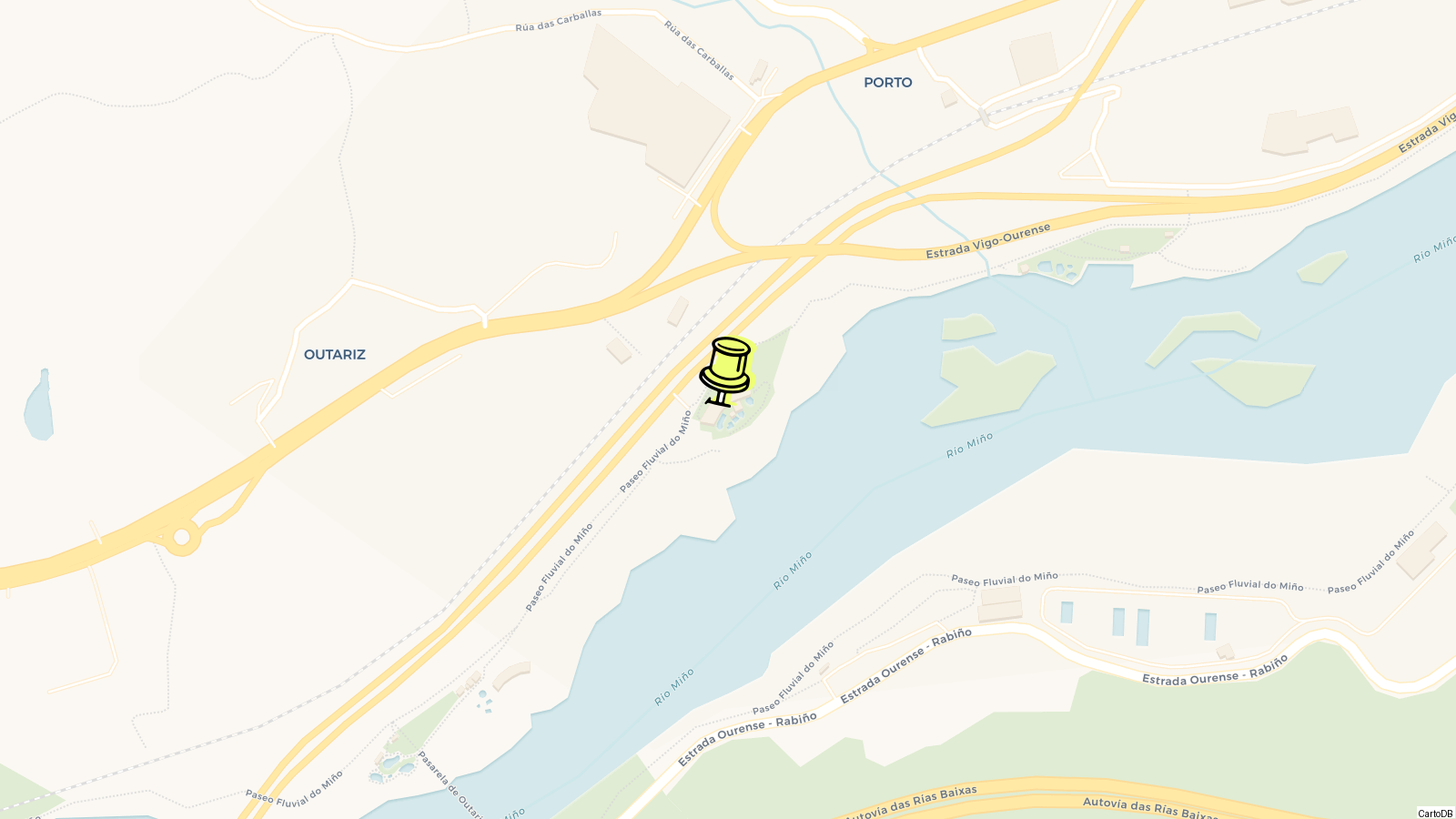
Steam fogs up the terrace beside the Miño, and you’ll spot locals and out-of-towners sliding between stone pools, towels around their waists and plastic slippers forgotten somewhere along the edge. You’re three kilometres from central Ourense at the largest open-air thermal complex in the municipality, Termas de Outariz.
This isn’t a single pool but a purpose-built thermal station with capacity for about 200 people at once. You’re paying €5.50 for a two-hour session at the private facility. The setup is designed for soak-and-rotate: cycle slowly between pools heated between 36 °C and 41 °C, with alternating indoor and outdoor baths. Water comes straight from the same mineral-rich springs the Romans once used when they picked Ourense as a base two millennia ago.
The mineral-medicinal waters here are formally classed as weakly mineralised, alkaline, fluorinated, and bicarbonated, claims you’ll see on the wall but can actually taste in the slightly slippery softness of the water. Bathing temperatures in the private circuit stay between 36 °C and 41 °C, far cooler than the spring’s actual emergence point, which can hit 60 °C nearby, strictly for filling, not dipping.
Half the appeal is how easy it is to join: you can skip formalities by heading past the paid spa to the freely accessible Pozas de Outariz or Burgas de Canedo pools, landscaped into the riverside and open all week. Those are stone basins tucked into greenery, with simple showers and benches.
The private and public pools lie side by side but feel very different. The private Outariz spa limits numbers, so you rarely share a pool with more than a handful of bathers. The public Pozas, by contrast, attract everyone from families in flip-flops to elderly regulars breaking up their afternoon walk. Facilities are basic, just landscaped edges, changing huts, and open-air showers. Water in the public pools runs at 38–40 °C (cooled from springs that rise above 60 °C), with the same weakly mineralised and slightly alkaline composition as the paid spa circuit.
The Termas de Outariz have become the anchor thermal stop for anyone coming to Ourense looking to soak in hot water year-round, locals and visitors both. Come for the social swirl, the sustained heat, or the riverside setting. If nothing else, the price means there’s no reason not to try both.
History
Romans and the discovery of the springs
Romans settled in Ourense over 2,000 years ago, drawn specifically by the steaming thermal springs on the banks of the Miño. The area that now includes Termas de Outariz became known for its natural hot water, which the Romans used for bathing and as a local meeting point.
The site benefited from the same set of mineral-rich, hyperthermal waters that bubble up throughout the Miño’s floodplain. Roman structures focused mainly on the central city, where the As Burgas springs emerge, but the Outariz side pools were tapped and used by local populations and likely saw basic Roman stonework as the reputation of the baths spread up and down the river. The link between “health” and bathing was strong enough that the Romans gave the region its Latin name, Auriense (“city of gold”), for both the gold-panned from the river and the perceived value of its warm waters.
Post-Roman, medieval and early modern use
Through the Middle Ages, these springs remained a fixture of local life, but documentation is scarce. In this period, Outariz was mainly rural, with the focus of communal bathing still in the city centre at As Burgas rather than on Outariz’s present site. Still, villagers and small landholders kept using the riverside pools for medicinal soaks, as knowledge about the mineral content, alkaline, fluorinated, bicarbonated, continued to percolate by word of mouth.
Outariz, sitting outside the city, escaped both the direct investment and the heavy later Christianisation that transformed the downtown springs into formal “fontes santas.” The area slid under the radar, really only used in earnest by people living nearby. None of the great monastic or civic projects of the period focused on Outariz, which kept it functional but rustic.
19th and early 20th-century changes
By the late 1800s and early 1900s, Ourense city expanded and transport links improved, giving people easier access to riverside sites like Outariz. More Galicians began to use the pools for both leisure and “curas” (cures), prescribed soaks for aches or skin conditions. Still, there was no formal complex here, just informal use of the open pools.
In contrast to the grand spas built alongside other Spanish hot springs, Outariz continued to function as a “poza” (natural pool) destination for the working majority. It was only in the late Francoist period and into the transition to democracy that improved riverside roads and development of the “sendas termales” started to make Outariz accessible for more than just the nearest parish.
Modern era: public and private pools
Demand for open-air bathhouses grew from the late 20th century, as Galicians and visiting Spaniards rediscovered the region’s appeal as a thermal destination. The Outariz site emerged as one of Ourense’s largest open-air thermal complexes. Landscaped public pools (“Pozas de Outariz” and “Burgas de Canedo”) were built first and remain free, open-access, and city-maintained.
The modern, pay-to-enter facility at Termas de Outariz followed as the idea of Japanese-style thermal circuits took hold, blending local stonework with managed pool flows and spa facilities. As of 2026, the private circuit costs €5.50 for a two-hour session, and capacity tops out at around 200 people at peak. Development focused on sustainability and keeping the waters’ original mineral makeup, a selling point rooted in historical use.
Continuity with the past
The springs at Outariz are still fed by water at roughly 60 °C, cooled down to a comfortable 36–41 °C for bathing. Today’s visitors follow, almost exactly, a line of local bathers stretching back 2,000 years.
Most of what separates a modern spa-goer from a Roman or a medieval villager is the stonework and the regulated pool occupancy. The water mineralisation is unchanged, and public pools remain open every day for free use, just as they have been for generations. Outariz, once a sideline to the grander city-centre baths, is now the city’s flagship for both tradition and low-cost thermal tourism.
Visiting
Expect two different experiences at Termas de Outariz: the paid “Estación Termal Outariz” complex, and the separate public pools (Pozas de Outariz and Burgas de Canedo) just along the river. They’re near each other but run separately, with their own rules and pricing.
At the Estación Termal Outariz, entry gets you a spot in the private circuit of stone and wood outdoor pools for two hours, costing €5.50 per adult as of 2026. The place holds about 200 people max, and it’s first-come-first-served, no pre-booking, just show up and queue if it’s busy. You’ll move between pools at temperatures from 36 °C to 41 °C, with views of the Miño and landscaped gardens. Facilities are modern, with changing rooms and showers.
If you arrive at a peak hour and they’re full, they’ll turn you away until spots clear. Once inside the private area, you cycle through the thermal circuits: a series of pools and baths in different temperatures, designed to be done in a sequence from hot to cold for traditional hydrotherapy. The circuit is strictly two hours. There’s a clock at reception and staff keep time, don’t try to sneak extra minutes. Inside, shoes are left at the edge and staff enforce basic poolside rules (shower before entering, children closely supervised, no food in pool areas). The pools use lightly mineralised, alkaline, fluorinated, and bicarbonated spring water piped straight from the source.
The public pools are a short walk away, accessible for free every day. These get busy, especially in good weather. There are basic changing rooms, showers, and landscaped grass areas beside the river. You’re responsible for your own towel and gear. No ticket, no time limit, but no guaranteed space either.
Both public and private pools use water that’s naturally weak in minerals but rich in bicarbonate and fluoride, typical of this corner of Galicia. The public Pozas de Outariz and Burgas de Canedo have landscaped stone pools, and the banks usually fill up with bathers who cycle between thermal water and a cold splash from the Miño itself. The pool temperature sits around 38–40 °C. There’s no staff supervision, so don’t expect spa-level quiet or strict rules: summer afternoons turn communal.
Hours change by day. The Estación Termal opens Monday, Wednesday and Thursday 10:30–23:00; Friday and Saturday 10:00–01:00; Sunday 10:00–23:00. Tuesdays it’s shut. The public pools don’t have official hours, they’re unsupervised and always open, but avoid early mornings in winter when the river fog makes visibility and footing lousy.
If you want the full amenities, heated changing rooms, monitored pools, drink service, stick with the Estación Termal and buy a ticket. For a zero-budget soak, the public side works but expect crowds, mixed etiquette, and cold showers at best. Phone the spa (+34 988364650) to check for closures or maintenance before you make the trip.
Tips
- Bring footwear for wet and slippery stone paths. The pools have rough edges and ground surfaces aren’t made for bare feet.
Plastic slides, flip-flops or water shoes are typical. The complex doesn’t rent or sell them on site. Some locals go barefoot, but it gets painful fast, especially in colder months when the walk from pool to pool is chilly.
- Don’t count on the Tren das Termas: it now stops short of Outariz. The bus is cheap (ordinary urban fare, under €1) and runs every day.
Before January 2026, the Tren das Termas was the straightforward option, running from Plaza Mayor directly to the baths for €0.85 each way. Now, everyone uses Ourense’s bus line 5, which may be busier at peak times. Get off at Reza parking and expect a brief walk.
-
The private circuit has a 2‑hour time limit, strictly enforced, for €5.50 per person. Arrive a bit before your slot, as lines can move slowly at evenings and weekends.
-
Towels aren’t included. Bring your own or expect a rental fee if available.
The Estación Termal Outariz complex sometimes rents towels, but stock is limited, especially on busy days. If you forget, neighbouring shops aren’t reliable for buying one in a pinch. Robes aren’t mandatory but help in cooler weather if you want multiple circuits between pools.
-
No entry on Tuesdays. The paid termal circuit closes every Tuesday, but the public pools remain open daily. No exceptions on holidays.
-
If you want quiet, go weekday mornings. Fridays and Saturdays after 19:00 can get crowded and noisy. Capacity is 200, but weekend turnover feels like more.
Late evening (after 21:00) can be appealing: the pools are lit and the air cools off, especially after the city’s hottest summer days, which can top 44°C. But if you show up late on a Friday or Saturday, expect to share the pools with a lot of voices.
-
Water temperature in the private pools ranges from 36–41 °C. The public Pozas de Outariz and Burgas de Canedo pools (free and next door) feel slightly cooler, usually 38–40 °C.
-
Tap water in showers is cold only, no hot water outside the thermal pools. Factor this in if you’re coming on a chilly day.
-
No food or drink allowed poolside. Eat beforehand or bring a bottle for the lockers, staff are strict about this at the paid circuit.
-
Lockers require a €1 coin (returned after use) and fill up quickly at weekends. Change isn’t always available at the front desk.
There are no bag checks, but bags and street shoes stay in the changing area or lockers. If you’re using the public pools, leave valuables at your hotel: the open area is safe but unsupervised, and busy periods draw larger crowds.
Know this destination? Help us improve
Your local experience is valuable to other travelers.