Ribadeo
Police check your booking at Praia das Catedrais, the only Galician beach where summer access means flashing a free reservation at the sand.

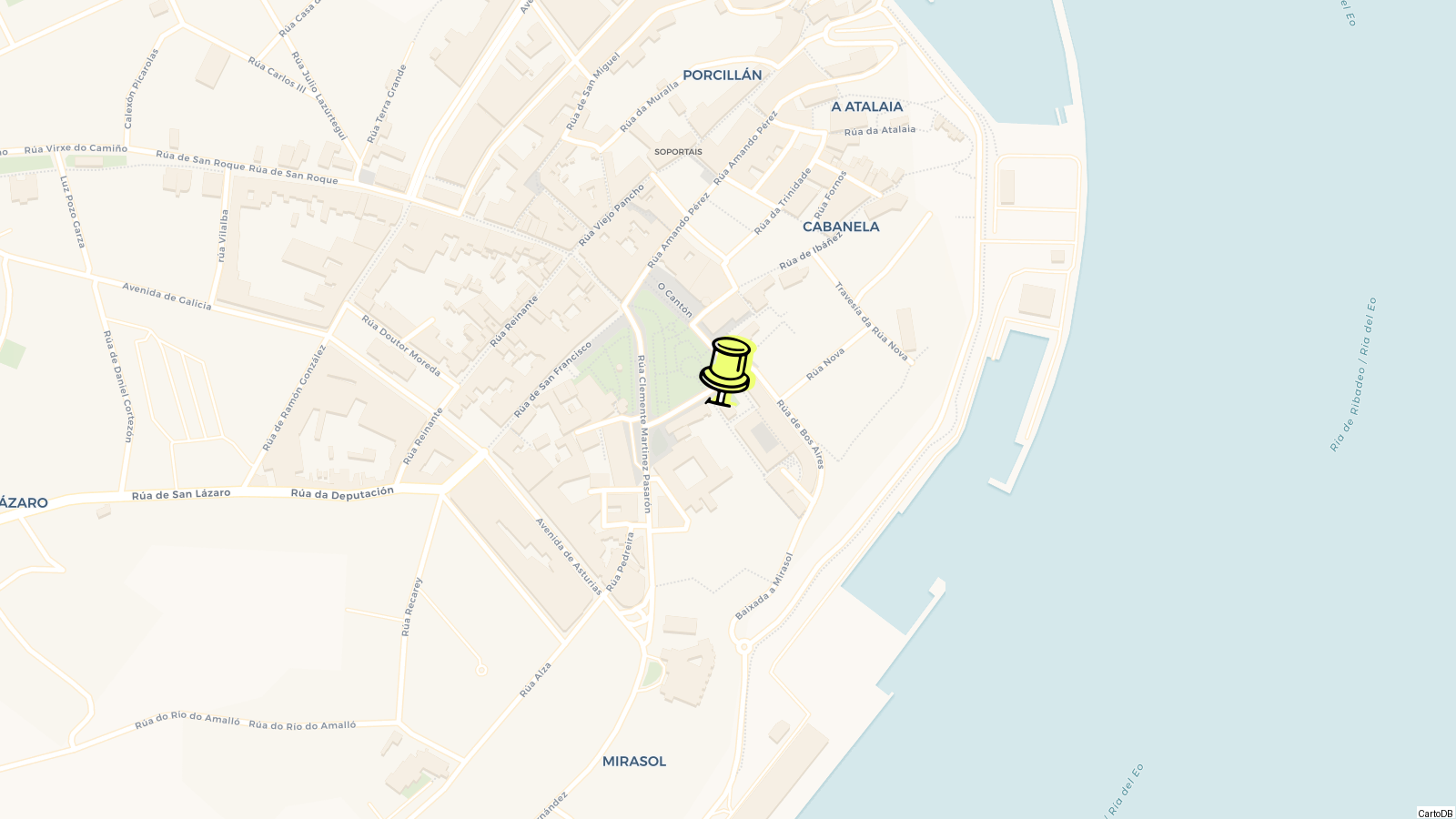
Overview
Drive ten kilometers west from Ribadeo town and you’ll hit Praia das Catedrais, the only Galician beach where police will actually stop you if you show up without a (free) reservation in summer. Most visitors drop anchor in Ribadeo just for that, snapping photos of natural arches in August with half of Asturias for company. But there’s a real town here, one that swells from around 10,000 to 25,000 people by late July.
Ribadeo itself is a “head town” of A Mariña Oriental, perched above an estuary that divides Galicia from Asturias. You’ll hear both Spanish and Galician traded between seafood trucks and market stalls. The port once handled ships from Riga bringing Kümmel, and the old town still holds onto signs of better days: Torre de los Moreno’s odd mix of modernist and neoclassical styles, Indian houses around San Roque with palm trees in the gardens, ruins of a Franciscan convent quietly rusting at the edge of the casco vello, and the Santa María do Campo parish church.
The town isn’t huge, walking from the central Praza de España to the port takes barely ten minutes, and even the train station sits within reach, so almost everything’s compressed into 106 square kilometers alongside 175 scattered hamlets and villages. Out past the edge, surf beaches like Playa de Esteiro appear without warning, uncrowded except in July and August. Isla Pancha with its 1857 lighthouse is just across a skinny causeway, easily reached on foot if you want to dodge traffic and scan for dolphins instead.
There’s still a weekly open-air market (Fridays, by the church), heaps of bars that put out newspapers and espresso every morning, the Camino del Norte passing through, and, in summer, the sense that Galicia starts, or ends, right here.
The summer surge
Late June to August, the town’s population multiplies, nearly tripling, mostly families returning for school holidays and a lot of Asturians hopping the bridge for seafood and an honest menu del día. Bars in San Roque, usually dead at siesta, heave with sobremesa around 3pm. Booking a hotel last minute is dicey unless you’re fine paying triple the winter rate or staying out on a country road. Life slows down even more: shoppers at Gadis mark time chatting in Galician (the rest of the year it tips Spanish), and at dusk, crowds wander up Avenida Rosalía de Castro for drinks before settling in for raciones, zorza, empanada, those fried green peppers everyone claims aren’t spicy. You’ll see everyone dressed for both drizzle and sun in a single day.
History
Ribadeo’s history begins with old stone, seriously old. The oldest settlements here are Gallaecian hillforts like Grovas, Fornelo, Meirengos, Cárcovas, Pumarega, Torre, and Aira da Croa, all inhabited by the Egovarri tribe long before Romans arrived in Galicia. You can still trace earthworks and stones in the countryside around town if you know what you’re looking for.
By the 6th century, the area was mentioned as part of Britonia, a little-known region populated by Celtic migrants from Britain. Most visitors skip this fact, but the first written mentions of Ribadeo tie it right into the tangle of dark-age migrations along the Bay of Biscay.
Jump to the 13th century and Ribadeo starts to look like a proper medieval town, not just a riverside trading post. It received royal privileges from Ferdinand II, itself an early sign that the port mattered. The settlement grew up from the docks at Porcillán and Cabanela, backed by a wall that, let’s be honest, was more about collecting custom duties than fending off invaders. Pieces of that wall survive in odd corners of the old town, usually only noticed by people who’ve parked somewhere awkward.
Ribadeo was one of the three main medieval towns of the province of Mondoñedo, its weekly market still runs on the same royal charter granted by Fernando III in the early 1200s.
After a stint as royal property, Enrique de Trastámara granted Ribadeo to Pierre de Villeines, a French noble who backed the right side in Castilian dynastic scuffles. Ownership then bounced through various noble families, eventually ending up with the House of Alba, which still holds the title “Count of Ribadeo”, today that’s Carlos Fitz-James Stuart Martinez de Irujo.
If you find a bottle labeled “Kúmel de Ribadeo,” the town once imported Kümmel liqueur directly from Riga, making Ribadeo the only legal spot in Spain to get it off the ship. For a time, the port’s trade west along the Cantabrian coast and north to the Baltic made the town rich enough to leave traces, like grand houses and old customs posts, though by the mid-1800s, business faded as Gijón and other ports cut into its shipping.
The odd history of the Ribadeo coat of arms
The current arms, wavy blue-and-white lines under a golden key and a silver star, are medieval in origin. The key stands for Ribadeo opening the door into Galicia, the star for its position on the north coast. Older versions of the arms only had the key (upright, not slanted), and you can find a 1699 stone carving of this simpler version at the Capilla de la Virxe do Camiño.
From fortified trading post to summer town
Through the 19th and early 20th centuries, as the port declined, locals started to emigrate or reinvent themselves, many went to Cuba, Venezuela, or Argentina, then sent money home to build indianos-style mansions. You’ll spot these in the San Roque neighborhood, standing alongside ancestral Galician stone houses.
The population hovers around 10,000 for most of the year but balloons to 25,000 in summer when madrileños and Galicians with family ties come back for August. The built-up town is much smaller than the municipality as a whole, which includes 12 parishes and 175 separate hamlets.
Ribadeo sits right on the line between Galicia and Asturias, with the estuary acting as old border and lifeline. That border mattered a lot during centuries of shifting kingdoms and customs regimes, half the stories you’ll hear from old-timers involve crossing goods or people across that estuary, sometimes legally, sometimes less so.
The port’s golden age tracks the Baltic trade, but the town’s luck declined just as steam-powered shipping became standard, bypassing Ribadeo for faster, deeper ports. You can still spot old port warehouses down by the ria, but most have been converted into bars or small shops.
Another detail tourists miss: the Camino Norte of the Camino de Santiago slices right through Ribadeo. Pilgrims walking west follow parts of the old royal roads, which also carried trade between Castile and northern Europe.
Physical traces of all these phases are scattered: ruined convent walls, the parish church of Santa María do Campo, bits of old customs defenses, and the modernist house called Torre de los Moreno from 1915, if a building has weird steel-and-concrete construction, it’s probably from the phase when money from the New World was pouring in, and old rules didn’t matter so much.
Trading, smuggling, and the port’s slow fade
For centuries, Ribadeo’s port was the legal point of entry for all imported liquor from Northern Europe, especially Kümmel from Latvia. That legal monopoly made certain local merchants very rich and the authorities very vigilant, at least in theory. The decline started in the late 1800s when rail and bigger steam ports siphoned business elsewhere. Eventually, the estuary shifted from busy trade hub to a summer playground for yachts.
Population: parish boundaries and summer swings
Official stats say Ribadeo has just over 10,000 people, but that’s misleading. The dense town (the bit tourists see) is just 6,500, but there are tons of small villages and agglomerations around, plus the summer spike quadruples the population during August. Town halls will say “over 13,000” depending on how they count families with second homes.
From hillforts to Nobel courts
The Iron Age hillforts that started the whole story are tricky to find, but there are walking routes that pass close to Grovas and Torre. They’re only marked some of the time; you’ll need decent boots and some patience, but you’ll be walking where people were defending and trading two millennia ago.
Visiting
Start at the Ribadeo waterfront. If you come by car, you’ll probably want to park near the marina or along Avenida Rosalía de Castro, both are close to the old dock area. The port (Puerto de Ribadeo) is alive with fishing boats and small yachts, and you’ll smell the seaweed before you reach the harbor wall. Stroll the promenade; you get views toward Castropol across the estuary, and there’s usually a fishing rod or two if you want to check what locals are catching.
Head uphill toward the Praza de España. This is Ribadeo’s town square, ringed by cafés and municipal buildings. The Torre de los Moreno dominates: an oddball early-20th-century mansion with a modernist façade, built by wealthy returnees from the Americas. The structure mixes reinforced concrete, steel, and Art Nouveau detail in a way you won’t see elsewhere in Galicia. You can’t go in, it’s not open to the public, but it’s worth a slow circuit for the details (crest, balcony tiles, Art Nouveau glass).
From the square, look for Rúa San Francisco and meander the small grid of old streets. You’ll pass the parish church of Santa María do Campo. On the edge of the quarter are the ruins of a Franciscan convent and a handful of emblazoned stone houses; the coats of arms tell you who paid for them. Most days there’s a small farmers’ market or local food stalls, cheese, chorizo, seasonal fruit, on or near Praza de Abastos.
Isla Pancha sits just outside town. Drive or walk a couple of kilometers north and you reach the small bridge; this is the best viewpoint for the lighthouse built in 1857, now automated, and the sea crashing below. Access to the island itself follows public right-of-way laws: check locally if anything has changed, but you’re allowed to walk up and photograph.
Football fans: the municipal Pepe Barrera stadium stands about 10 minutes’ walk west of the center. Capacity is 2,500 and the latest remodel was in 2020, so it’s modern enough to be comfortable without feeling corporate. Check local listings for Sunday matches, especially when Ribadeo FC plays at home, tickets are cheap, and it’s mostly families.
Walking Old Ribadeo
Don’t just loop the square. The San Roque neighborhood is famous for “casas de indianos,” houses built by people who made their fortune in the Americas (mostly Cuba and Argentina) and sent back blueprints for decorative villas. Start on Rúa San Roque itself: count the palms and hunt for mosaic-tiled stairs, terrazzo floors, ironwork balconies, and old stenciled ceilings peeking out through cracked plaster. Most are private, but you can nose around the exteriors.
If you’re interested in self-guided walking tours, visit the Ribadeo tourism office at Rúa Dionisio Gamallo Fierros 7 and pick up a paper map (or just scan the public QR codes dotted around town).
Outlying Beaches
Ribadeo town itself doesn’t have a beach proper, but you’re a 7-10 minute drive from urban Praia dos Bloques or much wilder stretches like Playa de Esteiro, which forms a lagoon at low tide and is part of the Natura 2000 protected area. If you want to swim in summer, check lifeguard schedules in advance; in winter, expect no services and little cleaning.
On Saturdays, check the local market near the marina for fresh goose barnacles (“percebes”) and small bags of live clams, pay cash, and bring your own tote bag.
If you’re walking the Camino Norte, the Northern Way of the Camino de Santiago, Ribadeo is where the route crosses into Galicia from Asturias. Most hostels fill up by late afternoon, so book ahead if it’s summer or festival season.
Tips
- Reserve entry for Praia das Catedrais (Cathedrals Beach) from June to September, Semana Santa, and major holidays, or you won’t be allowed past the access points. The reservation is free and done at ascatedrais.xunta.gal. Go at low tide, or most arches are submerged.
- Tide times matter everywhere on the Ribadeo coast, not just at Catedrales. Check puertos.es for real-time charts.
- The tourist office is at Rúa Dionisio Gamallo Fierros 7 (tel. +34 982 128 689); Sunday mornings are the least crowded.
- Buses and trains don’t sync, plan for a midday gap if you’re changing between them. ALSA buses (for Lugo, Viveiro, Gijón, Santiago) run from the Estación de Autobuses on Avda. Rosalía de Castro. FEVE trains to Ferrol/Oviedo depart from the tiny station east of the center. Buy train tickets on the Renfe FEVE app; bus tickets via ALSA’s website or directly at the station.
- Supermarkets in town (e.g. Gadis or Eroski) close at 9:30 pm. For late supplies, your only bet is the small Dia Market near Praza de España until 10 pm Friday and Saturday.
- In summer, Ribadeo’s population triples. Book accommodation months ahead for July and August, especially during the first week of August (Festa da Auga, local holiday).
- For Isla Pancha, the road is open to pedestrians but parking is not allowed on the causeway. Go on foot from the centro urbano; it’s a 20-minute walk, and wind is constant, bring a jacket even in July.
- Local taxis don’t circulate much; pre-book by calling +34 982 128 202 (Radio Taxi Ribadeo).
- For walkers, Ribadeo is a Camino de Santiago stop on the Camino Norte, the yellow arrows start on the harbour road. If continuing, stock up before leaving town; shops disappear for many kilometers.
- ATMs: ABANCA, CaixaBank, and Santander all have cashpoints near Praza de España. Only ABANCA has an indoor lobby accessible after midnight.
- The market (Praza de Abastos) is open Tuesday to Saturday mornings only; best fresh seafood and local cheese.
- If driving, be ready for blue-zone pay parking in most of the centro from mid-June to September, free after 8 pm and all Sunday.
- Playa de Esteiro has no lifeguard or shower facilities outside July and August. Don’t leave valuables in your car in the clifftop lots.
Specific tips for July & August
- Avoid midday for beach trips, parking at As Catedrais, Os Castros, or Augasantas fills up before 11 am.
- Book dinners ahead for the weekend: traditional spots like O Piano or Costa Verde are full after 9:30 pm.
- Festa da Auga (first Sunday of August): from 12:00, anyone can (and will) dump buckets of water on you. Pack an extra set of clothes in a dry bag; don’t bring your phone in the old town.
Useful local numbers
| Service | Phone |
|---|---|
| Taxi Ribadeo | +34 982 128 202 |
| Civil Guard | +34 982 128 020 |
| Health Center | +34 982 128 007 |
Beach gear
No need for a full beach tent: windbreaks sold at Chavarria (Praza de España 10) for €10-15 suffice. Only the main beaches (Os Bloques, As Catedrais, Illa Pancha) rent umbrellas, most don’t.
Know this destination? Help us improve
Your local experience is valuable to other travelers.