Roman walls of Lugo
Lugo's fully intact 3rd-century Roman walls (UNESCO 2000)

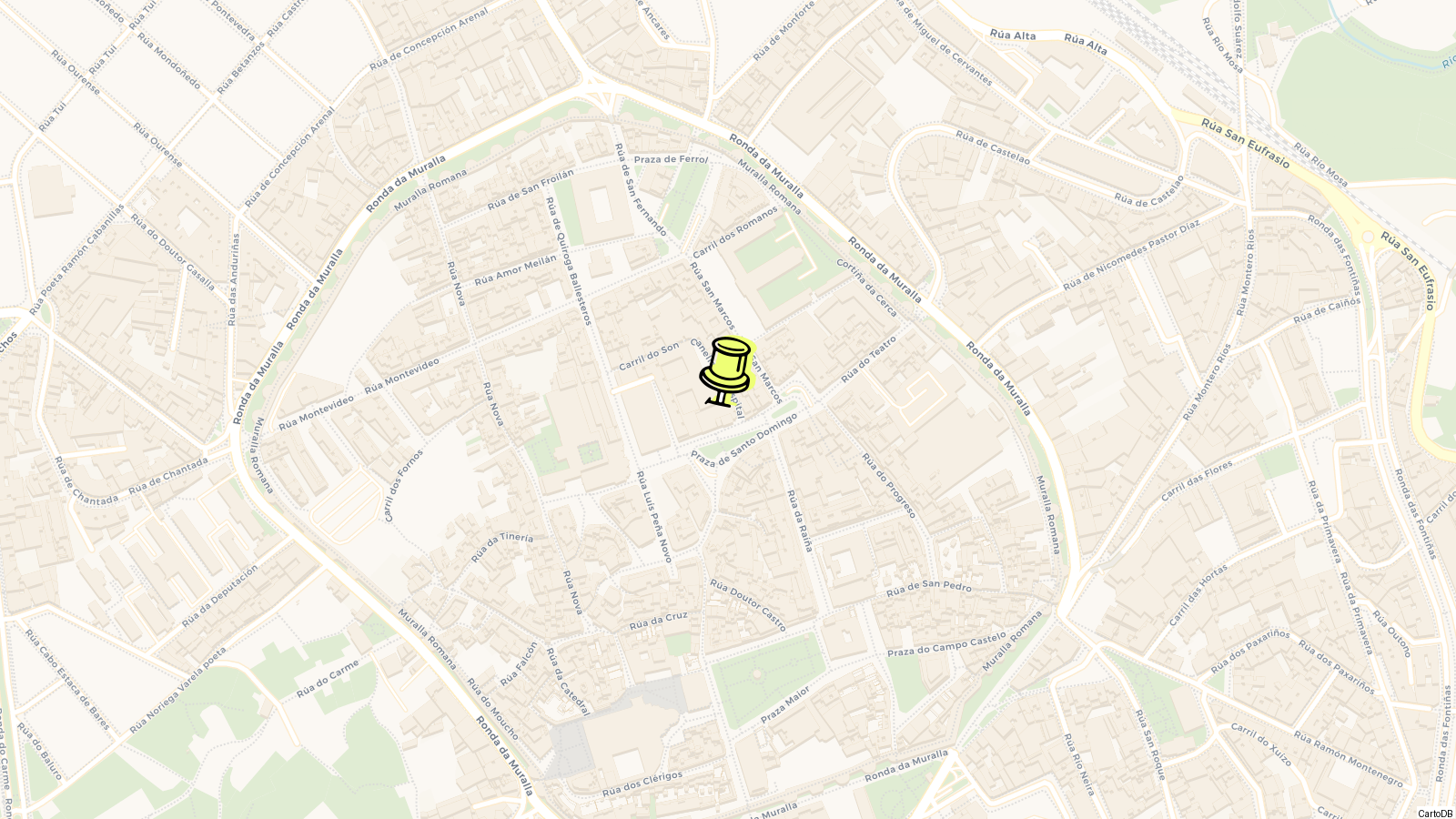
Visit details
Overview
You don’t get Roman engineering like this anywhere else: Lugo’s ancient city centre is hemmed in by a perfectly walkable 2,120-metre circuit of stone walls, with seventy-one towers breaking up the skyline. The walls dominate the central grid. Everyone, locals stretching their legs, day-trippers, the odd delivery cyclist, uses the upper promenade like a public park.
The basics: Lugo, fourth-biggest city in Galicia, is the only place on earth entirely enclosed by complete Roman walls from the late Empire. They’ve stood since the third century, most of the time doing very little actual defending. UNESCO calls this the best-surviving example of late Roman military fortification in Western Europe.
The circuit encloses about 34.4 hectares, making Lugo’s old town compact and easily covered on foot. The walls average 10 metres high, but the minimum is still a solid 8 metres; in spots, they bulk out to 12 metres high and 4.2 metres thick. Materials include granite on gates and towers and slate slabs for the main faces, with a fill of rubble, gravel, and cemented stones bound up by water mortar. Archival sources confirm ten city gates now pierce the ring: five original Roman, five punched through for traffic since 1853.
Most people come for the walk: the parapet path is uninterrupted, open 24/7, and free, with five stairways and a ramp letting you hop on or off wherever suits you. If you’re curious what the towers look like inside or want context, the Centro de Interpretación da Muralla sits at Praza do Campo 11.
For sheer state of preservation, it’s rare to find ancient architecture this accessible in daily urban life, morning joggers looping past stonework that’s been here since Diocletian. Walking the circuit is the main event, day or night: sweeping views across red-tile rooftops and the tight grid of the historic centre on one side, modern Lugo spilling out on the other.
The walls’ massive earth-and-stone fill absorbs sound, so the atmosphere on top feels cut off from street bustle below. It’s also not just a tourist beat: locals regularly use the promenade for exercise, lunch breaks, or cutting between errands, especially since step-free ramp access improved in recent years. In June, the Arde Lucus festival draws crowds in Roman dress to relive Lugo’s ancient defences, but the walls otherwise tend towards everyday utility.
Character
The walls stand 8 to 12 metres high and about 4.2 metres thick, so they’re not just for show, you feel the bulk when you’re up there. More than seventy stone towers march along the circuit, each throwing shadows onto streets that exist because the wall shaped how Lugo grew up. It’s impossible to miss the way the ancient line of stone defines the whole city centre, even now, locals and newbies use the wall as an inner border. Inside, you’re in old Lugo. Step outside a gate, you’re in modern Galicia.
Those towers (seventy-one in total) aren’t evenly spaced. Some stick out in pairs; a few anchor modern plazas where the city’s outgrown its Roman street plan. All were meant for defence, and you’ll spot the remains of the moat and intervallum clearance at a few sections, especially near the old gates. The walls are stone-faced but hide a core of earth and rubble, all held together with water-mixed lime mortar, still doing the job nearly two millennia on. The granite is for brute strength at the gates and towers; most of what you walk on is slate, quarried nearby.
The parapet walk is part of daily life, not a museum treadmill. There’s always at least one or two locals taking exercise up top even on a drizzly morning, and every stairwell feels well-used. Five stairways and a ramp bring you up to the walkway so you can enter at different points, which makes the wall feel like a continuation of the pavement rather than a “site” you enter and exit.
The promenade view is hard to beat: one minute you’re looking down on metal rooftops and narrow lanes inside the walls, the next you’re staring out at Galician trees, tiled modern flats, and the sprawl of Lugo past the perimeter. Given the varied height of the wall, the sense of perspective shifts quickly along the circuit. Inside, a handful of surviving staircases still climb towers, meant for defenders but now for anyone wanting a better view.
The ten gateways break up the circuit with their own personalities. Five of them are still in their Roman alignments, with the Puerta Falsa showing just how utilitarian a gate could be, barely wide enough for two modern cars, nearly 6 metres tall, and all rough stonework. The other gates were punched through in the 19th and 20th centuries as the city grew, letting traffic and new districts bleed through.
The older gates, like Puerta Falsa, were intended as controlled choke points, easily defensible but impractical for day-to-day modern use. The five post-1853 gates were concessions to traffic, some finished in a very un-Roman industrial style. There’s a small satisfaction in finding the original gates still doing what they were built for: keeping the line and forcing you to take a turn instead of going straight.
Material isn’t just a technical quirk, it matters up close. Door lintels and towers get granite for strength, but the wall itself is faced with slate, more common and easier to work in this region. The core is earth, stone chippings, old recycled Roman debris, all dumped in layers that absorb impact and survive Galician winters.
Stop anywhere on the parapet and rest your hand on the slate. You’re likely touching stone quarried nearby when Roman Lugo was still “Lucus Augusti.” About 4.2 metres thick, the wall was overengineered for ordinary rebel attacks and has outlasted most Roman city defences in Europe, the reason Lugo’s circuit is still a solid unbroken loop.
Evening is when the character of the wall hits hardest: joggers pound the path, families take a stroll, and bars on both sides just inside the gates fill with regulars. The old stones aren’t a backdrop, they’re the stage, still directing the way Lugo organises its day.
History
The Roman founding and late Empire
Lucus Augusti, the Roman city under today’s Lugo, needed proper defences when things got rough in the third century. Construction of the walls kicked off around AD 263 and finished in 276, during a period when Germanic invasions and bandit raids were an everyday threat for Roman outposts in the northwest. These weren’t decorative. Granite and slate walls, nearly 4.2 metres thick in places, circled the whole Roman settlement. The brief was to intimidate and keep trouble beyond the moat.
The colonia of Lucus Augusti took its name from Augustus, the first Roman emperor, and stood as a key hub of Roman Gallaecia after Galicia came under Roman control in 19 BC following the Cantabrian Wars. The defensive system combined natural elevation (465 metres) with masonry: thick ramparts sandwiched local stone around a fill of earth and rubble, locking everything together with water-based mortar. Inside the ring, the “intervallum” width and a moat added a further buffer zone before any enemy could reach the main inhabited area.
Adaptation, Medieval Lugo, and population ebb
Roman rule faded and Germanic kingdoms rolled in, but the bulk of Lugo’s walls outlived the fall of the Empire. Over centuries, both the walls and the city adapted: gates were bricked up, towers repurposed or knocked down, and the defences shifted from fortress to urban boundary. Five gates date from the original Roman phase; five more arrived after 1853 as city life needed new access points for traffic and trade.
Some of the Roman gates gained local nicknames, often linked to historic functions or nearby streets. Defensive needs changed. As Lugo’s population shrank or shifted, the walls eased from life-and-death fortification to a marker of the medieval core. Occasional repairs in the late Middle Ages and early modern period kept the structure basically intact, unlike most European cities, where walls either collapsed through neglect or were razed for expansion.
State recognition and UNESCO inscription
Local and national authorities gradually realised they were lucky: hardly anywhere had a Roman city wall circuit this complete. The structure was officially protected as a National Historic Monument in 1921. In 1973, Lugo’s city centre was declared a Historical-Artistic Ensemble, giving the old quarter extra protections and limiting development within the wall ring. UNESCO World Heritage status followed in 2000, finally putting Lugo’s walls on the international map.
Once UNESCO status landed, there was real money and attention for preserving the original masonry. Lugo’s walls are now cited by the World Heritage Committee as the finest surviving example of late Roman military fortification in Western Europe. The core UNESCO protected zone covers 1.68 ha, buffered by almost 60 ha of central Lugo to keep the visual integrity of the ramparts. Ongoing work focuses on balancing public access with much-needed conservation: the stones soak up weather and foot traffic better than most, but two millennia take their toll.
Walls and Lugo’s urban identity today
Over centuries, the wall’s circuit shaped Lugo’s street grid and neighbourhood boundaries. Locals treat the rampart as both city park and defining landmark, with the original perimeter still obvious on any map. Modern development beyond the walls had to work around the stone ring, leaving the old Roman core more or less intact while growth crept outward. The Roman ramparts aren’t a relic, they’re the line that still divides Lugo’s past and present.
Visiting
The Roman walls loop for over two kilometres around Lugo’s centre, enclosing the old town in a continuous ring. You can access the parapet walk for a full circuit via any of five stairways and a ramp dotted along the perimeter, all clearly signed as “Muralla Romana de Lugo” on maps and lampposts. There’s no need to book, register, or pay. The walk is open 24 hours a day and stays lit after dark.
The walls are wheelchair and pram accessible using the ramp, though the full circuit has uneven stretches where ancient stones rise several centimetres and the path narrows around certain towers. Five original Roman gates (plus five more added in modern eras) punctuate the ring, so it’s hard to get lost. If you join at any gate and just keep walking, you’ll complete the circuit in about 30 minutes even at a leisurely pace, but you’ll want to stop often, the views alternate between Lugo’s historic core on one side and modern city on the other.
Start at any staircase or at the main ramp if you need barrier-free access, these are spread around the circuit, so you’re never far from an entry point. The highest stretches of parapet are 12 metres up, which puts you eye-level with Lugo’s bell towers and the urban grid beyond.
The 71 towers break up the walk with a repeating rhythm of slate faced walls and granite reinforcements, punctuated by gates old and new. Among the highlights is the Puerta Falsa, an original gate measuring roughly 3.45 m wide and 5.65 m tall. Don’t expect to go inside every tower, most are solid except for occasional internal staircases and small viewing cut-outs.
If you want context as you walk, the Centro de Interpretación da Muralla (visitor centre) stands at Praza do Campo, 11. Museum style panels explain how Romans built the double-faced stone walls with an earth-and-rubble core, reinforced with granite and slate, and why the layout forced Lugo’s old town into its compact shape.
The visitor centre dives into the construction methods, with models and diagrams in Spanish, Galician, and English, plus timelines of repairs and stories of how the walls shaped Lugo’s urban development and defence. If you’re curious about the original moat, or how the intervallum buffer worked, this is where to get nerdy.
You’re never far from the walls in Lugo: the entire ring is built into pedestrian routes and forms a hard line between the calm old town and the sloping avenues outside. Just aim for one of the main gates (any hotel or local will point you in the right direction). The bus station is a flat ten-minute walk away.
UNESCO’s listing includes not only the 2.12 km walls themselves, but also a buffer zone covering nearly 60 hectares to shield the area from overdevelopment. Official coordinates are 43.011 N, -7.553 W, right in the heart of Lugo at roughly 465 metres elevation.
Tips
- The Roman walls are open 24 hours, so you can visit any time, day or night. Locals use the parapet for a morning jog; early or late is quietest and best for photos, especially if you want to avoid the midday sun or selfie-stick crowds.
Night walks along the walls are just as safe as during the day, as the promenade is part of the usual pedestrian flow in Lugo. Some of the towers and gates are illuminated after dark, so don’t forget your camera for a different look at the ramparts.
- Walking the full circuit is free. There’s no ticket; just walk up any of the five stairways or the ramp, all clearly signed as “Muralla Romana de Lugo” on local maps and streets.
If you want to go inside the Centro de Interpretación da Muralla at Praza do Campo, 11, check their opening hours, as these don’t match the 24/7 schedule of the walls themselves. Some towers or small museums nearby may have modest entrance fees, but you can walk the walls at absolutely no cost.
- The walls are level and broad (around 4.2 m wide), but surfaces can be uneven in places, especially if it’s rained recently. Wear decent walking shoes, not sandals or heels.
Slippery slate and weathered stone are common here, so even on a dry day, the surface can catch you off guard. In Galicia, rain is never far off. Carry a lightweight waterproof or small umbrella.
- If you’re meeting friends, pick a gate, ten in total, five Roman originals and five more added since the 1850s, to avoid confusion. The larger original portals are usually easier to find and signposted.
The Puerta Falsa (also signposted as posteriorulae) is smaller than the main gates and can be missed if you’re not looking. It’s roughly 3.45 m wide and 5.65 m high, tucked into less-trafficked stretches of the wall.
- Don’t skip the towers: if you see open stairs, climb up and take a peek. Not every tower is accessible, but some double staircases let you duck in directly from the parapet walk. You’ll see how the interior connects with the city below.
Seventy-one towers ring the entire circuit. Most are semi-circular and visible from both the wall and street, worth pausing for the best viewpoints over Lugo’s historic centre.
- The Centro de Interpretación da Muralla is worth 20 minutes if you want background or a break from the weather. Info panels are in Spanish and Galician, but staff may help in English on a quiet day.
Know this destination? Help us improve
Your local experience is valuable to other travelers.