Tower of Hercules
Climb 234 steps to the top of the world’s oldest working lighthouse and watch Atlantic waves crash below, just outside A Coruña.

Overview
You’re standing in front of a working lighthouse that’s been guiding ships since the 1st century AD, yes, nearly 2,000 years. The Tower of Hercules, on a windy headland about 2.5 km from the center of A Coruña, isn’t just old, it’s the last Greco‑Roman lighthouse from antiquity still doing its job, still marking the Atlantic coast for ships. From April to September you can go inside every day 10:00–21:00 (10:00–18:00 in winter). Entry is €3, with discounts for students, seniors, and big families, and free on Mondays, but grab a ticket at the CIAV visitor centre even if it’s gratis.
Forget stair lifts: if you want the 360-degree Atlantic view, it’s 239 stone steps to the top. The tower rises 55 meters above sea level on its rocky perch, making it the third tallest working lighthouse in Spain, beaten only by Chipiona and Maspalomas. If you know your maritime trivia, you’ll recognize its alternate name from old charts: Farum Brigantium. Its architect’s name, Gaius Sevius Lupus, is literally carved in stone at the base, a dedication to Mars, and the original Roman core is still visible if you look for it.
Around the lighthouse you’ll find a sculpture park with more than 15 contemporary works by Galician artists, plus a hulking concrete Hercules by Francisco Leiro right by the ramp entrance. If you’re wondering about the city’s shield, yes, it really does show this lighthouse sitting atop a skull, that’s a medieval nod to the local legend about Hercules defeating the tyrant Geryon here.
Coast of Death and Myths
This spot isn’t just Roman stone and Atlantic wind. A Coruña marks the start of the “Costa da Morte”, the “Coast of Death”, named for the deadly shipwrecks along this stretch, the very reason such a lighthouse was put here by Rome. The region’s myths blend Celtic and classical, in one version, the hero Hercules slays the giant Geryon and builds the tower over the buried head of his enemy, which explains the skull on the city flag. There’s another legend that King Breogán, a Celtic figure, built a tower here so tall his sons could see Ireland and set sail for it, supposedly becoming ancestors of the Irish.
Not Just Old, Never Replicated
Unlike most Roman infrastructure, the Tower of Hercules wasn’t abandoned. Instead, it was expanded and refaced in 1791, but the original Roman masonry is still at its core. The tower’s uninterrupted use is real: it’s seen countless crusader ships pass, survived Atlantic storms, and kept working while most ancient lighthouses fell into ruin.
History
In 1791, the neoclassical restoration transformed the Roman core of the Tower of Hercules into what you see today, but the real story starts about 1,900 years earlier, when Gaius Sevius Lupus from Aeminium (now Coimbra, Portugal) dedicated the original lighthouse to Mars. The builder literally left his name and dedication carved at the base, so you’re not just climbing another anonymous ruin, there’s documentation.
Roman sailors called it Farum Brigantium and used it as a navigational landmark from the late 1st century AD. The design borrowed from the Lighthouse of Alexandria; the foundation likely reused an even earlier Phoenician plan. The early tower was chunkier and lined with a spiral ramp, still partly visible if you trace the faded outline running up the wall.
That spiral ramp wasn’t just architectural flair, it was built so carts could haul fuel for the lantern. Instead of lighting the sea with today’s electric beacon, ancient keepers fed enormous open fires at the top, making the light visible for as far as the weather allowed. This location at the northwest tip of Iberia, the “end of the earth” for the Romans, was notorious for shipwrecks: the Costa da Morte earned its name the hard way.
The next big moment came in the late 18th century. By then the lighthouse had endured centuries of rough weather and patchy repairs. In 1788, engineer Eustaquio Giannini started a top-to-bottom renovation under King Charles III. He modernized the old Roman shell with a new 21-meter upper storey and the neoclassical facade you climb today. The work deliberately preserved the original core, so the inside walls still carry scars from the Romans and medieval masons side by side.
Medieval accounts hint that ships bound for the Holy Land routinely stopped at the Tower as a waypoint, then made pilgrimages inland to Santiago de Compostela. Crusaders believed Julius Caesar built it, thanks to a long-standing misreading of the Latin inscription. Actual Roman remains, graveyards, buildings, have been found around the peninsula, proving A Coruña was a Roman stronghold.
The area’s identity as Brigantia, the name tracked through ancient texts, has always sparked rivalry between A Coruña and nearby Betanzos. Betanzos folks insist their river port was the real Brigantia, but the geography doesn’t back them up: Roman triremes needed deep water, and the old lighthouse sits much closer to the open Atlantic. The “Pharum Brigantium” is referenced as a landmark facing Britain by the 5th century historian Orosius.
Legends have inevitably stuck to the place. The city shield, as you’ll see everywhere in A Coruña since 1448, features the Tower perched over the skull of Geryon, the mythic tyrant supposedly killed by Hercules at this very spot. If you stand near the base, you can find Breogán’s statue, too. Local lore claims this Celtic chieftain built a giant tower so high his sons spotted Ireland from its top, inspiring the first voyage north.
Technical changes rolled on into the modern era. In the 19th and 20th centuries, the light source switched from fuel to Fresnel lamp, and eventually to electricity. That old 1857 Fresnel lens, by the way, now lives in A Coruña’s National Museum of Science and Technology, in case you want to geek out on lighthouse hardware.
On 27 June 2009, UNESCO finally caught on and put the Tower of Hercules on its World Heritage list, spelling out international recognition for what Galicians already knew: this isn’t just a scenic lookout, it’s a piece of working Roman infrastructure that hasn’t ever quit.
Engineering
You see the sharp corners and blocky shape? That core is 1st-century Roman, architect Gaius Sevius Lupus put his name in stone at the base, dedicating it to Mars, and it’s still visible inside, rough and patched but unmistakably old. The tower’s cross section is a strong rectangle with an internal spiral ramp that once let ox-drawn carts haul fuel to the beacon on top. Today, as you climb, you walk up a tight stone staircase, the 239 steps are steep and echo every footfall.
Outside, the neat granite cladding is from the 18th-century overhaul by Eustaquio Giannini, a Spanish naval engineer. He wrapped the old Roman core in a Neoclassical shell,21 meters of it, so what you see now is an 55-meter stack consisting of about two-thirds original, one-third Enlightenment-era intervention. Both layers are on full display: original Roman blocks peek out between newer ones, and windows still appear where ancient floor levels used to be. The exterior spiral lines that snake around the base mark where the Roman ramp was.
The lighthouse originally functioned with wood fires, then oil lamps, before getting a proper Fresnel lens in the late 19th century, if you want to see that 1857–1904-era Fresnel lens up close, it’s now at the National Museum of Science and Technology across town.
The beacon’s height (and that upper gallery you can visit) gives a total elevation close to 112 meters above sea level. The light remains functional, automated now, with a cone-shaped stone vault underneath to support the weight. The original Roman interior is kept visible on several levels; you’ll spot changes in stone color, tool marks, and ancient Latin numbering systems carved right into the blockwork.
The whole thing sits on a three-tiered base, massive by any standard, set just above the pounding Atlantic. Drainage channels, carved in Roman times, kept rain from pooling against the foundations, think less “decoration,” more “big rock-and-mortar sump pump” at the base. Even now, despite the storms that slam this bit of coast, the walls stay mostly dry.
Anatomy of the Tower
-
Base: Three square levels made from granite. The lower levels are distinctly rougher, with marks from hand chiseling and decades of patch jobs.
-
Spiral Interior: The Roman ramp originally spiraled at a gentle slope for carts; today, reconstruction has replaced that with stairs. The twist of the old ramp is visible both outside and in, especially if you pause at the windows.
-
Floors: Internal floors divide the shaft; the wood was replaced with stone vaults during 18th-century works.
-
Viewpoints: The gallery just below the light gives a 360-degree Atlantic panorama, on clear days, you can see the curve of the coastline for kilometers.
-
Structural tricks: Double granite cladding, thickened walls at the corners, and a sloping plinth all help keep the lighthouse upright and dry in the Galician gales.
Not Just “Standing”, Still Working
The lighthouse is still a registered aid to navigation, although modern ships use GPS. Its current light range is 24 nautical miles. Electric (first installed 1927) replaced the oil and wick setup, and the bulb is maintained by technicians from Spain’s maritime authority.
Renovations happen more often than you’d think. As of late summer 2025, the tower is getting another major round of repairs to the cost of €1.2 million, mostly waterproofing, structural tweaks, and preserving the Roman stone where leaks have opened cracks. If you visit between summer 2025 and June 2026, expect scaffolding on one side and some access limitations, but the core structure and viewing platforms should remain open (always check ahead on the official site).
Unlike plenty of “restored” monuments that are just shells with modern interiors, here you’re climbing through real, load-bearing Roman and Enlightenment engineering. The sound of the wind inside is legit: this place is still built to withstand a northwest gale.
Visiting
A ticket for the Tower of Hercules costs €3 for adults; Mondays are free, but you still need to pick up a ticket at the CIAV visitor centre at the base. Reduced tickets (€1.50) are available for students, seniors, and large families, bring proof if you want the discount. The ticket lets you climb the tower itself and includes entry to the exhibits inside. Last entry is half an hour before closing. From April to September, you can go up between 10:00 and 21:00; from October to March, opening hours are 10:00 to 18:00. Closed on January 1st and December 25th.
Crowds build fast, especially in summer and on cruise ship days, because only about 20–32 people are allowed up per half hour. If you don’t want to hang around waiting, buy your ticket in advance at torredeherculesacoruna.com or come early.
Inside, you’ll face 239 narrow steps to the top platform. No elevator. Expect occasional closures at short notice for high winds or renovations, major works are planned between late summer 2025 and June 2026, so check the official site for updates.
Once at the top, you’re above the Atlantic, looking over the coastline and the city. On clear days, you can see as far as the Sisargas islands. In the base rooms, you pass rebuilt stonework from Roman and later centuries. Interpretive panels (in English, Spanish, Galician) explain layers of construction and the lighthouse’s use.
Outside the tower, the Sculpture Park sprawls over the headland. You’ll spot over 15 modern works scattered through the grass, including Francisco Leiro’s massive stone Hercules and other pieces that reference local legends, Celtic origins, and shipwrecks. If you want background, the CIAV visitor centre at the entrance ramp has models, interactive displays, and brochures. Buses 3, 3A, and 5 stop about 5 minutes’ walk away; taxis from the city centre run about €10.
Physical layout: what you’ll actually do
- Start at Avenida Doctor Vázquez Iglesias; walk up the sloping promenade toward the tower.
- Drop in at the CIAV visitor centre for your ticket (and the free Monday pass).
- Enter through the modernized reception. Security does a bag check.
- Take the spiraling stairway. The first few rooms are inside the massive stone base with slabs of Roman core masonry on display.
- The stairs continue in tight square runs, getting steeper as you climb.
- At the top, doors open to a viewing balcony. Most people spend 10-20 minutes here, taking pictures of the Atlantic and watching cargo ships, sailboats, or seabirds. On stormy days, it’s spectacular but very windy.
- Descend and walk the clifftop paths outside. The sculpture park is free and worth at least another 30 minutes, look for the compass rose mosaic on the ground and the Celtic-themed carvings.
Accessibility
- The climb and inside are not accessible for wheelchairs or strollers. Paths around the headland and the visitor centre are step-free, but the lighthouse itself is all stairs.
- No lockers. Bring only what you can carry up the steps.
- There are toilets at the base, but not inside the tower.
Visitor volume
Around 150,000 people visited in 2009. Peak summer days are busy, but even in winter school groups show up, so don’t count on having it to yourself. Entry control means lines move slowly but don’t crush up at the top.
Tips
-
It’s 239 steps to the top. There’s no elevator, and the staircase is narrow, steep, and often busy. If you’re claustrophobic or have knee or heart issues, rethink the climb, views are great from outside too.
-
Mondays are officially free but you still need to pick up a ticket at the CIAV visitor center counter at the base before heading to the tower entrance. These run out quickly, especially on sunny days or weekends.
-
Regular admission is €3. Reduced rates (€1.50) for students, seniors, large families, and groups. Kids under 14 need to be with an adult. Bring ID for reduced tickets.
-
They cap access to 20–32 people per half hour slot inside, if you come on a weekend in July or August, either arrive right at opening (10:00) or book in advance at torredeherculesacoruna.com. Afternoon walk-ins are a gamble in high season.
-
Last admission is 30 minutes before closing, but security can (and does) start nudging people out earlier. Check current hours: 10:00–21:00 (April–September), 10:00–18:00 (October–March). Closed Jan 1 and Dec 25. Don’t cut it close.
-
Wear windproof layers even in summer. The Atlantic blasts the headland, calmer days still mean a solid breeze at the top, and it can drop 3-5°C compared to the city center.
-
In 2025–2026 the tower is getting a €1.2 million restoration. Check ahead if you’re coming during these months (especially summer 2025): there may be scaffolding, restricted access, or partial closures depending on work progress.2025-06
-
Skip flip-flops. The ancient stone steps are slippery in wet weather, which is most of the year in A Coruña. Sneakers or hiking shoes are best.
-
They don’t allow bulky backpacks, large purses, or tripods inside. There’s no locker at the base, so travel light or leave stuff at your hotel.
-
The sculpture park around the tower is always free, open 24/7, and alone worth walking for at sunset. If the tower is too crowded or closed, this is still a solid plan B for a visit.
How to get here and away without headaches
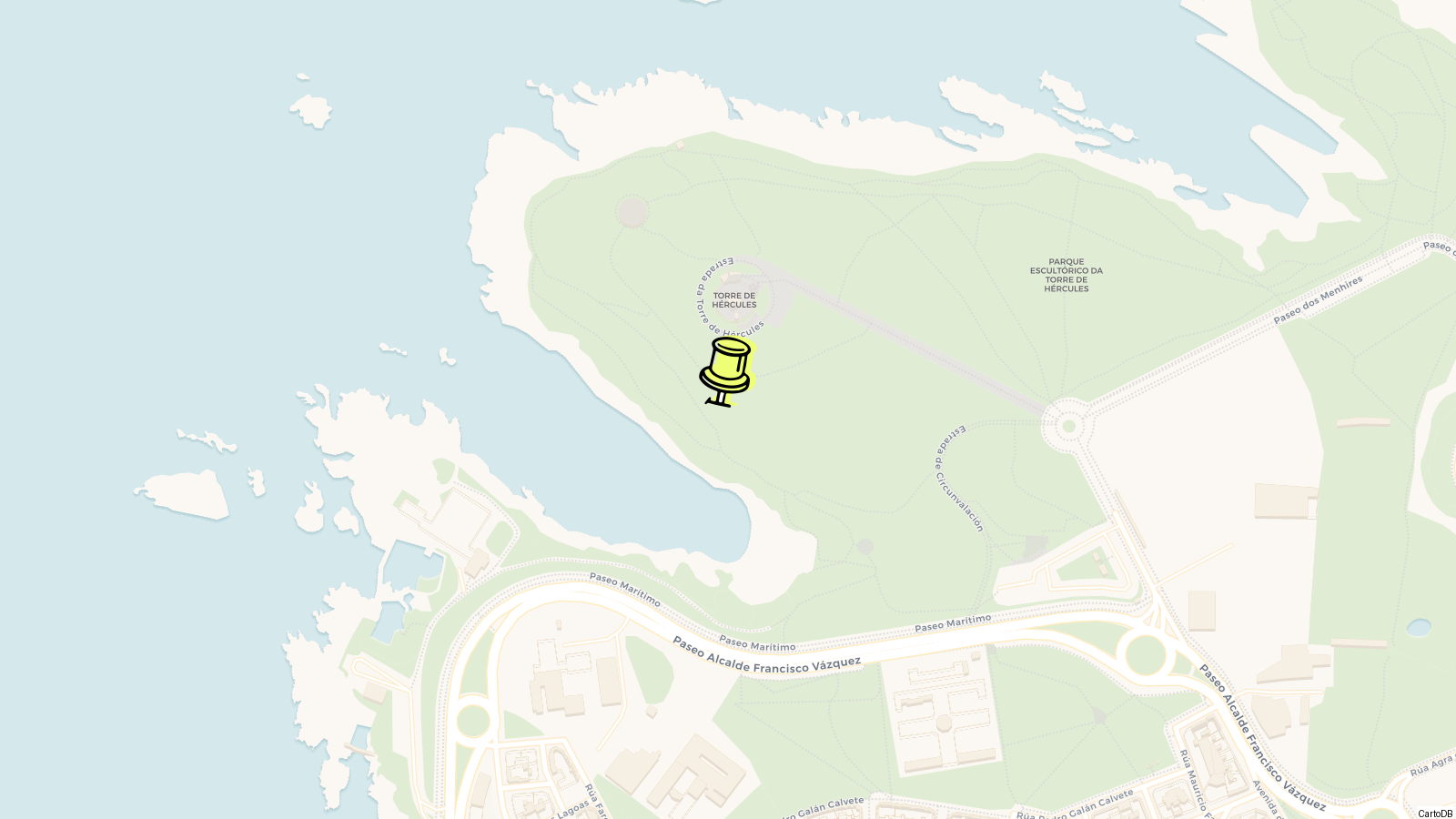
From the city center, it’s about 2.5 km, walkable in 30–40 minutes along the headland promenade, which is an experience in itself, especially in good weather. If you prefer wheels, city bus lines 3, 3A, and 5 stop near the base (stop “Torre de Hércules”); from the cruise port or Plaza de Pontevedra, it’s about 10–15 minutes and €1.30 each way cash fare.
Know this destination? Help us improve
Your local experience is valuable to other travelers.