Concatedral de Santa María de Vigo
Co-Cathedral of Saint Mary of Vigo, known locally as A Colexiata, is a Spanish Baroque/Neoclassical Catholic temple located in Vigo. It is co-cathedral with Tui Cathedral, both sharing the seat for the Diocese of Tui-Vigo.

Visit details
Overview
Cristo de la Victoria is the face you’ll see on religious floats every August, but the statue’s home is the Concatedral de Santa María de Vigo in the old city quarter. The building outside is heavy stone, no-nonsense, and not especially tall by cathedral standards, a marker that Vigo was a working port town, not a bishop’s showcase. You won’t find spires or gold leaf shining in the sun, but you will see people ducking in for a quick prayer before work, and the beginnings of Fiestas de Vigo kick off here when the Cristo leaves his glass case for the annual parade.
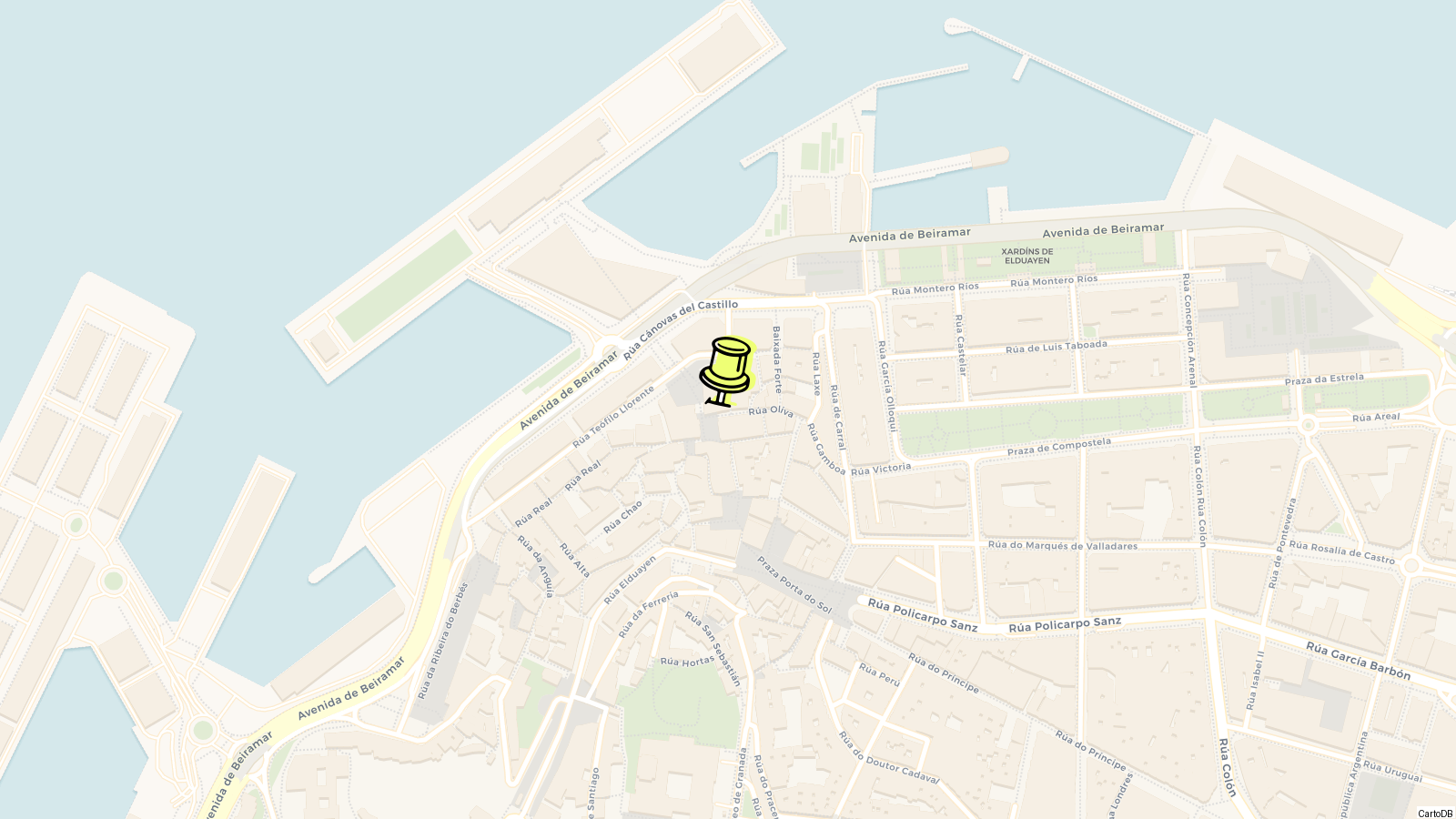
This is the main Catholic church for Vigo’s core, but it only became a “concatedral” (a cathedral sharing bishop duties with another city) in 1959, splitting the diocese seat with Tui Cathedral. You’re at latitude 42°14′20.9″ N, longitude 8°43′33.9″ W, smack in the historic centre. Entry is always free, doors open 11:00–19:00 most days (until 20:00 June–September), and there’s no ticket desk or tour gauntlet, this is first and foremost a local parish, which keeps the atmosphere easygoing.
The Concatedral sits at a little prominence at 42°14′20.9″ N and 8°43′33.9″ W according to official records, anchoring the oldest part of the city. That “concatedral” status since 1959 is unusual: it means the bishop splits his time between here and Tui Cathedral, twenty kilometres inland, reflecting Vigo’s late growth as a major city and port. The transition from ordinary parish to concatedral level was officialised by Pope John XXIII. There’s no formal visitor’s centre. You’ll enter through the square in front, past a scattering of benches and pensioners, straight into the nave.
It’s not the city’s oldest church, but it’s where you go for anything major, weddings from the old port, processions, civic events tied to Vigo’s modern identity. The building you see now was finished in 1838, after a powder magazine explosion at the nearby Castro fortress levelled the previous structure. Gothic bones gave way to a sober neoclassical rebuild, trading medieval arches for crisp, thick pillars and restrained ornament. You’ll find more ordinary working-class Galicians here than in any other “cathedral” you’ll visit, useful for people-watching, less so if you’re after art treasures.
Before its 19th-century remake, Santa María traced its lineage back to a church finished in 1403. English privateers burned that one out in 1585, then French and Napoleonic-era chaos finally did it in for good in 1809. Each rebuild reflected the needs of a city busy with trade, war, and religious devotion, but not dripping with aristocratic donors.
The Concatedral is where Vigo’s past and present overlap. Don’t come expecting the grand spectacle of Santiago de Compostela or León, this is a living parish, full of regular faces and city rituals. Worth a stop if you want to see how religion and city identity still click together in Galicia after all these centuries.
History
Early beginnings: medieval Galicia
The site of the Concatedral de Santa María de Vigo has anchored religious life here since at least the early fifteenth century. The first major church was a Gothic building, completed in 1403.
Little survives of that original fabric, but its presence signalled Vigo’s status as a growing port town in late medieval Galicia. By 1497, just under a century later, the church’s rising importance was recognised when it was elevated to the status of colegiata, a collegiate church staffed by a chapter of canons, marking it as a central institution in the diocese.
A violent chapter arrived in 1585, when the English privateer Francis Drake raided Vigo. His men ransacked and torched the original Gothic church, leaving it severely damaged.
Drake’s actions in Vigo were part of broader hostilities between England and Spain that repeatedly shook the Galician coast in that era. The townspeople managed basic repairs in the decades that followed, but it was never fully restored to its former state.
Destruction and rebirth: the Peninsular War
The cycle of destruction repeated in 1809. As Napoleon’s armies swept across Spain, Vigo’s Castro fortress became the scene of heavy fighting during the Peninsular War. An accidental explosion at a powder magazine next to the church blew out most of the building.
The ruined church could not be salvaged. During the following years, architect Melchor de Prado y Mariño drew up a fresh design, modelling the project in 1811. But the city was still reeling from war, so it took until 1816 for building work to begin.
The main structure rose slowly, as Vigo struggled to recover from the conflict’s economic and population losses. Most sources date the completion of the current building to 1836 or 1838. Its layout and massing stayed simple, pragmatic rather than ornate, reflecting both the city’s priorities and tight postwar budgets.
19th to 20th-century shifts
By the late 1800s, Vigo was on its way to becoming Galicia’s largest city, and Santa María remained the heart of the old quarter. Its role kept growing as the port boomed.
In the twentieth century, new recognition arrived from Rome. On 9 March 1959, Pope John XXIII raised Santa María’s status from collegiate church to concatedral, the seat is now shared with Tui Cathedral as part of the Diocese of Tui-Vigo.
This shift acknowledged Vigo’s demographic growth and rising local influence. Whereas Tui had been the historic diocesan capital for centuries, Vigo’s expansion meant parishioners now outnumbered those in Tui by many times. The city’s religious events soon made the Concatedral a core site of public life, especially around major processions and the Fiestas de Vigo each August.
Visiting
Arrive at the Concatedral de Santa María de Vigo from the old quarter, you’re right in the thick of things, set at latitude 42°14′20.9″ N and longitude 8°43′33.9″ W. Doors open every day from 11:00 to 19:00, extended to 20:00 from June through September. Entry is free, no tickets, no queue unless you’re caught behind a wedding or mass. Want to check if a service is on or see which festival is about to roll through? Call +34 986432260, or check the official page: www.diocesetuivigo.org/parroquia/concatedral-de-santa-maria-de-vigo/
Inside those generous hours, you’ll rarely battle crowds except during local religious holidays. The 19:00 closing flashes up suddenly in the off season, in summer, closing time bumps to 20:00, which gives you more breathing room after a late lunch. All regular visits are self-guided; there are no official audio guides or museum-style panels clogging the aisles. Current schedules and changes for feast days or parish events get posted to the door and the website above, but for major happenings the city itself tends to buzz and signage appears around the quarter.
Step through the entrance and you get what the outside promises: solid stone columns, restrained lines, plenty of white light. There’s little in the way of ornate gilding or side chapels. The main draw is the image of Cristo de la Victoria, standing at the heart of the nave. Locals drop by to light a candle anytime, but if you want an uninterrupted look at the statue or at the sober granite structure, avoid Sunday mornings when mass packs the pews.
Beyond religious services, the nave’s clean neoclassical design means you see nearly everything at once on arrival. There’s no cloister, crypt, or side museum. Besides the Cristo de la Victoria icon, raised above the altar, check the walls for a few painted panels and commemorative plaques. Photographs are generally tolerated outside of mass, though flashing and posing at the altar will get you hard side-eye from staff or parishioners. If you’re keen on architecture, the thick columns and barrel-vaulted ceiling are signatures of early 19th-century Galician neoclassicism, a reset after the old Gothic church was levelled in the 1809 explosion.
You won’t find much signage in English or Spanish explaining the building’s background or artworks, it’s very much an active parish, not a museum. If you want the stories, you’ll need to look them up beforehand or ask at the parish office (modest, up the side corridor). Staff are generally friendly if not busy with preparations for events.
The concatedral shares its bishop and status with Tui Cathedral, a quirk since 1959. It was originally just a collegiata, upgraded by Pope John XXIII. This means Tui gets some of the bigger diocesan events, but for locals Santa María remains the everyday face of the city church. The site’s centuries-old role in local life is one reason the interior feels as lived-in as it does, you’re never far from a noticeboard covered in hand-written invitations for baptisms and funerals.
Tips
- Dress codes are lax: you don’t need to cover your head or shoulders, but flip-flops and swimwear are pushing it, especially in summer when weddings sometimes take over a side chapel.
- Admission is always free, and you won’t spot anyone selling tickets, walk in, no hassle.
- Hours shift by season: in summer (June–September), you get an extra hour, so last entry is at 20:00. The rest of the year, doors close at 19:00. Sundays follow the same schedule as weekdays.
- Photos are fine, but skip the flash, it annoys parishioners and can get you scolded if a mass or wedding is on.
- No lockers or left-luggage. You’ll have to carry your bag, but staff don’t bother tourists unless you swing a huge hiking backpack around.
- There’s no official guided tour, and you won’t spot info boards inside. If you want backstory, read up before you visit. The official page is here.
- No toilets on site. The nearest public ones are in bars surrounding the square, buy a coffee, use the facilities.
If you arrive with a group, entering together isn’t a problem unless you’re visibly interrupting a service. The cathedral shares functions with Tui Cathedral, so big diocesan ceremonies often rotate location. The busiest crowds show up on the first Sunday of August for the Cristo de la Victoria procession, which technically spills outside but clogs the inside for the whole day. If you’re just ticking off the building, avoid that day, or join the chaos if parades are your thing.
The church’s central location makes it an easy anchor point for exploring Vigo’s historic streets. If you’re looking for a breather, the steps out front are good for people-watching, though late afternoons bring a steady crush. No one will hurry you along unless a service is set to begin.
Know this destination? Help us improve
Your local experience is valuable to other travelers.