Igrexa de Santa María de Castrelos
church building in Vigo, Spain

Visit details
Overview
Granite blocks and barrel vaults set the mood before you even cross the threshold. This is real Galician Romanesque, squat, weathered, and grounded in the landscape. Steps echo underfoot during weekday mass, and the entrance sits a quiet 500 metres east of the daily joggers and dog walkers at Parque de Castrelos.
Santa María de Castrelos is no novelty act. Consecrated in 1216, it stands as part of a dwindling club: only three Romanesque churches survive intact on the outskirts of Vigo, the others are Santiago de Bembrive and San Salvador de Coruxo. The structure you see is eight centuries old, and still in use for regular parish services. The exterior mixes plain stone with a few primitive carvings; inside, you get the cool hush of thick walls and minimal fuss.
Vigo’s expansion has buried or replaced most old churches, so these three (Santa María de Castrelos, Santiago de Bembrive, and San Salvador de Coruxo) now serve a double duty: as places of worship and rare survivors of pre-modern architecture. Each tells a subtly different story in stone, you can compare the capitals and doorways if you’re into that sort of close-up history. Castrelos’ parish counts under 8,000 inhabitants in roughly 2 km², an almost village-scale community on the edge of an industrial city.
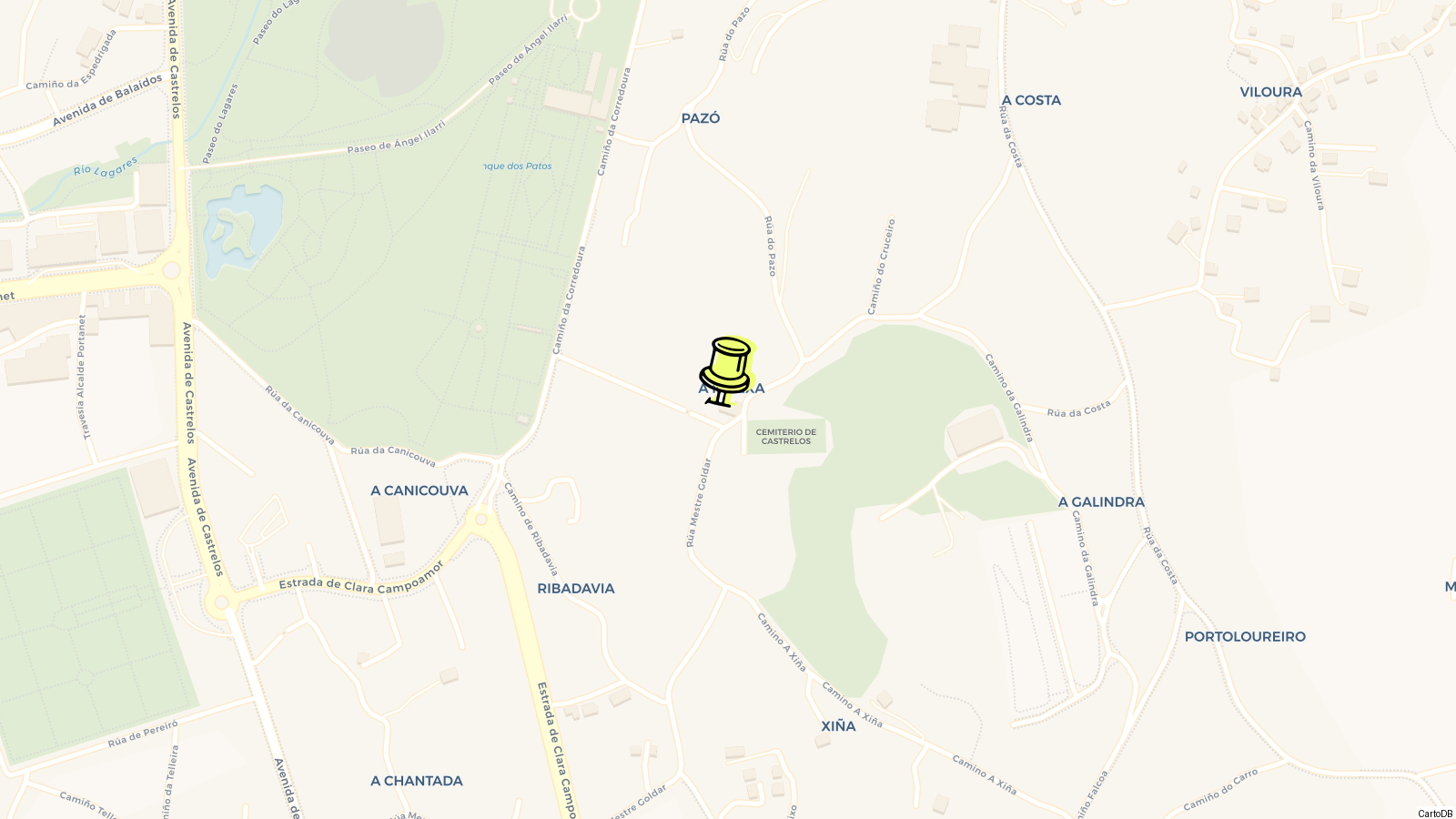
It sits at Rúa dos Mestres Goldar 16, part of the Castrelos neighbourhood’s old spine. For coordinates: 42.21056, -8.72581 lands you at the entrance. It’s a regular (if unsung) marker for pilgrims on the Portuguese Way–Coastal Camino, heading into central Vigo from the seaward side.
You don’t need a ticket, entry is free and open when services are running. It’s at heart a functioning parish church, not a museum. Don’t expect a queue or a shop at the door; most visitors are locals, with the occasional Camino pilgrim pausing for a photo or a breather.
The site keeps a low profile compared to Vigo’s major civic landmarks or the crowds at Parque de Castrelos each weekend. What it does offer is an unbroken continuity: over 800 years of parish routine, marked only by small discoveries like the medieval inscription uncovered behind the altar. Some wall paintings were restored in 1995, so poke your head in, just don’t expect the full cathedral treatment. The site is best appreciated with a slow ten-minute walk around the outside, then a few moments inside to cool off and clock the stonework.
History
Foundation and Romanesque Era
Igrexa de Santa María de Castrelos was consecrated in 1216, making it one of the oldest continuously functioning churches in Vigo. The date isn’t guesswork: an inscription from that year, tucked out of sight behind a later Baroque retablo, clinched the foundation time. Construction put it squarely in Galicia’s Romanesque moment, with the thick-walled, fortress-church vibe typical of the region just after the peak of pilgrimage fever on the Camino.
The year 1216 falls in the reign of Alfonso IX of León, a period when ecclesiastical construction and land grants for church institutions exploded across Galicia. Romanesque churches were designed to last, and Igrexa de Santa María de Castrelos has outlived most of its contemporaries. Its foundation inscription is rare, most churches in the Vigo area have lost original documents or had them plastered over in later centuries. The Portuguese Way–Coastal route of the Camino de Santiago passes nearby, so the church has watched centuries of muddy pilgrims traipse by on their way north.
Medieval Life and Parish Tradition
Through the late medieval period, the church served a small farming parish just outside Vigo. The parish of Castrelos itself had its own identity, distinct from the town proper. By the 14th and 15th centuries, parishioners ringed the church with houses and burial grounds. Murals inside date to this period, painted directly onto the stone walls and later restored in 1995.
The best surviving interior decorations are those late-medieval wall paintings, partly hidden under whitewash until the 20th-century restoration. Even in the decades after its foundation, Santa María de Castrelos was never isolated: the proximity to pilgrim routes and Vigo’s medieval marketplace meant the church’s parishioners had contact with traders, craftsmen, and passing foreigners. The church’s interior layout and its administrative documents (now mainly lost) suggest a community focused on small-scale agriculture and local religious festivals, blending Galician folk rites with official Catholic practice.
Early Modern Survival
Castrelos stayed rural even as Vigo itself turned outward to the sea and trade in the early modern period. Agriculture and local stonecutting paid for basic repairs, but the church avoided showy Baroque remodelling. The most significant alteration in the period was the installation of a Baroque altarpiece that, ironically, shielded the original 1216 inscription for centuries.
Unlike many churches that succumbed to the fashion for elaborate gilded altarpieces and architectural expansion, Santa María de Castrelos mostly kept its medieval core. Its closest brush with “progress” was the 17th- or 18th-century Baroque retablo, a practical makeover to keep up with changing liturgical styles rather than a full redesign. That preservation-by-neglect accidentally kept the church more “authentic” than better-funded neighbours, a lucky outcome for later historians and today’s visitors.
The Modern Era: Near-urban Submersion
Post-1850, Vigo boomed on herring, shipbuilding, and international commerce, swallowing its rural parishes as the city sprawled west. Castrelos’ population ballooned through the 20th century, but the church itself saw less upheaval than the town proper. Its quiet parish functioned through the Peninsular War, Francoist repression, and Galicia’s complex entry to modern Spain, not on the front lines of any battle, but surviving the city’s transformation into industrial Galicia.
The survival of Santa María de Castrelos through wars, anti-clerical movements, and urban expansion owes as much to luck and geography as to active protection. It was simply less tempting to looters or revolutionaries than more prominent urban churches. Recent decades saw a revived interest in preserving Galician heritage, and the church now benefits from legal protections. The 1995 restoration of its late-medieval murals brought the building some renewed local attention.
Present Status
Today, the church sits less than 500 metres from Parque de Castrelos, facing a traffic circle rather than fields. Locals attend parish mass here every week, and pilgrims on the coastal Camino still pause outside for a look. The building is a rare survivor, with nothing obviously touristified, its endurance is built into every mossy stone.
Visiting
The entrance is at 16 Rúa dos Mestres Goldar, a quiet residential street about 500 metres east of Parque de Castrelos in Vigo’s Castrelos parish. As of 2026, entry is free; you don’t need to book in advance, but this is an active parish church, so access outside of services depends on events and caretaker availability. The main doors are plain Romanesque arches with little ornament, you’re straight into the single-nave interior unless there’s a service in progress.
Ignore the web for opening times; regular public visiting depends almost completely on parish activity. If you show up outside mass hours, you might find the doors locked and need to phone for information (+34 986 29 36 20). The parish only reliably opens for mass: 18:00 on weekdays, 11:00 on Sundays (as of late 2025). Expect wedding and funeral interruptions on weekends. When open, you’re welcome to wander in, there’s no staff desk, ticket control, or official tour.
Almost everyone approaches on foot from the park, passing the Pazo Quiñones de León grounds. If you’re doing the Portuguese Way–Coastal route of the Camino de Santiago, the church is directly on the pilgrim path as you enter the eastern edge of Vigo from the Ría. The latest tourist hop-on bus runs four departures per day in Easter week (10:00, 12:00, 16:30, 18:30), stopping at the park. Ticket: €7.50 adults, €4.00 children (5–14).
The tourist bus only operates during special periods such as Semana Santa, not year-round. Ordinary city buses also serve Castrelos. From Vigo centre, walk or taxi is usually faster than waiting for infrequent suburban routes. If you’re driving, parking is available around the park but fills on weekends and during events.
Inside, you’re in real Galician Romanesque. The nave is compact and windowless; head to the apse to see where late medieval fresco fragments were uncovered and restored in 1995. Light is minimal, especially on a cloudy day, so leave the sunglasses off to spot faded details.
Restoration works in the 1990s brought back vestiges of fourteenth- and fifteenth-century wall painting, mostly in muted reds and ochres. If you look up to the right of the altar, you’ll see evidence of these beneath bare stone and later paint. The barrel vault and chancel arch are textbook Romanesque, and the walls are unusually thick, the church doubles as a time capsule when you get a stretch inside to yourself.
There’s no signage or printed guide in English or Spanish. Don’t expect interpretive panels or information beyond the mass schedule and a candle rack for parishioners. Photos are generally tolerated outside sacramental moments, but be discreet if there’s anyone praying or after mass, as this is a functioning local church.
Local guides occasionally do group visits for architecture students or pilgrims, but there’s no official city-run tour as of 2026. If you want deeper context, the parish website has a basic historical summary, though in Spanish and Galician only.
Tips
- Weekday public mass is at 18:00, Sunday at 11:00 (as of late 2025). If you just want to look inside, avoid mass times unless you’re prepared to sit through the service. There’s no formal signposting restricting visits, but when in use, visitors are expected to keep quiet or stay outside.
Schedules can change with little notice, especially around Easter (Semana Santa) and local feast days. Arrive 15–20 minutes early if you want to catch the quieter moments before a mass begins. You’ll sometimes find the door open daylight hours for cleaning or maintenance, but it isn’t guaranteed.
- There’s no admission fee, and you won’t find ticket machines or a staffed desk. The building is still an active parish church, so donations are entirely optional.
- The entrance is on Rúa dos Mestres Goldar 16. There’s no signage from the main road, but Google Maps will put you within 30 metres if you use the GPS coordinates (42.21056, -8.72581).
Street parking is tight, local residents fill most of the spaces. If you’re coming by car, plan to park at or near Parque de Castrelos, then walk the last 7–10 minutes east along footpaths.
- Dress code is informal, but show basic respect: no swimwear, cover shoulders, and hats off indoors. As with most parish churches in Galicia, the place can be chilly inside, even in late spring. Bring a light layer if you plan to linger.
Humidity inside Galician Romanesque churches is real, it’s not just for the old stones. Leather jackets, camera kit, bags, and anything sensitive to moisture will thank you for bringing a dry bag or lining.
-
If you’re tracing the Camino de Santiago’s Portuguese Coastal route, you’ll recognise the yellow shell markers right outside. The church sits right on the pilgrim path as it enters Vigo from the south.
-
No toilets on site. Use the public services just inside Parque de Castrelos or plan a café visit nearby.
Know this destination? Help us improve
Your local experience is valuable to other travelers.