Island of San Simón
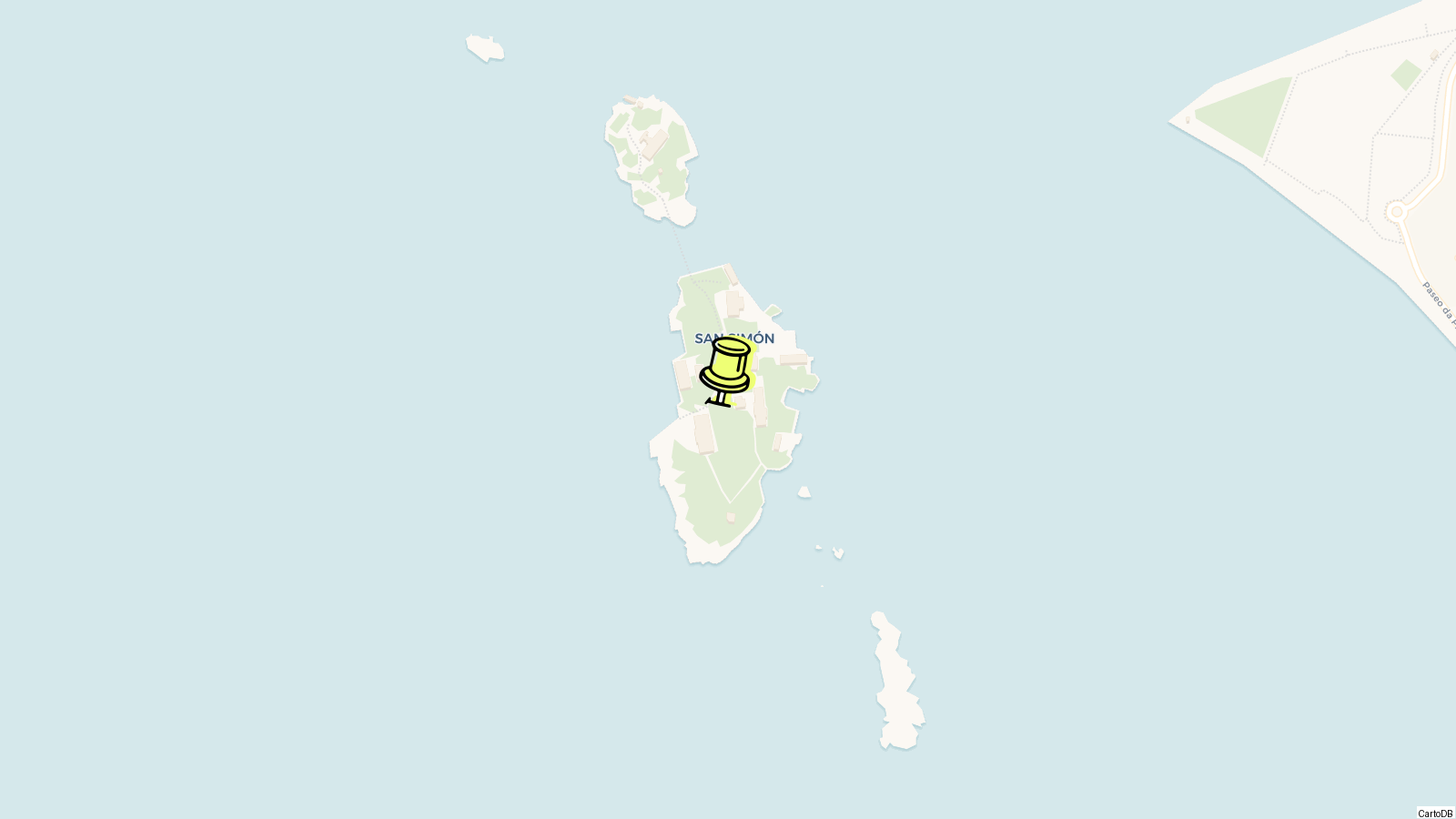
The Island of San Simón, which alongside San Antón and other islets, is part of the San Simón archipelago in the Vigo estuary, Spain. The islands are one of five parts of the parish of Cesantes in the municipality of Redondela.

Overview
The hum of boat engines fades as you close in on the Island of San Simón. The first thing that hits you is the scale (or lack of it), the two tiny linked islets, San Simón and San Antón, together stretch just 250 metres wide and 84 metres long, joined by a bridge and surrounded by the quiet Ría de Vigo. Craggy stone paths, moss-coated ruins, and centuries-old trees set a mood that’s more contemplative retreat than island getaway.
There are no year-round residents here, as of 2021, San Simón is officially uninhabited. These days, visitors arrive on guided boats from Cesantes or Santo Adrián in small groups, a rule that keeps the mood tranquil and the impact low. Access is strictly controlled, with groups typically capped at 300–400 people at once and visits running around two hours each.
The island is only reachable by boat, there are no bridges to mainland Galicia, and most visitors come on scheduled guided tours, which are mandatory. These tours limit entry to around 300–400 people at a time to protect the environment and buildings. The main boat access points are the small ports of Cesantes and Santo Adrián, in the municipality of Redondela. Tour groups tend to stick to a roughly two-hour window, after which a new group is ferried in. The limited numbers mean that even in peak months, the island stays quiet, and you’re unlikely to find crowds at any one spot.
The place is more than just nature. It’s officially designated as a European protected habitat (part of Natura 2000), but San Simón is also a site for cultural and historical reflection: Bien de Interés Cultural since 1999, and from October 2025, a recognised Lugar de Memoria Democrática.
This dual role is right on the surface. Old convent buildings and memorials for Franco-era political prisoners mix with busts of poets like Mendinho, Johan de Cangas, and Martín Codax. The “A Illa do Pensamento” initiative uses the space for events, debates, and art installations that lean into themes of memory and recovery. Cultural programming happens year-round, from research conferences to more theatrical guided tours (sometimes led by actors dressed as monks or sailors who spin stories rooted in island history).
San Simón packs a wild mix of stories into a space smaller than a football field: medieval monastic poetry, English raids, centuries as a centre of isolation and suffering, and now a focus on remembering past injustice and exploring new art. It feels cut off, and yet everything here is tied to the tides of Galician and Spanish history.
History
Medieval and Early Modern San Simón
San Simón’s story hits the written record in the Middle Ages, when a monastic community took root on its compact footprint. Little survives from those centuries, but Galician tradition clings to the memory: the medieval poet Mendinho sang about the island, and a bust in his honour stands there today.
English privateers under Francis Drake raided the island in 1589, torching its monastery and signalling the start of a run of violent centuries.
The attack by Drake’s men formed part of his “Counter-Armada”, as he harried Spanish and Galician ports after the failed Spanish Armada invasion of England. San Simón, isolated and poorly defended, was an easy target, its religious quiet upended by fire. Restoration faltered, and the monastic community dwindled in the decades that followed.
Napoleonic and Carlist Era
Detail thins for the 18th and 19th centuries, but the shadow of conflict never fully left. The wider Ría de Vigo saw action during the Battle of Vigo Bay in 1702, drawing international attention, but San Simón itself receded to a secondary role as wars and disease hit the mainland harder.
Plague, Quarantine, and Penal Use
The island’s isolation was both curse and opportunity. San Simón served as a quarantine station in the 19th and early 20th centuries, a practical response when ships from American colonies brought waves of disease to Galicia. Old installations from those years linger in the island’s layout, but few details survive about the daily life of those isolated here.
Records mention its use specifically as a leper colony and for other infectious disease outbreaks, but documentation is patchy. The combination of distance from the mainland and a natural port made the logistics simple: sick arrivals were unloaded from boats, housed on San Simón, and cut off from the general population until deemed safe. The damp Galician climate did little to improve the prospects of the unlucky sent here; many never left.
Spanish Civil War and Francoist Prison
Nothing matches the trauma San Simón endured from 1936 to 1943, when Franco’s regime converted it into a concentration camp for political prisoners. Over 5,600 detainees passed through the bleak cells and courtyards, with at least 517 deaths recorded during those years. Galicia’s political exiles, unionists, and suspected leftists landed here, often for months without trial or hope.
The archipelago’s nightmare reputation outlasted Franco. Each prisoner transport from the mainland became a ritual of humiliation and fear. Hunger, dysentery, and arbitrary shootings shaped the rhythm of daily existence. Bodies were buried in shallow graves or in mass pits, many still unidentified today. Attempts to whitewash this chapter failed. After the Civil War, survivors and relatives began a slow, hesitant process to document who passed through San Simón. Gaps persist, as records were partially destroyed during the regime’s retreat.
Memory and Recognition
By the late 20th century, calls grew louder to honour the island’s victims. On 29 July 1999, both San Simón and San Antón were declared Bien de Interés Cultural, category “Historic Site”, a formal recognition of both tragedy and layered history. In October 2025, Galicia designated them Places of Democratic Memory, ending decades of bureaucratic foot-dragging.
These designations mean the islands must be maintained as sites of reflection and public remembrance. Most of the old prison structures remain, repurposed as exhibition halls or left as ruins, a deliberate decision to foreground memory over sanitised reconstruction. Annual ceremonies draw relatives and researchers trying to document the full list of internees and victims, and debate persists among historians over how best to honour their story on-site.
Today: From Prison Island to “A Illa do Pensamento”
San Simón is now a state-owned public cultural space, better known as “A Illa do Pensamento” (The Island of Thought). Events here are less about tourism and more about learning, lectures, research retreats, and cultural residencies, all designed to face the island’s past honestly while looking to the future.
The legacy of violence is never far off-stage. But the Encontro Paraíso, held since 2021, shows San Simón refuses to be frozen by its darkest chapters. Younger generations come for art, debate, and music, stepping carefully among memorials and explanatory plaques. What marks San Simón out is this: nowhere else in the Vigo area fuses so many layers, monastic retreat, plague outpost, prison, and now a living cultural site.
Visiting
Guided visits are mandatory. You can’t just rock up, the Island of San Simón is strictly visitable via pre-arranged group trips, typically departing by boat from the ports of Cesantes or Santo Adrián. Ferries take about 30 minutes if leaving from Vigo, or under 15 if you join at Cesantes. All visits are guided and capped at around 300–400 people at a time, with tours lasting just two hours.
Boats are often run by Piratas de Nabia in the high season (May–September). Their tours cost from €15 one way per adult, half-price for children 5–12, and free for under-5s. Expect demand spikes on weekends or during summer, so book well ahead, last-minute spots are rare. Free tickets aren’t a thing, but prices are moderate for Galicia. If coming high season, the island sometimes takes direct bookings for special events, but these go first to residents of Redondela or groups.
No fee to enter the island itself, the charge is for boat transport and the compulsory guide. Stepping onto San Simón, you land at the main jetty. Groups stick together for an initial briefing, then walk the single paved path, which loops around both San Simón and San Antón. The entire double-island is less than the length of three football pitches, so you’ll never get lost.
The tour route passes the old monastery grounds, the penal colony buildings, and the bridge linking the two islets. Guides often split time between historic explanations and environmental notes, this is a Natura 2000 protected habitat, not just ruins and memorials. What you won’t find: shops, cafés, or any kind of commercial food or drink offer. Water and toilets are on-site, but that’s it. Many visits now include short theatrical scenes with characters (like a monk or sailor) popping up to narrate legends and lived history, great if you’ve got non-history-buff kids along.
You’re expected to stay with your group; solo wandering isn’t allowed. At the Mendinho bust you’ll have time for photos or quiet reflection, this spot gets a pause because of its link to Galician poetry. The guides balance environmental and historical points: you’ll hear about the Franco-era prisoners, but also about the local birdlife and the history as a monastic retreat.
The last part of the visit usually brings everyone to the bridge to San Antón, a tight footbridge that was rebuilt after storm damage in the early 2000s. You won’t have to double back, the circuit makes a full loop so you end up back at the boat pier. Groups keep moving quickly (the guides aren’t shy about herding), partly to avoid wildlife disturbance and partly because tours run on the ferry timetable.
Group size is small enough that most guides will answer questions during or after the set circuit, especially during low season or midweek. If you want official details, the best up-to-date info is on the Xunta’s own page: cultura.gal/es/illadesansimon.
Some years see temporary closures for restoration, especially after winter storms. In practice, opening times align to ferry capacity outside these exceptional cases. If in doubt, check the Xunta site or call the operator well in advance, especially for off-season or school holiday dates.
Tips
- Dress for exposed conditions. There’s practically no shelter, so bring a jumper or windbreaker even in summer. The Ría de Vigo can get breezy fast, especially in May, June, or September, when temperatures flip between pleasant and chilly.
The island’s tiny footprint (just 250 metres wide, 84 metres long) means there’s no natural or architectural cover from wind or sudden drizzle. Boats don’t wait for stragglers if weather turns. Aim for a layered outfit, and keep an eye on the short forecast for Vigo before you commit.
- Book well in advance, and don’t expect flexibility. The transfer to Fundación Museo do Mar de Galicia in 2022 didn’t change access rules, but demand far outstrips slots, and bureaucracy can slow things further.
Redondela’s council still complains about visit delays in 2024 since the Fundación Museo do Mar took over, but the Xunta says the number of visits per week and visitor caps haven’t changed since then. Tours are usually grouped; there are no free-roaming slots, and timetables tie to boat operators. A no-show is a lost slot.
- Photographers should come early or late. Midday sun flattens everything. Light is best in the first or last arrival of the day. If you visit during an Encontro Paraíso event (usually in summer), expect others to have the same idea, and the atmosphere to shift from silent to lively.
Most regular guided visit slots last about two hours including the return boat. For the best crowd-free photos, book the earliest slot from Cesantes or Santo Adrián (sometimes as early as 10 a.m. in summer), but expect dew and cool air on arrival. Evening returns often overlap with private cultural or educational events hosted under the “A Illa do Pensamento” umbrella.
-
Snacks and water: bring your own. No shops, no machines, no café on the island. You’ll be stranded for two hours minimum, come prepared.
-
Accessibility is basic. The bridge between San Simón and San Antón is level, but terrain is uneven in places and assistance is limited. Strollers and wheelchairs face obstacles at pier embarkation, depending on the tide and the landing steps.
-
There’s no overnighting. The entire island is uninhabited, no hotels or campsites, even for events. If you’re joining an evening activity or Encontro Paraíso, sort your return transport well in advance.
The lack of facilities isn’t an oversight, it’s deliberate. San Simón is managed as a protected cultural and natural space, with all infrastructure geared toward temporary day visits or official programming. Events never involve overnight accommodation. If you want to make a day of it, bring everything you need and plan around the return boat schedules.
- Guides often incorporate legends, poetry, and tales from the island’s history. If you get a chance at a theatrical tour (with monk or sailor characters), take it, the basic guided version is more factual but less entertaining.
Know this destination? Help us improve
Your local experience is valuable to other travelers.