Museum of Contemporary Art, Vigo
The Vigo Museum of Contemporary Art is an art museum in Vigo,, Spain. It displays changing exhibitions of contemporary art, but has no permanent collection.

Visit details
Overview
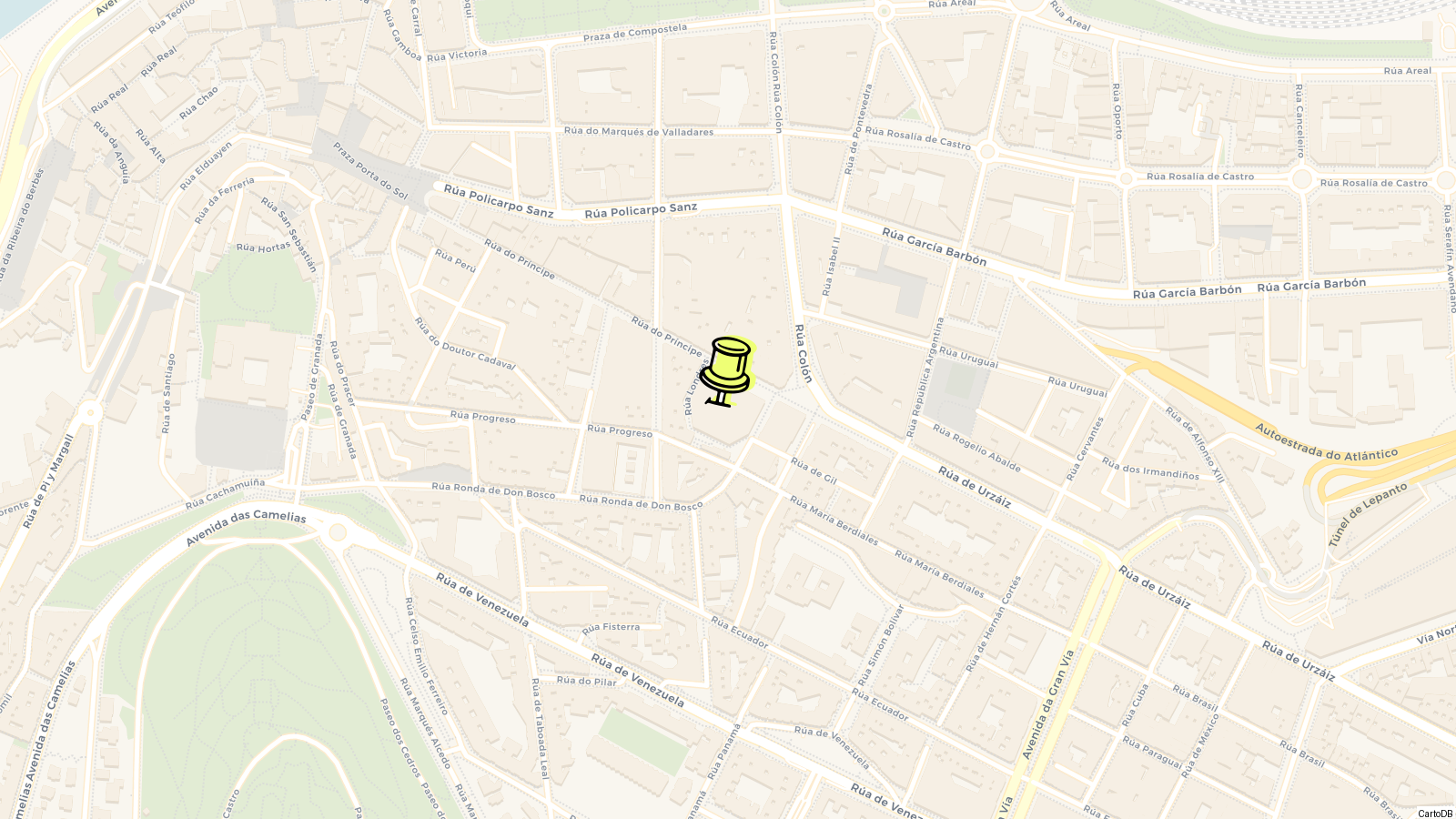
MARCO, the Museum of Contemporary Art of Vigo, occupies the city’s old courthouse and prison on Rúa do Príncipe, a granite neoclassical block that was approved by royal order in May 1861 and finished in 1880. It opened as a museum on 13 November 2002 after a rehabilitation that ran past two million euros, with the original cell block converted into exhibition halls and the central rotunda kept intact.
The thing to know going in is that MARCO has no permanent collection. Everything you see is a temporary exhibition, rotated through the year, drawn from visual art, architecture, video, design and film. That makes it a different kind of stop from a collection-led museum: check what’s currently on the wall before you commit time to it. When the programme is good, it’s the strongest contemporary art venue in Galicia outside Santiago. When the building is between shows, parts of it close.
The pre-museum building has a parallel history worth knowing about. It functioned as Vigo’s courts and provincial prison from 1880 well into the 20th century, then sat empty for years before the conversion. The cellular layout of the cell block is what gave the architects the modular gallery rooms on the upper floors; the curved facade and stone pilasters facing Rúa do Príncipe are the original 19th-century street elevation, restored rather than rebuilt. The building was declared a Bien de Interés Cultural on 6 October 1990, twelve years before it reopened.
Admission is free, the building is fully accessible, and there is a free guided tour at 18:00 every day it’s open. An hour is usually enough.
Collection
The permanent collection at the Museum of Contemporary Art, Vigo focuses on art from the late 20th century to the present. It covers painting, sculpture, photography, installation, and new media. Most works are by artists from Spain, with a heavy focus on names from Galicia and the rest of the northwest.
The highlights tend to rotate, but you’ll almost always find pieces by major Galician artists active from the 1980s onward. Photography and large-format painting get special attention.
The core of the holdings traces the development of Galician contemporary art since the late Franco period. Expect to see work exploring changing political, social, and environmental themes that shaped post-dictatorship Spain. The collection also includes occasional temporary loans and some works by Spanish artists based elsewhere in Europe.
Exhibitions are often arranged thematically, one year, the focus might be on urban life in Galicia, while another might highlight conceptual installation or experimental video. When the main gallery is prepping for a new show, you may encounter a different selection than you’d see three months earlier.
Strongest coverage in the collection is on artists who emerged since the 1990s. These usually get solo-room treatment when the museum mounts focused retrospectives.
International work is represented through changing temporary exhibitions rather than being part of the permanent collection. If you want to see global names, check the current exhibition website listings before visiting.
Large video screens anchor several galleries. New media artists featured in the past have included Galicians working with digital soundscapes and interactive projection. Sculpture installations often spill into long corridors and staircases, using the building’s odd corners.
Don’t expect chronological order. The museum groups works by theme or concept, not era. Some rooms focus on politics, others on landscape, urbanisation, or gender. Wall text is in Galician and Spanish, with English translations typical for major pieces.
You’ll see reference to the social and economic history of Vigo, especially its position as Galicia’s biggest city and a major industrial port. Artworks about Vigo’s transformation, the port, and its role in Spain’s transitions turn up frequently. Several commissions directly respond to the city’s maritime character and factory closures.
If you want to dig deeper, ask at the desk about catalogues from previous temporary exhibitions. They often have limited-edition catalogues with essays (mostly in Spanish and Galician).
The museum’s reference library holds documentation and catalogues covering the full run of past shows since opening, and it’s open to visitors with a request at reception. Students and researchers can pre-schedule visits if they’re after something specific, especially related to Galician artists from 1975 onwards.
Visiting
The Museum of Contemporary Art, Vigo sits in central Vigo, just south of Praza da Princesa (coordinates: 42.235833333, -8.721111111). Arrive at the main entrance to find a compact glass-and-stone building. Most visitors head to the information desk first; maps and temporary exhibition leaflets are in Galician and Spanish.
After entering, you’ll find the permanent collection on the upper floors. This is almost always open alongside a rotating series of temporary shows. Expect mostly painting, sculpture, and installations from the late 20th century onwards, with clear signage in each room. Photography is allowed without flash, but videos are off-limits unless otherwise posted.
Plan on about 60–90 minutes for a thorough visit. If you’re short on time, head directly to the top floor for the recent acquisitions, then wander back down through the older works. Several spaces host time-limited exhibits with their own opening dates and access points. Most displays are barrier-free and lift access is straightforward, with toilets and a small shop near the entrance. Events like lectures or workshops, if scheduled, are announced on information boards by the ticket desk; ask staff if something’s happening that day.
The building is step-free from street to all galleries. If you use a wheelchair or have limited mobility, you’ll have no trouble moving between floors. Cloakroom lockers handle day packs but not large luggage; no left-luggage service is available.
The ticket desk handles admissions and visitor questions. If you need information in English, ask directly, signage is mostly in Galician or Spanish, and translated explanations are sporadic. Photography policy is relaxed within reason, but avoid group selfie sticks or filming outside scheduled tours. Museum staff are usually easygoing on this, so long as you’re not disrupting other visitors.
No café or restaurant on site, but several options line the nearby streets. Restrooms are next to the main entrance, beside the shop. Exit is through the same door you entered, there’s no rear or side exit.
Lockers require a €1 coin deposit, returned when you collect your belongings. Bag checks are standard on busy days. Museum Wi-Fi is intermittent; don’t depend on it for uploading photos.
Peak visiting hours are mid-afternoon, especially on weekends. There aren’t usually long queues, but if there’s a major temporary exhibition, allow extra time for ticketing and security. Staff patrol regularly and will advise about gallery closures due to installation or private events. You won’t find large coach groups, so even busier periods are manageable and rarely overwhelming.
Tips
- No need to dress up, but leave backpacks in the cloakroom to avoid carrying them through exhibitions.
The cloakroom is available for all visitors. Staff might ask you to hand in larger bags or backpacks before entering the galleries, especially during busy periods. Lockers may be available; it’s safer to bring a €1 coin just in case.
-
Photography is often permitted, but using flash or tripods is not. Check signs at gallery entrances.
-
The museum sits just south of Praza da Princesa. Google Maps sometimes points you to side streets, aim for the main door facing the square.
The official address is close to the square’s pedestrian zone. If you follow the coordinates (42.235833333, -8.721111111), you’ll arrive at the right spot, but look for the modern entrance with large glass doors. Some side alleys look inviting but don’t lead to the museum itself.
- Take the lift if you struggle with stairs; upper floors host changing exhibitions and require more walking.
The museum’s layout spreads temporary shows across several levels, often with long corridor-like galleries. Lifts are signed and accessible, but they’re sometimes tucked beside the main stairwell, look for posted maps near the entrance.
-
Check for free entry days on the museum’s official site before you go. Some special exhibitions may carry a fee, but the permanent collection is often free.
-
If you’re coming with children, look out for activity leaflets at the desk. Staff sometimes hand out worksheets tied to current shows, keeps kids busy while you actually look at art.
Know this destination? Help us improve
Your local experience is valuable to other travelers.