Praza da Constitución
square in Vigo, Spain

Essential info
Visit details
Overview
Praza da Constitución is the main square of Vigo’s Casco Vello, a small arcaded plaza tucked into the medieval grid above the port. It was the agricultural market of the old town for centuries, the place where small farmers sold eggs, fruit and vegetables, and it took its current name after Spain’s 1812 constitutional reforms.
The dominant building on the square is the old Vigo town hall, finished in 1862, now repurposed as the Casa Galega da Cultura and used for exhibitions and cultural events. The square was also where Vigo’s first electric street lamp was lit, a moment the city still flags as the start of its modern era; a five-lamp lighthouse-style fixture in the centre of the plaza is the easiest meeting point in the old town.
On a normal day it works as Vigo’s outdoor living room: cafés under the arcades, a few craft shops selling baskets, hats and lace, tapas bars on the streets running off the square, and benches that fill up by lunchtime. The plaza is open 24 hours, free, and a short walk from both the port below and the higher Casco Vello above. Wear shoes for cobblestones; the surrounding streets are steep and uneven.
History
Medieval Beginnings
Praza da Constitución has anchored public life in Vigo’s old town for centuries. Its origins trace to the medieval period, when the square served as the focal point for civic gatherings, markets, and proclamations. What makes it distinctive is its role as the traditional seat of the city council. For much of its early history, decisions affecting all of Vigo were discussed and posted here.
In medieval times, every Galician town had a designated square as the place for public notices, trading, and religious events. In Vigo, this was the heart of the fortified old town, the spot where the council (concello) met and issued mandates. The earliest records describing Praza da Constitución appear alongside references to the walled precincts that protected the population from periodic raids and maritime threats. Over the centuries, as Vigo expanded beyond its walls, the square retained its status as a centre for the townsfolk, festivals, and official celebrations.
From Market Square to Civic Stage
By the early modern era, Praza da Constitución was the city’s primary marketplace. Merchants, fishwives, and farmers converged here to trade everything from sardines to fresh produce. Unlike later squares, this was not a designed showpiece but a working hub. Overheads and arcades were later additions, meant to shelter stalls from the Galician rain.
The square’s layout and function evolved with the times. Markets took priority on most days, occupying every available patch of cobbles even as surrounding streets remained quieter. Records from the 18th century show that the city council would issue directives from the buildings lining the square, ensuring everyone heard them as they did their daily shopping. Over generations, arcade walkways were added to provide cover for both shoppers and vendors, responding to Galicia’s famously unpredictable weather.
1702: The Battle of Vigo Bay Echoes
The Battle of Vigo Bay in 1702 sent ripples through the city, and Praza da Constitución (then simply the main square) was where townspeople gathered for news. The Anglo-Dutch attack on the French-Spanish fleet in the Ría de Vigo brought real risk of escalation closer to home. Here, worried locals heard proclamations and rumours, while merchants fretted over disrupted trade.
Though the fighting took place in the ría, its outcome had immediate consequences for the city’s economy and population. Praza da Constitución served as the information hub, the city’s de facto newsdesk, with public readings of decrees and court judgements. The plundering of ships in Vigo Bay meant fewer goods passed through the city, and the everyday conversations in the square reflected these anxieties.
The Napoleonic Occupation and the Reconquista
French occupation marked one of the most dramatic chapters in the square’s story. When French troops took Vigo in January 1809, they imposed new rules from here, backed by the threat of military force. But the same square later saw the people of Vigo plan and celebrate their uprising against French rule, an event marked every year on 28 March as the Reconquista festival.
Vigo’s liberation in 1809 became a local point of pride, and Praza da Constitución was where news of the victory was first announced. Citizens from across Vigo crowded in, listening to speeches and celebrating the end of occupation. In the years since, locals have returned to the square each March to commemorate this hard-won freedom, a tradition that blends civic memory with lively festivity.
19th and 20th Century Changes
As Vigo industrialised and expanded, Praza da Constitución’s role shifted. The bustling fish and produce markets migrated to purpose-built sites, and the square reinvented itself as the venue for city events, political rallies, and civic commemorations. Its architecture changed too, with classic Galician arcades and stone façades giving way to the design you see today.
Waves of migration toward the port and factories changed the makeup of Vigo, but Praza da Constitución remained the symbolic centre. Renovations in the late 19th and 20th centuries replaced older wooden market shelters with stone arcades and more regularised façades. The buildings around the square housed not just the council, but lawyers, clubs, and social groups connected with Vigo’s shifting status as a regional hub. Occasionally, the square hosted political demonstrations and, in times of crisis, crowds looking for information or solidarity.
Today’s Role
These days, Praza da Constitución is less an administrative core and more a backdrop for annual gatherings and celebrations. The Reconquista festival still pours through its cobbles every March, keeping the connection between the square and Vigo’s identity alive.
Outside festival time, the square is quieter, used mostly for social meet-ups and as a point of orientation within the old town. Its centuries-old arcades, though now occupied by bars and shops, still sketch the outline of Vigo’s past civic and mercantile life.
Visiting
Find Praza da Constitución in the middle of Vigo’s old town, a traffic-free, rectangular square surrounded by arcaded buildings. There’s no ticket barrier and you don’t need to book, this is a public space, open all hours. Stone benches and cast iron lampposts line the plaza, making it a natural spot to pause during a walk through the city.
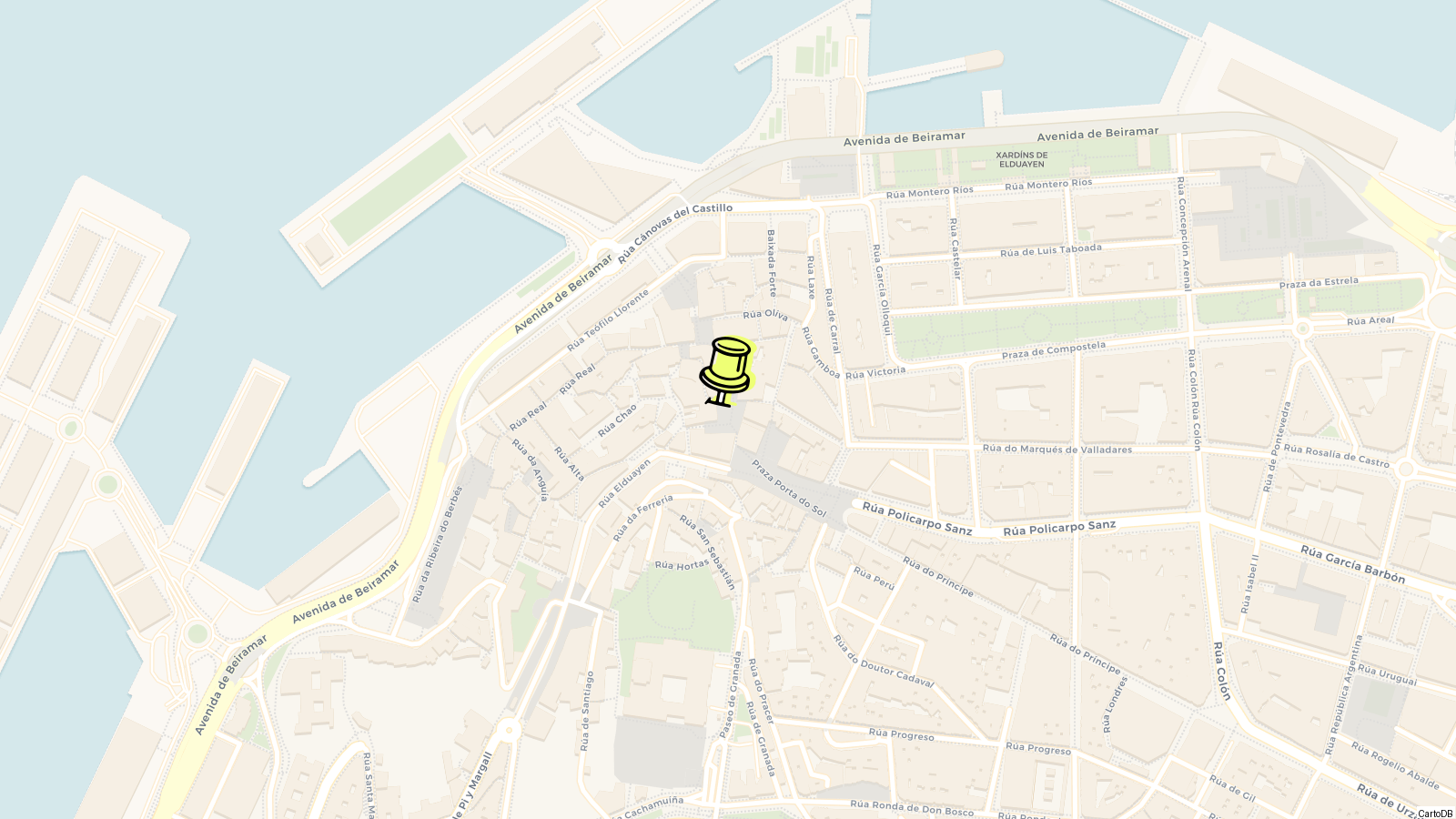
The square sits at coordinates 42.238602154, -8.726049447, exactly in Vigo’s historic core. The arcades shelter the ground-floor terraces. Many visitors duck in from the narrow streets radiating around the casco vello without realising they’ve entered the central plaza, because the space blends into side alleys. You can enter from various directions, it’s never gated or closed, and you won’t need to plan your timing.
Praza da Constitución functions as a social living room, not a museum. Expect a steady background of small groups and locals meeting beneath the porticoes. The buildings around the square hold ground-floor businesses; some afternoons you’ll see doors open to reveal storage for civic events or market kit.
Activity spikes on festival days and during weekend evenings, when the entire old town sees a surge in visitors. On most weekdays, it’s quieter, especially before noon. You’re as likely to see a pensioner reading as you are street musicians passing through on their way elsewhere.
There are no interior exhibits here: you’re coming for the architecture, the open air, and the view up towards the town hall. The historic city hall faces onto the square but isn’t generally open to tourists; you can sit on the steps but will be redirected if you try to wander inside.
Wander east or west and you’ll immediately hit Vigo’s grid of tight alleys and staircases. A walk from Praza da Constitución to the city’s port takes under 10 minutes at a gentle pace.
The square’s surface is step-free and gently sloped, navigable for wheelchairs and prams, though older side streets nearby have rougher stonework. If you’re orienting by GPS, plug in those coordinates directly: 42.238602154, -8.726049447. There’s no on-site public toilet, but cafés nearby usually grant customers access.
Tips
- Early morning is quietest. By mid-morning, locals cross the square heading for coffee and errands. Most activity builds after 11am.
- No need to book or pay, this is a public space open 24 hours.
- Wear comfortable shoes. The old-town paving stones can be uneven and get slick on rainy days.
- Umbrella or rain jacket is wise outside summer. Galicia’s weather is unpredictable year-round.
Late March through early June and late September are safest for dry days. Vigo sits in Galicia, which means a high chance of rain for much of the year. Summer afternoons (July–August) can be busier with visitors and local families circulating for gelato or terrace drinks.
- All nearby lanes are pedestrianised, but cyclists and delivery scooters sometimes weave through.
- For photo-ops, sun reaches the square after 10am. By mid-afternoon, south-facing facades get the best light.
- Most cafés and shops around the square open after 10am. Avoid trying to grab breakfast earlier unless your hotel serves it.
- Benches get snapped up on weekends. Want a seat to linger? Go on a weekday or just before lunch.
- No public toilets in the square. Use a café (buy a drink), or try cross streets off the main plaza.
- At festival periods (see Reconquista, Carnival) the square can get packed; watch for pickpockets.
The Reconquista festival (March 28) is loud, crowded, and set-piece heavy, with period costumes and a mock assault on French positions staged right in the square. Expect traffic rerouting in the old town during these events. If you want to avoid crowds, skip these dates. Carnival (February/March, shifts annually) also stages major processions through Praza da Constitución, drums and confetti guaranteed.
Know this destination? Help us improve
Your local experience is valuable to other travelers.