Way of Saint James
Over 500,000 walkers reached Santiago in 2025,most starting with coffee in Saint-Jean-Pied-de-Port and ending with Galician octopus in Praza do Obradoiro.

Overview
In 2025, over half a million people finished one of the official Camino de Santiago routes, a new record and a 12% jump from the year before. The classic walk is the Camino Francés, which starts for most people in Saint-Jean-Pied-de-Port, France and covers 790 km across northern Spain to Santiago de Compostela, but in reality, there are 17 recognized Caminos and dozens more “unofficial” routes, often picked up at big nodes like Sarria, Tui, or Porto. In 2025, Sarria alone saw 32% of all pilgrims start their last 100 km there, just to qualify for the Compostela certificate.
The Camino isn’t just for the devout or masochists prepared to sleep in dorms, the split is roughly 39% religious, 33% religious-plus-something-else, and 28% “non-religious” motivations these days, and 93% of people just walk it (the rest bike or, rarely, do it on horseback). Women actually outnumber men (53% in 2025) for the first time, and you’re as likely to hear English, Italian or German as Spanish: 43% of arrivals in 2025 were Spaniards, the rest split between North Americans and almost every European country.
If you look for the scallop shell markers, you’ll find pilgrims everywhere between April and October, but peak arrivals now cluster in September (~77,000 finished that month in 2025), with steady waves the rest of summer. The Caminos pass through hundreds of towns, and there are practical differences: the Caminho Português da Costa saw 90,000 people in 2025, with about 11,000 Americans and 9,500 Germans walking it just that year.
Completing any official route (at least the last 100 km on foot, or 200 km by bike) gets you a Compostela certificate from the Pilgrims’ Office in Santiago, which issued 499,239 in 2024. That office tracks everything: most popular start points, age groups (in 2023: 23% under 30, 61% ages 30-60, 16% over 60), and which towns fill up fastest.
The Most-Used Camino Routes
The top three in 2025 were:
- French Way (Camino Francés): 47% of all pilgrims (over 235,000 people).
- Portuguese Way (interior and coastal combined): 34% (over 100,000).
- English Way, Primitivo, and Northern Way, a combined 15%, are smaller but growing fast. The English Way had 30,204 completions in 2025, an 8% jump in a single year, half from Spaniards, half foreigners.
How the Pilgrim Scene Has Changed
The Camino is quieter in November-March. Summer is crowded, especially the last 100 km stretch from Sarria, which is a conveyor belt of school groups, retirees, and newbies aiming to qualify for their certificate. Book hostels in advance if you’re starting from Sarria, Tui, or Porto in July-September. If you want space and a “less processed” experience, pick the Camino Primitivo from Oviedo (320 km), or a Northern/Coastal route.
Why People Actually Do It
Many start for spiritual reasons, but just as many come for the walking, the open social scene, and “resetting” away from normal life. The mix of cultures is real; Americans now make up 8% of pilgrims, Italians 6%, Germans 5%. The list of most-popular start towns includes Tui, Porto, Saint-Jean-Pied-de-Port, and Ferrol for those who want to experience different regions.
History
The oldest known pilgrim to complete the Camino de Santiago was in his 90s, but the tradition itself goes back a lot further, at least to the year 813. That’s when legend says the tomb of Saint James the Great (one of Jesus’ apostles) was discovered in Galicia, and a church was built on the site. By the 10th century, the route had exploded in popularity with Christian pilgrims from all over Europe, turning Santiago de Compostela into a major religious destination alongside Rome and Jerusalem.
The classic French Way (Camino Francés) follows an old Roman road and covers about 800 km from Saint-Jean-Pied-de-Port in France to Santiago. The first “official” medieval guidebook, Book V of the Codex Calixtinus, dates from around 1140 and lays out the main route, mentioning stops like Roncesvalles, Burgos, León, and Astorga. Pilgrims just left house and walked; that’s why you’ll see trails feeding into Santiago from every direction across Europe.
For centuries, doing the Camino meant months or even years of rough travel. Towns along the way, like Hospital de Órbigo or Navarrete, built hospitals to care for sick and broke pilgrims. The scallop shell you still see everywhere came from old pilgrims bringing back a real Galician shell as proof of arrival. The shell later got adopted as the Camino’s universal symbol.
Medieval pilgrims sometimes did the journey as a penalty for legal or religious crimes, not always voluntarily. For some, the church or state would enforce a pilgrimage as penance. The routes were dangerous: between disease, bandits, and the weather, many didn’t make it. The development of big stone bridges, monasteries, and fortified towns along the route wasn’t just for commerce, they were directly tied to supporting pilgrims in the thousands every year.
By the early 12th century, the system was so organized that the Pope granted indulgences (full pardons) to those who completed the walk and confessed, making it spiritually on par with Rome or Jerusalem. The pilgrimage boomed in popularity, especially on Holy Years: whenever July 25 (St. James Day) lands on a Sunday, the Cathedral of Santiago opens its Holy Door and the Jubilee indulgence becomes available to all pilgrims arriving that year.
The Camino’s popularity tanked in the 16th and 17th centuries because of the Black Death, religious reforms, wars, and just general travel insecurity. You could walk days without seeing anyone except the cows. A turning point was 1957, when Walter Starkie published “The Road to Santiago” and hiking for non-religious reasons started to make sense again. Since then, every decade brought more walkers, with the number of finishers shooting up after regional tourism campaigns in the 1990s.
In 1987, the Council of Europe recognized the Camino as its first “Cultural Route,” which is why the yellow shell waymarkers now run from Poland to Portugal. The core Spanish routes became a UNESCO World Heritage Site in the 1990s, and modern caminos branch out nearly everywhere: the Portuguese Way from Porto or Lisbon, the Camino Primitivo from Oviedo, the English Way from Ferrol, and the Northern Way following the Bay of Biscay.
The legend says that after Saint James was martyred in Jerusalem, his body floated in a stone boat to Galicia and was discovered by a local hermit under a star-lit field, hence “Compostela,” meaning “field of the star.” That’s why you see so many stars and shells along the trail. My favorite local quirk: every Holy Year, on July 25th, the Cathedral’s Botafumeiro, basically the world’s biggest thurible, swings above the heads of pilgrims at the midday mass.
Santiago’s holy years (“Año Xacobeo”) happen whenever July 25 lands on a Sunday. In those years, everything is full: more masses, longer opening hours, packed albergues (pilgrim hostels) and the normally closed Puerta Santa (Holy Door) of the Cathedral opens for pilgrims to pass through and receive the plenary indulgence.
If you want the absolution-in-writing (“Compostela”), you have to walk the last 100 km (the stretch from Sarria is the classic), or bike the last 200 km, and collect at least two stamps per day in your credential to prove it. The Pilgrims’ Office in Santiago gives you the parchment for free if you meet the requirements; the credencial passport costs €2-4 at nearly any albergue or church along the route.
During the 18th century, the Camino made a few odd appearances in the wider world: John Adams, future U.S. president, landed at Finisterre in 1779 (thanks to a leaky ship) and actually walked part of the Camino in reverse, toward Paris. He didn’t visit Santiago, something he later admitted regretting.
The footprint of the Camino is still visible in place names (Hospital de Órbigo, Puente la Reina), countless Romanesque churches built for the crowds, and in the quirks of the towns it touches. If you’ve ever seen stone bridges way bigger than the modern village requires, chances are they were built for pilgrims. The sheer number of old hospitals and hostels still functioning proves how much the Camino shaped northern Spain.
Today, the traditions around the Camino, scallop shell, albergues, the stamped credencial, and all, trace back to solutions for problems medieval travelers had. Pilgrims walked for faith, for penance, for adventure, or just because it was the European road trip before those were a thing. Now the reasons are all over the board, but the rituals haven’t changed much, and you’ll run into plenty of reminders, especially if you make it in a Holy Year.
Visiting
You start by picking your route and getting a credencial (“pilgrim’s passport”). Most people in 2025 still walk the “French Way” (Camino Francés), starting in Saint-Jean-Pied-de-Port or Sarria if you just want to cover the last 100 km, the minimum to earn the Compostela certificate at Santiago. The route is marked by yellow arrows and the scallop shell symbol, except for the stretch through Vigo, which somehow still lacks proper signs.
If you’re walking, budget 20-30 km per day. The most common rhythm is 5-6 hours of walking, then lunch around 2 pm, and a siesta or wash before dinner (if you do a menú del peregrino, expect €8-14 for a 3-course meal). Most routes are on country paths, quiet roads, and old Roman tracks. The last two days into Santiago get increasingly busy, especially after Sarria, as that’s where many start to qualify for the certificate, a sea of blisters and hiking poles by June.
Expect a chain of albergues every 5-10 km, especially on the French Way. These are basic hostels just for pilgrims with a credencial; a bunk in a municipal albergue costs €8-10, a private one €12-15, and they fill fast during school holidays and September. Some monasteries, like San Xulián de Samos, let you stay for a donation. Municipal albergues open at 1 pm, and it’s first-come, first-served, no reservations. If you want to guarantee a bed, book a private albergue or a room via Booking.com.
Don’t expect much privacy. Dorms are snore symphonies. Showers can run ice-cold. Wi-Fi is hit or miss. But you’ll hear a dozen languages at breakfast, and the routine is simple: walk, wash, eat, sleep, repeat.
Here’s how a typical day plays out:
- Wake up before dawn, by 6 am, most albergues are empty.
- Walk through a mix of forests, small villages, and farmland. At least every other town has a bar serving coffee, tortilla, and, in Galicia, empanada or tarta de Santiago.
- Collect a stamp (sello) in your credencial at each stop, cafés, churches, and albergues all have one. You’ll need at least two per day in the last 100 km as proof for the Compostela certificate in Santiago.
- Arrive before 2 pm to claim a bed. Grab lunch, wash clothes (every albergue has sinks, some have machines), and hang out.
- If you arrive in Santiago before 11 am, head to the Pilgrim’s Office for your Compostela. Bring your filled credencial and passport/ID. Lines can be long in summer, grab a ticket from the machine, then get lunch and check your number online.
- Join the Pilgrim’s Mass at 12:00 or 19:30 in the Cathedral; if you finished the day before, you’ll hear your name, country and starting point announced from the pulpit.
- If you want to keep going, the Finisterre and Muxía routes start right from the square, 4-5 more days on foot to the “End of the Earth.”
Cyclists need to ride at least 200 km for the certificate, most start in Ponferrada or Porto. Pilgrims on horseback or in a wheelchair get special mention at the office, and in 2025 only 4% of all finishers came by bike, and a tiny fraction by other means.
At the end, it’s traditional to walk into the Plaza del Obradoiro and touch the Romanesque pillar just inside the cathedral doors (the spot is now worn smooth by millions of hands). Pilgrim tradition is to line up for confession or a quiet sit under the nave.
If you arrive during a Holy Year (the next is 2027), prepare for shoulder-to-shoulder crowds, every July 25th falling on a Sunday triggers a flood of visitors and quadruple the Masses. Hostel beds are fully booked weeks in advance, prices surge, and all-night parties spill onto the square. 2021 and 2022 were both special extended Holy Years due to the pandemic shutdown in 2021.
You do not need to register or pay for the Camino itself, it’s free to walk, and you can download maps and get official info at caminodesantiago.gal. Some stretches overlap with long-distance Spanish trails (GR routes) that are marked with red and white paint. The end point is always: Santiago de Compostela Cathedral, coordinates 42.88056, -8.54389, in Praza do Obradoiro.
Tips
-
Pick up your credencial (pilgrim passport) at a local pilgrim’s office, albergue, or church before starting, don’t wait until the day you walk, especially if you’re starting in Sarria, Saint-Jean-Pied-de-Port, Tui, or Porto where lines are long in high season. You’ll need two stamps per day the last 100 km (walkers) or 200 km (bikes) to qualify for the Compostela certificate.
-
September and May are busiest for arrivals in Santiago, followed by August and June. If you want less-crowded trails and beds in albergues without racing ahead, target April or October. July and August are hot and villages can be booked solid, especially after Sarria.
-
Most public and church albergues don’t accept advance bookings, show up early (by 13:00-14:00 is safest in peak months) for a bed. Private albergues and hostels allow reservations via Booking.com.
-
Laundry: you’ll find washing machines (€3–€5) and drying lines at most albergues, but dryers sometimes cost extra or don’t exist. Quick-dry clothes are a lifesaver. Avoid jeans, cotton socks, and new shoes.
-
The most common injuries are blisters, shin splints, and sunburn. Bring at least two pairs of shoes (something airy for afternoons), Compeed or Leukotape for feet, and sunscreen.
-
Pharmacies (“farmacias”) stock blister plasters, bandages, and basics in every town. The Farmacia de Guardia app lists on-duty shops for emergencies on Sundays and holidays.
-
Cash is king in rural Galicia and most of rural Spain, carry at least €30–€50 in small bills and coins. ATMs cluster in larger towns like Sarria, Palas de Rei, and Arzúa.
-
Tap water is potable everywhere along the major routes. Most fountains are marked “agua potable”, only skip them if there’s a clear “no potable” warning.
Luggage transfers
If you don’t want to haul your pack every day (knee problems, heavy gear, just over it), luggage transfer companies like Correos Paq Mochila and Jacotrans cover the French, Portuguese (central and coastal), and English Ways. Drop your bag at the albergue or hotel desk by 8:00, and it’ll be waiting that afternoon, cost is around €6–€8 per stage. You can book online, by WhatsApp, or at the hostels, no need to plan weeks ahead.
Compostela certificate
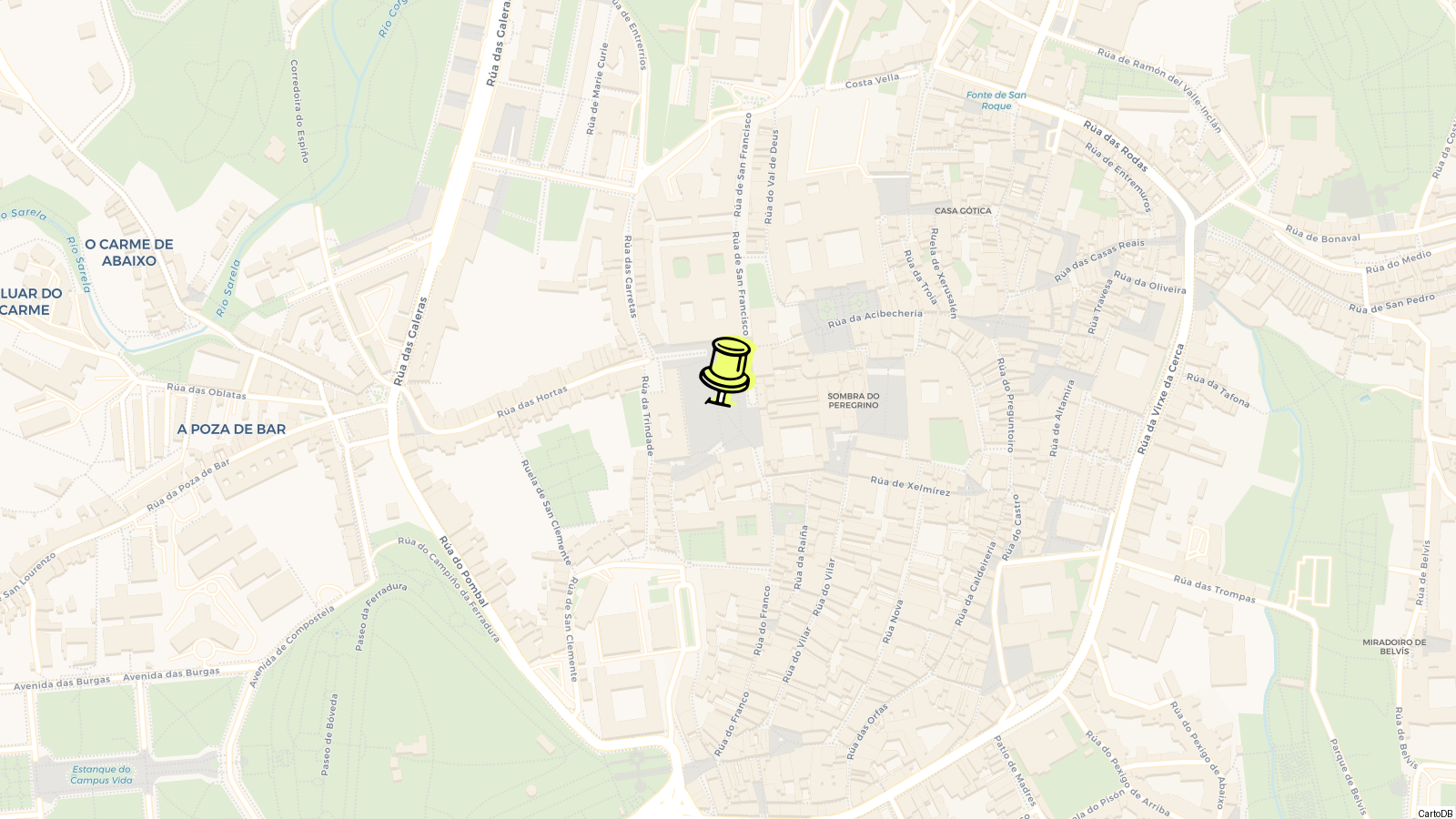
To claim your Compostela, go to the Pilgrim’s Office at Rúa Carretas 33, Santiago de Compostela. Summer waits can hit over 90 minutes from 11:00–15:00, especially on Fridays and Saturdays. They open daily from 9:00 to 19:00. Pilgrims’ Mass (where they read countries and starting points) happens at 12:00 and 19:30 in the Cathedral.
Digital bookings/apps
The Wise Pilgrim and Buen Camino apps have up-to-date lists for albergues, routes, and amenities, and are more reliable for closures/renovations than print guidebooks these days. Gronze.com is the fastest site for route breakdowns and albergue status in Spanish.
-
Sundays and some Mondays, supermarkets and most restaurants in Galicia shut or run limited hours, even in towns like Palas de Rei or Arzúa, plan snacks ahead.
-
If you want a meal in a rural bar that looks closed, ask, owners often open for business or can call around for food if you’re a pilgrim.
-
Early mornings: Galicia is on “Spanish time” (Europe/Madrid zone) but the sun rises late, expect dark until after 7:30–8:30 most of the year. Headlamps aren’t just for winter.
-
If you plan to bike, the last 200 km from O Porto or 300 km from Lisbon count for the Compostela, but some dirt stretches after Sarria and Melide get crowded with walkers in the mornings, yield often and use a bell.
-
Horseback and wheelchair pilgrims are a rarity but have official recognition, wheelchair users should check for accessible albergues ahead, as few are barrier free.
-
You’ll see plenty of symbols: the yellow scallop shell and arrows mean you’re still on the right track; if you reach town and see them vanish, you probably missed a turn, so backtrack to the last marker.
-
If you want a quiet night in Santiago post-pilgrimage, avoid Friday and Saturday arrivals. Spanish university groups and clubs often celebrate the end of the route with late-running botellón
Know this destination? Help us improve
Your local experience is valuable to other travelers.