Museo Quiñones de León
museum in Vigo, Spain

Visit details
Overview
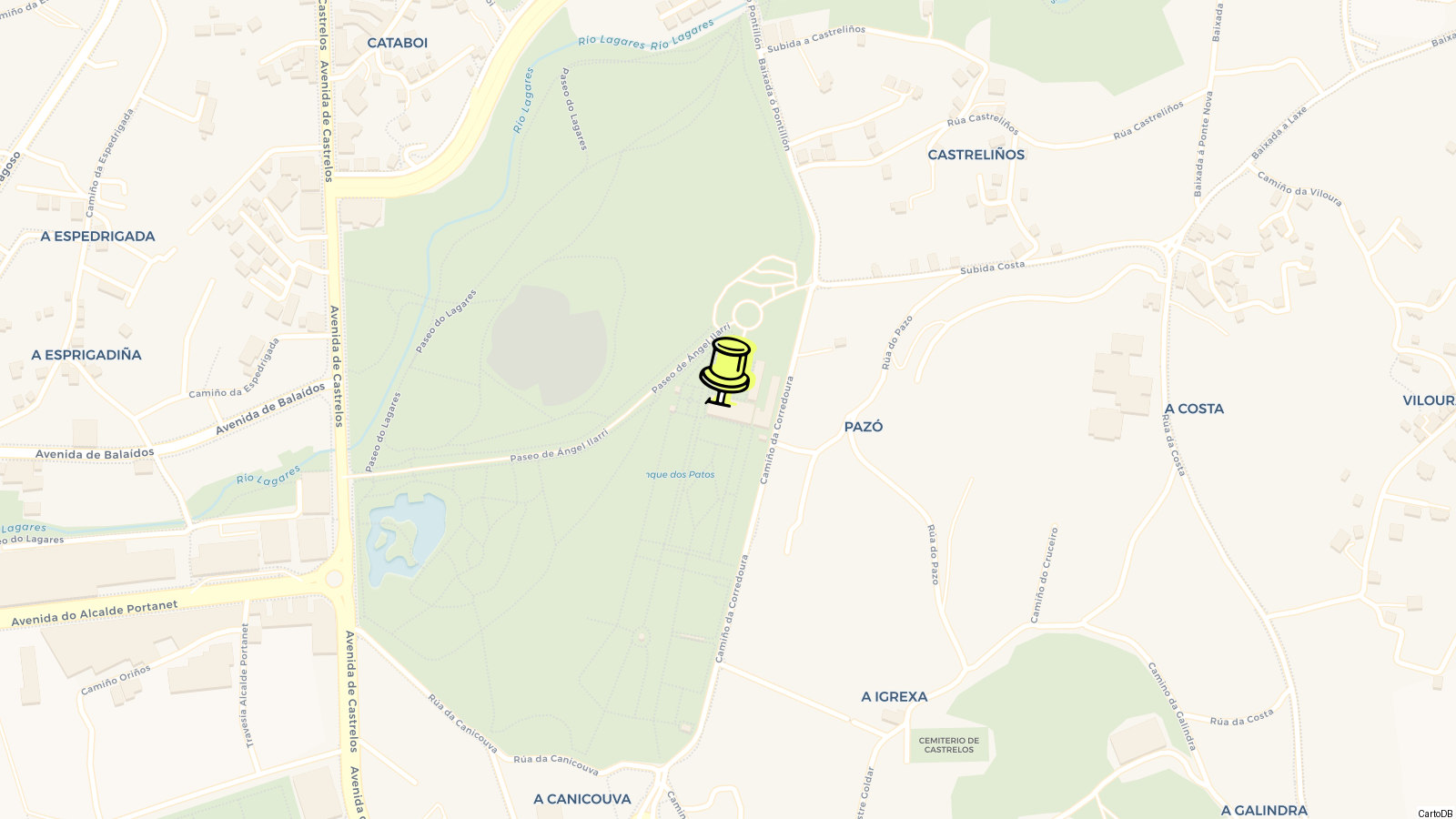
The Museo Quiñones de León is the city museum of Vigo, housed inside a 17th-century Galician pazo at the heart of Parque de Castrelos. The building, started around 1670 on the site of an earlier tower abandoned during the Portuguese wars, was donated to the city by the Quiñones de León family in 1924 and opened as a public museum in 1937.
Three things make it worth your time. The pazo itself, with its original family rooms, libraries and chapel left mostly as the last residents lived in them, is one of the few aristocratic Galician manors you can actually walk through. The painting collection covers Galician artists from the 19th century to roughly the 1960s, names like Serafín Avendaño, Jenaro de la Fuente and Laxeiro who are central in the region and largely unknown outside it. And the gardens around the building, French and English in style across about five hectares, are part of the same admission, with a 200-year-old camellia and a eucalyptus line planted in 1872.
It is not a blockbuster museum and shouldn’t be visited as one. Come for an hour or two, walk the rooms, then walk the gardens. The whole thing sits inside Parque de Castrelos, so the visit slides naturally into a longer afternoon in the park.
Collection
The Museo Quiñones de León collection is split between two main sections: the stately rooms of the 18th-century pazo (manor) and galleries dedicated to Galician painting.
Inside the palace, rooms hold the family’s original furnishings, decorative arts, and some period costumes. You’ll see the main hall with its elaborate ceiling, the formal dining room, and bedrooms furnished in late 19th-century taste. Unlike most manor museums, display cases are minimal. Most objects sit openly on tables and cabinets, the way they would have when families lived here. Oil portraits of the Quiñones de León family and Neira family line the walls.
Several rooms in the ground floor have been restored to closely match their appearance in the early 20th century. Decorative objects range from Limoges porcelain and French clocks to Asian lacquer boxes traded through Vigo’s port in the 1800s. Upstairs, the former library now displays a small set of books, maps, and nautical curiosities. The chapel, dating to an 18th-century expansion of the building, is set up with silver and wood religious artefacts used by the family. Only a handful of Galician pazos in the Pontevedra Province let you see this much of the original fabric; most were gutted or rebuilt in the 20th century.
A separate wing holds the municipal art museum, focused on Galician painting from the late 19th century to the 1960s. Labels are in Galician and Spanish, not always in English.
The collection covers local painters from Romanticism through early abstraction. Names represented include Serafín Avendaño, Jenaro de la Fuente, and Laxeiro, not household names abroad, but if you want to trace how Galician artists interpreted landscape, local history, or the growth of Vigo, you’ll get a sense of it here. The museum does not collect international “greatest hits”. It’s a regional lens, with most works donated or acquired from local foundations.
You will not find blockbuster names or blockbuster temporary exhibitions, that’s by design. This collection aims to show how art, landscape, and local history entwined for the upper classes around Vigo. For bigger regional art, head to museums in Pontevedra Province.
A final room covers temporary displays, mostly focused on local artists or anniversaries with a Vigo connection. These are tightly curated, with works rotated often, sometimes every season.
Unlike many Spanish provincial museums, nothing in the Museo Quiñones de León is behind grimy glass or crammed in a basement. There’s a consistent effort to stage works within the restored pazo and show how the house functioned in daily life. During annual events like the Reconquista festival, some furniture and art are temporarily removed to protect them from crowds, so you may see partial displays during peak periods.
Visiting
Start at the main gate near the roundabout at coordinates 42.213222, -8.727666. The entrance is signposted but easy to miss if you’re not watching for it. The driveway takes you straight toward the pazo, the 18th-century manor house. Admission is normally free, but check the city’s official page the week you’re visiting; hours and access sometimes fluctuate for events or maintenance.
The site does not charge regular entry fees as of 2024, but some temporary exhibitions or guided tours may require advance booking or small payment. Recent schedules show the museum generally opens from 10am to 2pm, and 4pm to 8pm, Tuesday to Saturday, with shorter hours (11am to 2pm) on Sundays and public holidays. Mondays are fully closed, and so are 1 January, 24–25 December, and 31 December. Always confirm hours online if your window is tight or visiting around Galician holidays; unannounced closures for works are not rare. The museum belongs to the city of Vigo, not a private foundation, so adapting to civic events is part of local life.
Inside, you’re happy if you start with the ground floor. You’ll walk straight into the manor’s stately reception rooms, with creaky wood floors and period furniture everywhere. The route is mostly linear: the museum has done a decent job keeping you moving room by room, usually finishing the pazo circuit in 25–40 minutes.
Most rooms keep the original 18th and 19th-century arrangement, down to the patterned carpets and old mirrors. The family’s art is spread above eye level, so you’re always glancing up past chandeliers and heavy curtains. Staff monitors are present but don’t hover, and the traffic flow is usually one-way, so if you want to really squint at the details, wait for gaps between tour groups. You’ll pass through the piano room, dining room, and some smaller bedrooms, most pieces have small bilingual signs (Spanish and Galician), with occasional English labels for more notable objects or artworks. Accessibility can be an issue: step-ups and uneven floors slow wheelchairs and prams.
At the end of the manor, follow signs to the wing for Galician painting. The gallery takes up a newer building attached to the pazo and focuses on 19th and 20th-century artists. Expect more locals than tourists and a laid-back feel: no timed tickets, no timed entry slots.
Photography is usually allowed in most spaces, without flash. Bags bigger than a daypack go in free lockers by the desk at entry. There’s no onsite café; nearest food or drink requires leaving the grounds and walking a few minutes through Castrelos Park.
If you get lost, staff are approachable but speak limited English. The handful of international visitors usually figure things out by watching locals. There are clean public toilets near the entry hall and at the exit from the galleries. Plan an hour if you just want to walk the highlights, or up to two hours for a read-every-label deep dive.
Tips
- Entry is free, so you don’t need to buy or reserve a ticket before visiting.
The Museo Quiñones de León doesn’t run any paid exhibitions or charge for temporary shows. They occasionally ask large groups (organised or educational) to give advance notice but solo visitors and families can walk right in. Donations aren’t expected.
- The main entrance is at 42.213222, -8.727666. The sign can be easy to miss: watch for the small metal plaque just a few metres before the roundabout at the park’s main gate.
- Bring an extra layer. Inside, the palace stays much cooler than the gardens, even in summer. The stone walls and wooden floors can feel chilly, especially on rainy Galician days.
In winter months, it’s common to see even locals with jackets inside, as the palace heating is minimal to preserve the art and antique woodwork. On summer afternoons, the shaded thick stone keeps the lower rooms markedly cooler, stepping outside can feel like a temperature shock.
-
Photography is allowed, but no flash or tripods. Large backpacks might be checked at the entrance or asked to be worn on your front to avoid bumping into art or furniture.
-
Wheelchair users should know that while the ground floor is accessible, some upstairs sections have no lift. The gardens have gravel and some uneven paths, so mobility is a challenge in wet weather.
- There’s no café or shop inside, and nowhere to buy food or drink on the grounds. Bring water, especially if you plan to wander in the gardens for more than an hour.
A water fountain is just outside the main gate, near the park entrance to Castrelos, but nothing for sale nearby. If you want a picnic, pack one before you arrive instead of counting on a kiosk.
Know this destination? Help us improve
Your local experience is valuable to other travelers.