Parque de Castrelos
park in Pontevedra Province, Spain

Essential info
Visit details
Overview
Parque de Castrelos is the green core of Vigo, a 24-hectare landscaped park about 3.5 km southwest of the city centre that locals call the pulmón verde, the green lung of the city. It is the largest urban park in the city and the one Vigueses default to for a Sunday walk, a run, a wedding photoshoot, or a summer concert.
The park grew out of the lands of the Pazo of the Counts of Valladares, a site documented under the name Castrelis since the 13th century, and the present manor at its centre dates from a 1670 rebuild after Portuguese troops withdrew from the area. The whole estate was declared a Historic Garden and a Bien de Interés Cultural in 1955. The Pazo houses the Museo Quiñones de León; admission to both park and museum is free.
What you get on a normal day is a mix of formal French and English Romantic gardens around the pazo, woodland paths along the Lagares River, an artificial lake built in the 1990s with swans and ducks, a rose garden, and one of the oldest camellias in Galicia, an estimated 200-year-old specimen on the lawn near the manor. Gates open at 09:00 and close at 21:00. Bring water; there are no kiosks inside.
Visiting
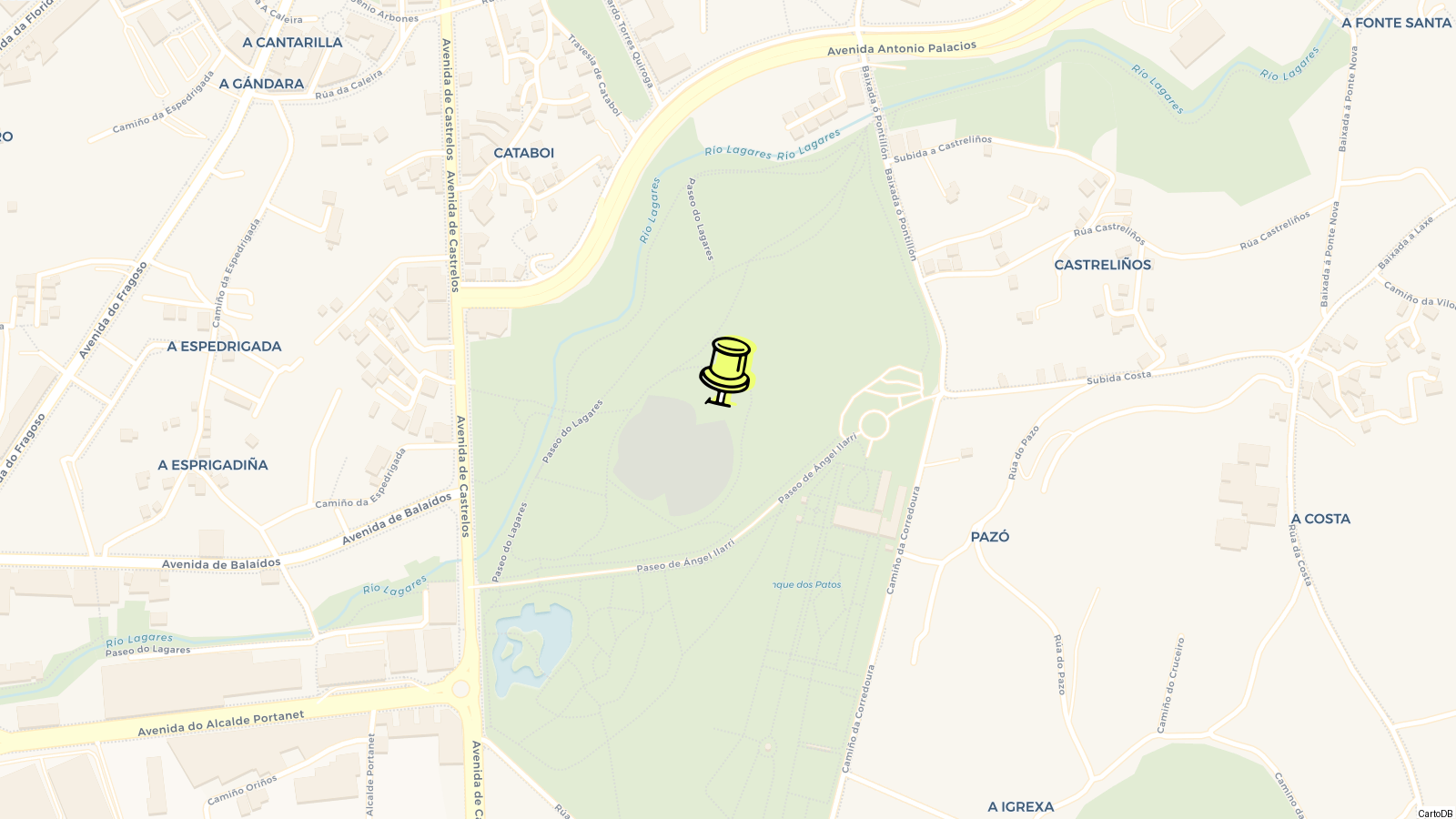
Most people enter Parque de Castrelos from Avenida de Castrelos, at the main north entrance next to the traffic roundabout at coordinates 42.214184, -8.72915342. There’s no admission fee and opening is, by custom, dawn to dusk, though the gates are sometimes shut if an evening concert is on or for maintenance. If you come by bus, city lines running along Avenida de Castrelos drop you right by the main gate.
Once inside, paths cut through a mix of open lawns, woodland, and formal gardens. The core of the park is dominated by a wide, straight avenue flanked by mature trees leading down a gentle slope. The French-style gardens with box hedges and symmetrical flowerbeds are just south of the entrance.
If you stick to the main avenue, you’ll soon reach the large pond and fountains, which form the centrepiece of the old estate’s landscape layout. To the right, follow signs for the Pazo de Castrelos (mansion), entry details for the pazo itself are covered in a separate section, but its gardens are freely accessible during park hours. Past the pazo, woodland trails loop down towards the Lagares River and a small waterfall at the far southern boundary.
On weekends, you’ll see runners, dog walkers, and families filling the main park axis. Bicycles are allowed everywhere except right inside the most manicured garden zones near the pazo.
If you want quiet, weekdays before noon are best, when the park crew are out clipping and watering but most locals are still at work or school. The southern trails along the river are almost always emptier than the lawns and gardens, especially on rainy days when only the die-hard joggers show up.
Kids usually flock straight to the playground, which is midway between the north gate and the pazo. Football pick-up games tend to happen at the southern edge of the big lawns, but there’s no booking or formal pitch.
Park benches cluster under the oldest oak and plane trees for shade. There aren’t permanent cafés or food kiosks inside; bring your own or buy snacks at the bakeries and bars on Avenida de Castrelos before you enter.
During holidays, especially on sunny spring and autumn days, local families fill the lawns with picnic blankets and folding chairs. There are regular municipal clean-up sweeps, but don’t expect spotless grass Sundays after a big event, bring a mat if you plan to eat on the ground.
Most paths are gravel or packed earth, not tarmac. Wheelchair users can access the main route through the park and into the paved gardens, but riverside paths and some minor trails are steep or bumpy, especially after rain.
You won’t find rental bikes or scooters in the park itself; Vigo’s city schemes don’t extend into Castrelos. Dogs are allowed on leads except in signed children’s play areas.
If you’re after a longer walk, loop off the main avenue into the south woodland, keeping the Lagares River on your left. The park’s southern limit is quieter, with some old stone footbridges and a view back up the hill to the pazo.
Dedicated birdwatchers sometimes set up near the river, hoping for a glimpse of kingfishers or herons using the waterway as a feeding ground. Early morning in spring brings the best chances, but patience is required; most casual strollers just get wood pigeons and the odd blackbird.
No maps are handed out at the entrance, but the grounds are impossible to get lost in: stick to any main path and you’ll circle back to the central lawns or one of the perimeter gates. Signage points you towards the pazo, garden sections, and the playground, but if you want more info or history you’ll need to check the city website ahead of time.
Getting there
From the centre of Vigo
Parque de Castrelos sits within the city limits of Vigo, in Galicia’s Pontevedra Province. It’s about 3.5 km southwest of Praza Porta do Sol (Vigo’s central square).
- On foot: Expect a walk of 40–50 minutes from the centre.
- By car/taxi: Around 10–15 minutes, depending on traffic. Taxis typically cost €7–10 for the journey within city limits.
The most direct driving route from central Vigo is via Gran Vía and Avenida de Castrelos. Free parking is usually available on the streets surrounding the park, but on weekends or event days these fill fast.
By city bus
Vitrasa, Vigo’s local bus company, operates frequent routes connecting central Vigo to the area around Parque de Castrelos. The park’s north entrance sits at Avenida de Castrelos, coordinates 42.214184, -8.72915342.
- Line C3 (direct from Praza América and Urzaiz)
- Line L17 (from Praza de España towards Castrelos)
Single tickets cost €1.49 and can be bought on board.
Both C3 and L17 stop within minutes’ walk of the main entrance. The closest convenient bus stop is “Castrelos - Praza de España,” which puts you right at the park’s border. Buses typically run every 10–20 minutes on weekdays, slightly less often on weekends. For precise times, check the Vitrasa website or look for route maps on most central bus shelters.
From Vigo’s train or bus stations
If you’re arriving by Renfe train, Vigo-Urzáiz station sits 3.5 km from the park. Bus L17 departs from the vicinity, or grab a taxi, no direct metro or tram exists. The Vigo bus station (Estación de Autobuses) is further east; use Vitrasa lines with a change at Praza de España or opt for a cab.
While both major stations are accessible to taxis and local buses, only the bus station offers direct coach services across Galicia and to cities like Madrid, but you’ll need to transfer to city buses for Castrelos. Keep in mind: there’s no direct regional or long-distance public transport to the park itself. Train and coach stations in Vigo are not adjacent, if changing between them, budget 20 minutes by taxi.
Navigation
Set your destination for “Avenida de Castrelos,” and you’ll be led to the main park entrance roundabout at 42.214184, -8.72915342 for maximum convenience. No dedicated train stop exists for Parque de Castrelos.
Printed maps and signposts in Vigo point to “Castrelos” (both the park and the neighbourhood), which can create confusion for newcomers. The vast park dominates the area, so once you’re along Avenida de Castrelos, keep an eye out for the traffic circle by the gates.
Tips
- The upper gardens nearest to Avenida de Castrelos are the busiest, especially afternoons when local families show up. If you want actual quiet, walk south to the woodland paths behind the main lawns. The further from the central monument, the fewer people*.
The central area can feel crowded in mid-morning and late afternoon on weekends, as it’s a default meeting spot for families and joggers. On workday mornings, areas near the rose garden are almost empty. The wooded southern edge has secluded benches and less foot traffic. The city bus routes that stop near the main entrance mean teenagers treat those lawns as their unofficial hangout spot in nice weather.
- If you don’t like pollen, avoid April and May. The massive plane trees drop pollen everywhere and it collects on benches and footpaths.
- Bring your own snacks and water, kiosks are rare, and only open in summer and on big event days.
- The main gravel trails are wheelchair- and buggy-friendly, but steeper secondary paths behind the museum get muddy after rain.
- If you want shade in summer, aim for any of the footpaths lined by mature trees around the perimeter. The central lawns get full sun all day.
Many of the biggest trees date back more than a century and cast deep shade even by mid-morning. The oldest plane trees on the western edge are prized mid-day reading spots for office workers from the nearby neighbourhood.
- The street entrance at Avenida de Castrelos is busy with car traffic and buses. Watch small children closely.
- Cyclists use the gravel perimeter trails, but bikes are not permitted on the main lawns.
- If you’re attending an event, use public transport or taxi. Nearby parking is usually full by 17:00 on show days.
- Toilets are functional but basic, bring tissues just in case. They’re busiest just before and after open-air events.
Know this destination? Help us improve
Your local experience is valuable to other travelers.